Apple cider doughnuts are the cake doughnut of the New England fall: a tender, spiced ring made with apple cider boiled down to a syrup and stirred into the batter, then fried and tumbled warm in cinnamon sugar. Unlike a yeast doughnut, the crumb is dense and moist and lifts on baking powder and soda rather than rising slowly, so the dough can go from bowl to fryer the same afternoon. The reduced cider gives a deep, slightly tart apple note that plain doughnuts never have. They are the signature treat of orchards and cider mills from Maine to upstate New York, eaten by the bagful with a cup of mulled cider on a cold weekend.




Despite feeling like a colonial heirloom, the apple cider doughnut is largely a 20th-century creation. Cider doughnuts existed in the Northeast by the turn of the century — they turn up at a 1901 Halloween party in a Buffalo newspaper — but the dish as a marketed fall fixture dates to 1951, when the Doughnut Corporation of America, the firm built by Russian-immigrant entrepreneur Adolph Levitt around his automatic doughnut machine, introduced the 'Sweet Cider Doughnut' and announced it that fall as a spicy round cake with natural autumn appeal. The automation that let roadside cider mills and orchards fry doughnuts to order is what wedded the doughnut to the cider press; each orchard now keeps its own recipe. Treat the precise first as folk and contested — what is documented is the 1951 commercial push and the older turn-of-century existence.
The outside is crisp and sandy with cinnamon sugar; bite in and the crumb is soft, dense, and moist, closer to spice cake than to a fluffy raised doughnut. Warm apple comes through with a gentle tartness, backed by cinnamon and nutmeg, and the edges have the faint caramelized bitterness of a good fry. Eaten fresh and still warm, it almost steams when you break it; the sugar coating clings to your fingers.
Cider is mostly water, so it is simmered down — often two cups to a third of a cup — to concentrate its sugars and apple aromatics without watering down the batter; this reduction carries both flavor and acidity. That acidity is the technical key: the malic acid in the cider reacts with baking soda to release carbon dioxide for lift and, by lowering the batter's pH, both tenderizes the crumb and speeds browning. Because it is a cake doughnut leavened chemically rather than with yeast, the dough is soft and is best chilled before frying so it firms enough to cut and hold a ring. Frying at about 175 to 185°C sets a crisp crust fast through the Maillard reaction while the inside steam-cooks and stays moist; the cinnamon sugar is applied while hot so it adheres to the surface oil.
Variations
The orchard standard is fried and rolled in cinnamon sugar, but baked versions in doughnut pans are common for home kitchens that avoid deep frying. Buttermilk or sour cream is often added for extra tang and tenderness; nutmeg, allspice, and a little cinnamon in the batter deepen the spice. Some shops glaze rather than sugar them, or add a caramel or maple drizzle; others fold in grated apple or apple butter for more fruit. The same batter, dropped without a hole, becomes cider doughnut holes or 'munchkins.'
On the Palate
Where Apple Cider Doughnuts sits in the American flavor cloud
Ingredients
Serves 12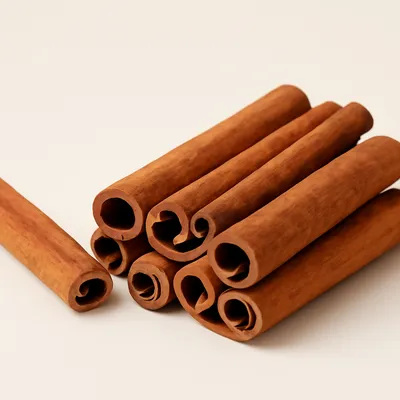

How it's made
6 steps · 30 min
- 120 min
Simmer apple cider in a saucepan until it reduces to a thick, syrupy fraction of its volume, then cool it completely.
Watch outReduce the cider until it's thick and syrupy, a small fraction of what you started with — that concentrates the apple flavor and the acid that lifts and tenderizes the crumb.
- 25 min
Whisk together flour, baking powder, baking soda, salt, cinnamon, and nutmeg in one bowl.
- 38 min
Beat sugar with butter and eggs, then mix in the cooled cider reduction and buttermilk until smooth.
- 460 min
Stir the wet into the dry just until a soft, sticky dough forms, then cover and chill it for at least an hour so it firms up.
Watch outChill the soft, sticky dough at least an hour before cutting — it firms just enough to hold a ring; warm dough smears and won't keep its shape in the oil.
- 510 min
Roll the chilled dough out, cut into rings, and let them sit a few minutes while the oil heats to about 180°C.
- 615 min
Fry the doughnuts a few at a time until deep golden on both sides, drain briefly, then toss while still warm in cinnamon sugar.
Archive tool suggestions — not reviewed
These legacy suggestions have not been evidence-reviewed and are not presented as required tools.