A coiled sweet pastry from Mallorca, built from a thin, lard-laminated yeasted dough wound into a flat spiral and dusted with icing sugar. A soft enriched dough of flour, water, sugar, egg, and sourdough is rested, stretched paper-thin, smeared with saïm (pork lard), then rolled into a rope and coiled. It proves slowly overnight before baking to a light, airy, faintly stringy crumb. It carries the PGI Ensaïmada de Mallorca, sold plain or filled.

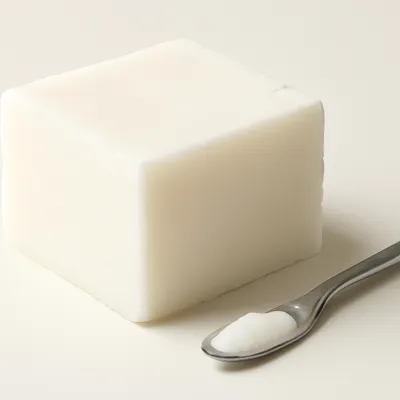


The name comes from saïm, the Mallorcan Catalan word for pork lard, the fat that laminates the dough. The pastry is documented on the island from the 17th century. It is said to descend from a Jewish-era enriched bread later adapted by converts who swapped olive oil for lard, though this origin is debated and not firmly documented. Ensaïmada de Mallorca was registered as a Protected Geographical Indication in 2003, which fixes its shape, ingredients, and the use of saïm rather than butter.
The crust shatters lightly under icing sugar, giving way to a crumb that is soft, airy, and gently elastic, pulling into thin strands rather than crumbling like a croissant. It is only mildly sweet; the flavour is mostly warm dough and the round, savoury note of lard. A fresh one is feather-light and a little chewy at the centre. Eaten torn by hand, often dunked in hot chocolate or coffee for breakfast.
Ensaïmada is laminated, but unlike a croissant the fat is smeared on, not folded in as cold sheets. The dough is stretched almost translucent, painted with soft lard, and rolled so each turn of the rope traps a film of fat between layers of dough. During the long, cool overnight prove the yeast inflates the coil and the fat keeps the sheets from fusing; in the oven steam and gas push them apart into the airy, slightly stringy crumb. Lard's plastic, low-melt texture spreads more easily than butter and is what gives the pastry its particular soft pull.
Variations
The plain ensaïmada llisa is the everyday breakfast size; the large festive ensaïmada de cabell d'àngel is filled with candied pumpkin strands (angel's hair). Other fillings include sobrassada with pumpkin, chocolate, or cream, and a torn-dough version called ensaïmada de tallades. Big coils are baked for sharing and are the classic edible souvenir carried home in a balsa-wood hatbox from the island.
On the Palate
Where Ensaïmada sits in the Spanish flavor cloud
Ingredients
Serves 8
How it's made
6 steps · 1 hour
- 125 min
Knead flour, water, sugar, egg, and sourdough starter into a soft, smooth enriched dough and rest until relaxed.
- 210 min
On an oiled surface, stretch and pull the dough out into a large, almost translucent sheet.
Watch outStretch until you can almost see your hand through the sheet — that translucent thinness is what layers up in the coil.
- 38 min
Smear the whole sheet evenly with soft saïm (pork lard).
- 412 min
Roll the sheet into a long thin rope, then wind it into a flat spiral on a tray, leaving room to expand.
- 5720 min
Prove slowly overnight in a cool place until the coil is puffed and light.
Watch outThe overnight coil is ready when it's visibly puffed, light and springs back slowly when pressed.
- 625 min
Bake at 180°C until pale gold, then dust generously with icing sugar to serve.
Watch outBake only to pale gold, not deep brown, so it stays soft, then dust thickly with icing sugar while still warm.
Archive tool suggestions — not reviewed
These legacy suggestions have not been evidence-reviewed and are not presented as required tools.