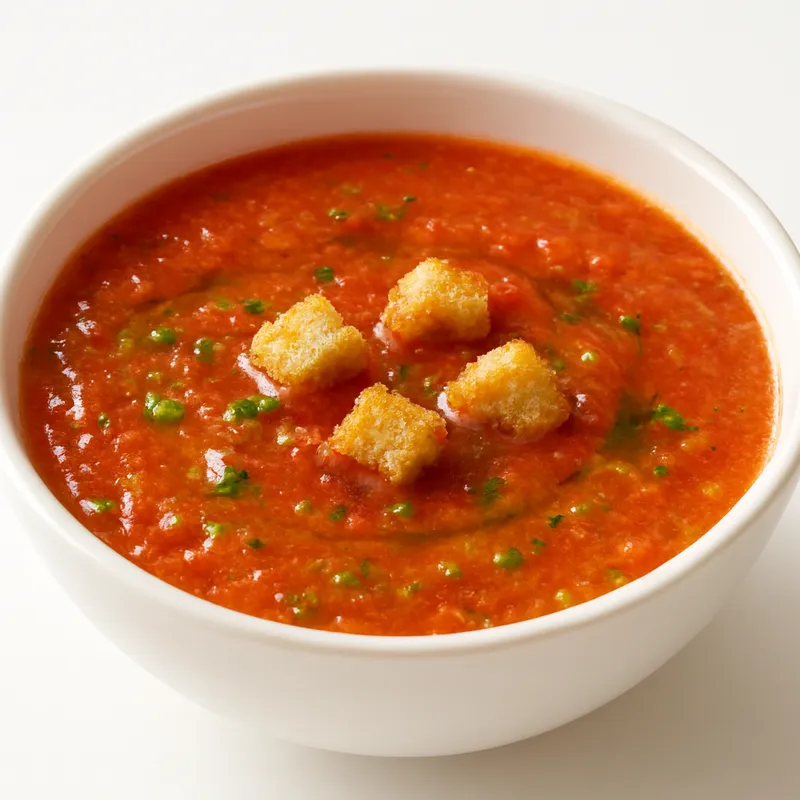
Caldereta de Cordero Extremeña
Caldereta — from caldera, cauldron — was the dish sheepherders cooked over an open fire on the dehesa, the oak-pasture grazing land of Extremadura and western Andalusia. The pounded liver-and-bread thickener is older than the New World pimentón that now defines it; pimentón joined the recipe sometime in the 17th century after La Vera began processing capsicums at scale. The dish is most associated with the Sierra de Gata and Las Hurdes shepherding villages.
Sierra de Gata shepherd's lamb stew named for the cauldron. The majado — pounded liver, fried bread, garlic, cumin — goes in only in the final 10 minutes off the boil; longer and the lecithin denatures, the starch over-gelatinizes, and the sauce thins out.
Spoon-tender lamb in a sauce the colour of brick, with the deep iron note of liver hidden in the background. The first taste reads as smoke and pepper from pimentón; the second reveals the cumin and vinegar in the majado. Bread comes with the dish, not under it — you tear pieces and sweep the bowl. If the sauce is thin, the majado was added too early and broke down; it should arrive in the last ten minutes only.
The majado does two jobs: liver lecithin emulsifies the rendered fat into the broth, and the fried bread starches thicken it — together they bind sauce that would otherwise separate into oil and stock. Add the paste too early and 90 minutes of simmer destroys both effects (lecithin denatures, starch over-gelatinizes and thins out). Stir it in only in the final 10 minutes, off the boil.
Variations
Sierra de Gata original uses milk-fed lamb; Las Hurdes version sticks to older mutton (stronger flavor); Andalusian caldereta from Huelva adds tomato and bell pepper; La Mancha cooks finish with grated chocolate.
On the Palate
Where Caldereta de Cordero Extremeña sits in the Spanish flavor cloud
Stir the pounded majado in only in the last ten minutes off the boil — added early, ninety minutes of simmer denatures the liver lecithin and over-gelatinizes the bread starch, and the sauce thins and splits instead of binding glossy.
Ingredients
Serves 4










How it's made
5 steps · 40 min active + 1 hour 50 min waiting
- 125 min
Cube 1.2kg bone-in lamb shoulder into 4cm pieces. Season with 1 tbsp salt and rest 20 minutes. Pat dry. In a heavy cast-iron pot, heat 80ml olive oil and brown the lamb in two batches over high heat — 8 minutes total. Set aside.
Watch outBrown the lamb hard in batches without crowding — a deep crust is where the sauce gets its body.
- 25 min
Drop the heat to medium. In the same fat, fry 8 garlic cloves (peeled, halved) and 100g lamb liver cut into 2cm pieces. Cook 4 minutes until liver is just firm and garlic golden. Lift out garlic and liver to a mortar; leave the fat behind.
- 34 min
Tear 1 thick slice country bread (~40g) and fry in the same fat until golden — 2 minutes. Add to the mortar with 1 tsp cumin seeds and 1 tsp salt. Pound to a coarse paste with a splash of red wine vinegar — this is the majado, the thickener.
Watch outPound the fried bread, liver, garlic, and cumin to a coarse damp paste — texture, not smooth purée.
- 410 min
Return lamb to the pot. Add 1 large diced onion, 1 chopped green pepper, 3 bay leaves. Cook 6 minutes until onion softens. Pull off heat, stir in 1 tbsp pimentón de la Vera and 1 tsp hot pimentón. Pour in 200ml dry white wine and 600ml lamb stock or water. Bring to a simmer.
Watch outPimentón goes in off-heat — same rule as migas.
- 5100 min
Cover and simmer very low for 90 minutes — bone should slip from the meat. In the last 10 minutes stir in the majado paste. The sauce thickens to a glossy reddish-brown. Rest 10 minutes off-heat. Serve with bread; no other side needed.
Watch outAfter the majado goes in, the sauce should turn glossy reddish-brown and coat the meat within a few minutes.
Archive tool suggestions — not reviewed
These legacy suggestions have not been evidence-reviewed and are not presented as required tools.
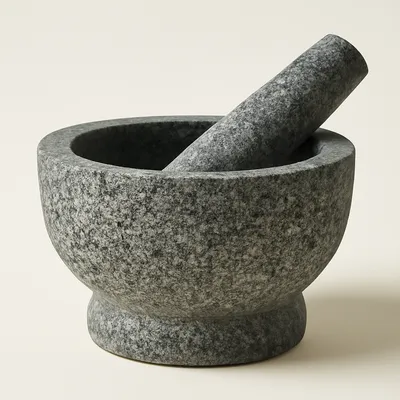
The simplest tool in any kitchen: a heavy bowl and a club to bash things in it. Different cuisines use different stones — Thai cooks pound green papaya in a tall granite mortar (krok hin); pesto Genovese requires the soft-pored Carrara marble; Indian masalas grind down on rough basalt. The bash-don't-cut motion releases volatile oils that a blade keeps sealed in the cell wall.

A heavy, single-piece cast iron pan, 25-30 cm across, weighing 1.5-2.5 kg. Once preheated, the thick mass holds 230°C+ even when a cold steak hits the surface — that's the secret to a deep crust. A well-seasoned skillet (multiple thin layers of polymerized oil baked into the iron) is essentially nonstick, gets better with use, and lasts a century. Lodge skillets from Tennessee have been in continuous production since 1896.