
A homely Castilian stew of brown lentils simmered with chorizo, onion, carrot and pimentón until the broth thickens into a spoonable red gravy. The small lens-shaped pardina lentil is cooked from cold water with a soffritto of onion, garlic and tomato, a bay leaf and whole chorizo, the smoked paprika tinting everything brick-red. Eaten as a midday main course with bread, it is one of the staple plates of Spanish home cooking.
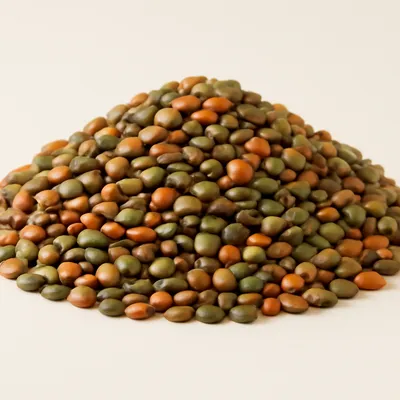




Lentil stews are eaten across Spain, and the brown pardina lentil at the heart of this one — small, lens-shaped, holding its skin in the pot — has been grown on the Castilian plateau since antiquity. The chorizo-and-vegetable version spread nationwide through the 19th and 20th centuries from its Castilian heartland. In Catholic Spain lentils were long a Friday and fast-day food, eaten without meat when the Church forbade it; the line in the 1605 opening of Don Quixote that the gentleman ate "lentils on Fridays" records exactly that calendar. The everyday version laden with chorizo belongs to the later era when cured sausage became an affordable household staple.
Lentils that keep their tiny round shape yet collapse softly under the spoon, suspended in a thick brick-red broth that clings to the back of the spoon. Coins of chorizo are paprika-orange and slightly chewy, leaching their spiced fat into the gravy; the carrot is sweet and soft. The dominant note is smoked pimentón over earthy lentil, rounded by the slow-sweated onion. Warm, filling and savoury rather than sharp, mopped up with crusty bread; it is firmly cuchara, Spanish spoon food.
Three things govern the pot. The lentils start in cold water, not hot: a cold start lets the seed coat hydrate slowly and the lentils cook through evenly, where dropping them into boiling liquid sets the skin and leaves the middle gritty. Salt goes in late, since salt added early firms the seed coat and drags out the cooking time. And it is held at a lazy simmer, never a hard boil that ruptures the skins and clouds the broth; instead the lentils gently release starch to thicken it naturally. The whole chorizo cooks submerged and is sliced afterward, so its pimentón-laden fat bleeds slowly into the gravy and colours it red rather than scattering in fragments.
Variations
This is the Castilian read — chorizo, no morcilla — and it stands against Lentejas a la Aragonesa, which adds blood sausage and a heavier hand of pimentón; La Mancha cooks may finish the bowl with hard-boiled egg, and some households add a ham bone or a sliver of jamón for depth. A vegetable-only version, lentejas viudas ("widowed lentils"), keeps the soffritto and paprika but drops the meat — the old fast-day form.
On the Palate
Where Lentejas Estofadas sits in the Spanish flavor cloud
Ingredients
Serves 4



How it's made
6 steps · 20 min active + 50 min waiting
- 15 min
Rinse the brown pardina lentils; no soaking is needed.
- 212 min
Gently sweat chopped onion, carrot and garlic in olive oil, then stir in grated tomato to make a soffritto.
- 32 min
Stir in the pimentón off the direct heat so it blooms without scorching.
Watch outStir the pimentón in off the direct heat so it blooms without scorching — dropped into a sizzling pan the paprika burns and turns the whole pot bitter.
- 45 min
Add the rinsed lentils, a bay leaf and whole chorizo, cover with cold water and bring up slowly.
- 545 min
Simmer gently, never at a hard boil, until the lentils are tender and the broth has thickened.
Watch outKeep it at a lazy simmer, never a hard boil — a rolling boil ruptures the skins and clouds the broth; a gentle simmer lets the lentils release starch and thicken it clear.
- 66 min
Season with salt near the end, slice the chorizo back in and rest briefly before serving with bread.
Archive tool suggestions — not reviewed
These legacy suggestions have not been evidence-reviewed and are not presented as required tools.


