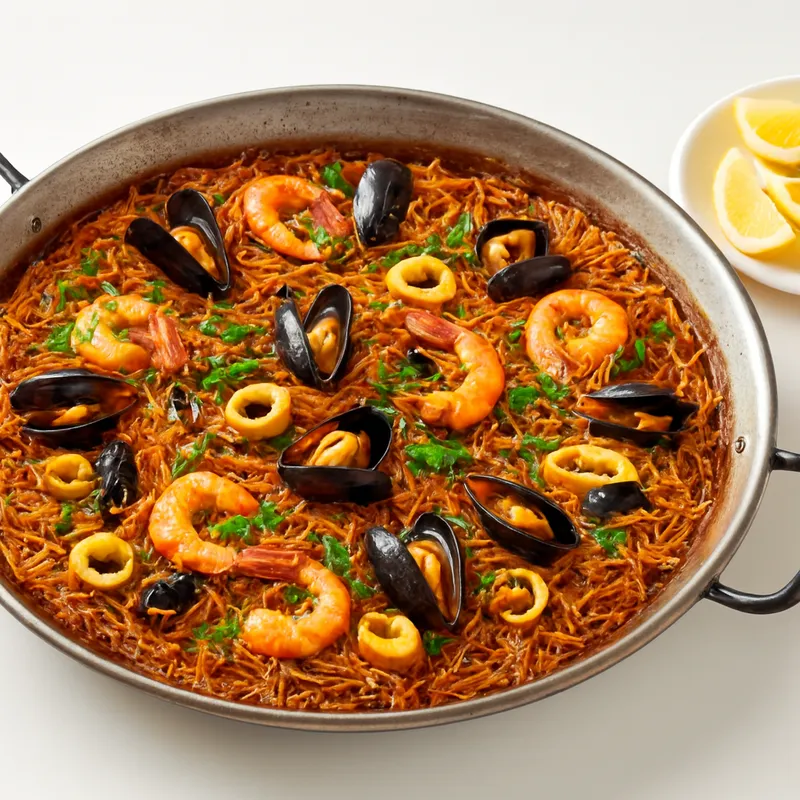
A one-pot spoon stew from the La Litera district of Huesca, in lowland Aragón, built on a trio of dried white beans, potato, and rice. The beans are simmered soft, then potato and rice are added to the same pot and a garlic-and-pimentón sofrito is stirred through, with a bay leaf perfuming the broth. It is traditionally a 'guiso viudo' — a meatless 'widowed' stew — though many cooks add bacon, pork rib, or chorizo. The finished pot is thick, starchy, and deeply savoury, eaten by the ladle as a winter main.





The dish belongs to Binéfar and the surrounding La Litera district of Huesca, in lowland eastern Aragón. Its name comes from 'recado', the everyday term for the simple daily errand to market for basic provisions. It was carried beyond the village by the chef Teodoro Bardají Mas, born in Binéfar in 1882 and for over twenty years head cook to the Dukes of Infantado: in 1922 he published the recipe in the culinary magazine El Gorro Blanco, dedicating it to his home town. The base trio of beans, potato, and rice is fixed; everything else is a household variable.
A thick, ivory-grey bowlful where the potato has half-collapsed and the rice has swollen and bound the liquid into something between a stew and a porridge. The white beans stay whole and break creamily in the mouth; the broth is starch-rounded and quietly smoky from the pimentón, with a bay-leaf backnote and a faint sweet warmth from the sofrito garlic. Where pork is added it reads as salt and richness rather than as chunks of meat. Served piping hot — it stiffens as it cools.
The recao thickens itself: the white beans and the potato leach starch into the water, while the rice — added late and cooked right in the pot — releases amylopectin that binds the whole into a spoon-coating body, so no flour or roux is needed. The pimentón (smoked paprika) is bloomed in warm oil with the garlic to make the sofrito, dissolving its fat-soluble pigment and aroma into the fat before it joins the pot; added straight to boiling water it would taste raw and stay gritty. The pot is barely simmered, not boiled hard, so the beans hold their skins.
Variations
The meatless 'viudo' version is the older, leaner one; richer households add pork rib, bacon (tocino), or chorizo, and some work in extra vegetables for a heartier vegetarian pot. It sits close to other Aragonese spoon stews — Lentejas a la Aragonesa swaps the bean for lentils, and the wider Spanish family of bean-potato-rice potajes uses the same logic across regions. Bardají's 1922 published recipe remains the reference text against which Binéfar cooks measure their own.
On the Palate
Where Recao de Binéfar sits in the Spanish flavor cloud
Ingredients
Serves 4

How it's made
6 steps · 20 min
- 15 min
Soak the dried white beans in plenty of cold water overnight, then drain.
- 270 min
Put the beans in a pot with fresh cold water and a bay leaf, bring to a gentle simmer and cook until almost tender, skimming the foam.
- 320 min
Peel and chop the potatoes into rough chunks and add them to the pot to cook with the beans.
- 46 min
In a small pan, gently fry the chopped garlic in olive oil, take it off the heat and stir in the pimentón to make the sofrito, then stir it through the pot.
Watch outFry the garlic in oil, then take the pan off the heat before stirring in the pimentón — added to boiling water it tastes raw and stays gritty; blooming it in warm fat is what releases its color and aroma.
- 520 min
Add the rice, season with salt, and simmer until the rice is cooked and the broth has thickened, topping up with hot water if it gets too tight.
Watch outAdd the rice late and simmer until it's cooked and the broth has thickened to a spoon-coating body — the rice's starch is what thickens the pot, so no flour is needed; top up with hot water if it tightens too much.
- 65 min
Rest a few minutes off the heat and serve piping hot in deep bowls.
Archive tool suggestions — not reviewed
These legacy suggestions have not been evidence-reviewed and are not presented as required tools.