



The recognizable tomato version dates only to the 19th century, after tomatoes and peppers (both New World imports) became cheap in Andalusia. The older form was a peasant white gazpacho — bread, water, vinegar, oil, garlic — eaten by Roman-era and medieval field workers in southern Spain as a hot-day calorie drink. Tomato gazpacho is essentially an Andalusian update once the ingredients arrived.
Andalusian field-worker drink-soup, pre-tomato versions go back to Roman times (bread, oil, vinegar, garlic, water). Tomato joined after the Columbian Exchange. Served ice-cold; the bread is the thickener, not a garnish.
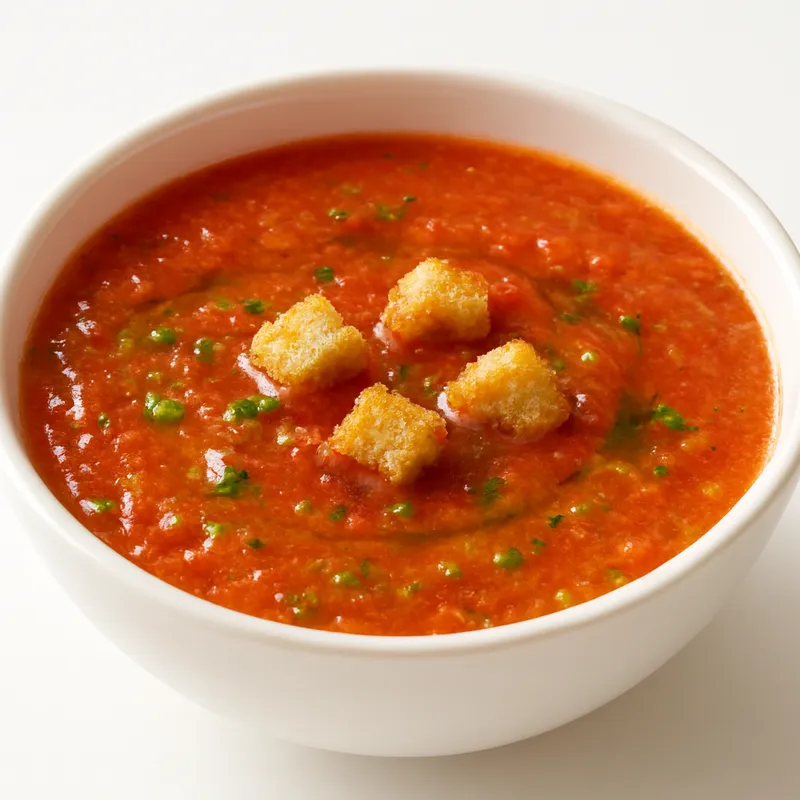
A cold, raw soup poured from a jug — tomato red, slightly orange where olive oil emulsifies in. Drinks more than it eats. Cucumber and green pepper sit in the back; sherry vinegar gives a sharp finish. Diced raw vegetables and croutons go on top at the table. Served fridge-cold, not room-temperature; if it's not properly chilled, the oil reads greasy instead of silky.
The bread isn't garnish — it's blended into the soup as the emulsifier. Stale bread crumb traps olive oil into a stable suspension with the tomato water, which is what makes proper gazpacho silky rather than watery on top with oil floating. Modern blender versions often skip the bread to seem light; they separate within minutes. Sherry vinegar over red wine vinegar matters: it's lower-acid and rounder.
Variations
Salmorejo (Córdoba) is thicker, with hard-boiled egg and ham on top; ajo blanco is the white version with almonds and grapes (no tomato); Extremadura version blends in green pepper heavier; modern haute-cuisine versions strain through cheesecloth for a clear consommé.
On the Palate
Where Gazpacho sits in the Spanish flavor cloud
Blend the stale bread right into the soup — it emulsifies the olive oil into the tomato water so the gazpacho turns silky and stays that way, instead of splitting into a watery layer with oil floating on top.
Ingredients


How it's made
4 steps · 12 min active + 1 hour waiting
- 15 min
Roughly chop the tomatoes, cucumber, onion, and garlic. Combine them with chunks of bread in a large bowl. Add a generous drizzle of olive oil and a splash of vinegar.
Watch outThis soup is only as good as its tomatoes — use the ripest you can find. Go easy on the raw garlic and onion, or they turn harsh and take over.
- 25 min
Blend the mixture until smooth, adding water gradually to reach your desired consistency. The soup should be velvety, with no chunks remaining.
Watch outBlend until completely smooth and velvety with no chunks, adding water slowly until it pours like thin cream.
- 32 min
Taste and adjust the seasoning with salt and additional vinegar if needed. The flavor should be bright and tangy, with a hint of garlic.
Watch outTaste for a bright tangy balance with just a hint of raw garlic; too much garlic turns it harsh.
- 40 min
Chill the gazpacho in the refrigerator for at least an hour before serving. It should be served cold, refreshing on a hot day.
Watch outIt should come out of the fridge genuinely cold and refreshing; a warm gazpacho tastes muddy.
Archive tool suggestions — not reviewed
These legacy suggestions have not been evidence-reviewed and are not presented as required tools.