
A roast beef sandwich from Buffalo and Western New York, built on a kummelweck roll — a kaiser-style roll crusted on top with caraway seeds and coarse salt. Rare roast beef is carved thin and piled high; the cut top of the roll is dipped in the beef's own au jus, and the sandwich is served with grated horseradish on the side or spread within. It is plain and savory rather than dressed, leaning on three things: the salty caraway crust, the rare beef and its jus, and the sinus-clearing horseradish. In Buffalo it sits alongside Buffalo wings as a signature local food.


Beef on weck is a Buffalo institution, but no single inventor or first date is settled. The roll's name is German: Kümmel means caraway and Weck means 'roll' in the south-western German dialects of the Palatinate, Baden, and Swabia, and the kummelweck arrived with the heavy 19th-century German immigration to Buffalo. By the broadly accepted lore the roll was brought or shaped in Buffalo by a German baker, often named as William Wahr of the Black Forest, though the claim is not firmly documented; the sandwich itself is variously attributed to early Buffalo establishments around the 1901 Pan-American Exposition, and Schwabl's, a long-running Buffalo restaurant, holds that its ancestor Sebastian Schwabl (who immigrated in 1837) created it. The sandwich predates the 1960s invention of Buffalo wings by roughly a century.
The hook is the contrast between a salty, crackling crust and clean rare beef. The top of the kummelweck shatters with coarse salt and the bitter-fennel note of caraway; under it the beef is thin-sliced, deep pink, and tender, slicked with savory jus that softens the underside of the roll. Horseradish brings a sharp, volatile burn that climbs straight into the nose and then fades. There is no cheese, no lettuce, no sauce beyond jus and horseradish — it is a deliberately spare sandwich whose whole effect is salt, beef, juice, and heat in balance. The au jus on the side is for dipping the whole thing as you eat.
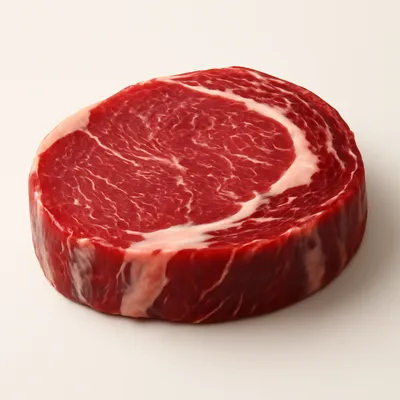
Three techniques carry the dish. The beef is dry-roasted to rare, ideally pulled at about 50–52°C internal so the slices stay deep pink and juicy, then carved thin across the grain to keep each slice tender; the pan drippings are extended into au jus. The kummelweck's crust is engineered: the salt-and-caraway topping is applied to the roll, often with a cornstarch or egg-white glaze and a burst of oven steam, so the crust crisps and the seeds and coarse salt stay anchored. The horseradish heat is a chemical reaction — grating ruptures the root's cells and lets the enzyme myrosinase convert glucosinolates into allyl isothiocyanate, the volatile compound that pierces the sinuses; because it is volatile it both peaks and dissipates quickly. Dipping the cut roll-top in jus softens it just enough to bind the stack without going soggy.
Variations
The orthodox build is rare roast beef on a kummelweck with horseradish and au jus, and Schwabl's hand-carving at the counter is the often-cited benchmark. Common variants swap the kummelweck for a plain kaiser roll when caraway rolls are unavailable, vary the doneness of the beef from rare toward medium, and adjust the horseradish from a mild creamed style to raw, eye-watering grated root. Outside Western New York the sandwich is sometimes compared to the French dip, which shares the thin beef and au jus dip but lacks the signature salt-and-caraway crust; some cooks add a thin smear of horseradish cream or serve the jus only for dipping rather than soaking.
On the Palate
Where Beef on Weck sits in the American flavor cloud
Ingredients
Serves 4

How it's made
6 steps · 30 min
- 1120 min
Season a beef top round roast with salt and pepper and dry-roast it until rare, about 50 to 52 degrees Celsius internal, then rest it.
Watch outPull the roast at 50–52 degrees internal for rare, then rest it — cooked further, the thin-carved slices lose the deep pink juiciness the sandwich depends on.
- 220 min
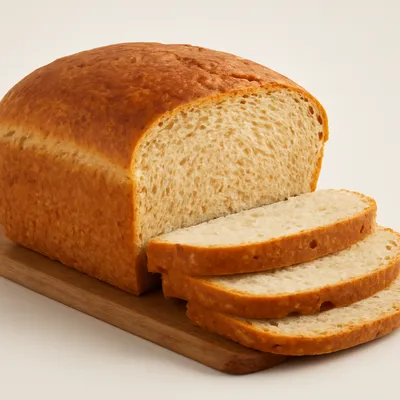
Make the kummelweck rolls: brush kaiser rolls with a cornstarch glaze and top with caraway seeds and coarse salt, then bake briefly so the crust crisps.
- 310 min
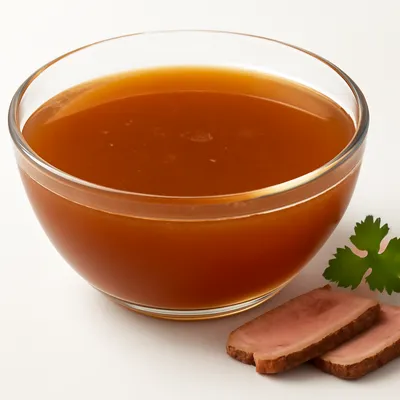
Skim the roasting drippings and stretch them with beef broth into a thin au jus, kept hot.
- 45 min
Carve the rested beef into thin slices across the grain.
Watch outCarve thin across the grain — cutting against the fibers is what keeps each rare slice tender enough to bite through easily.
- 55 min
Dip the cut top of each roll in the au jus, then pile the sliced beef onto the bottom.
Watch outDip only the cut top of each roll in the au jus — soak the whole roll and the crisp, salted crust goes soggy.
- 65 min
Spread or serve grated horseradish, cap the sandwich, and serve with a cup of au jus for dipping.
Archive tool suggestions — not reviewed
These legacy suggestions have not been evidence-reviewed and are not presented as required tools.


