
Tarte au Maroilles is a savory tart of the Nord built on Maroilles, the pungent washed-rind cheese of the Thiérache. A bread or short dough is lined into a tin, filled with a custard of eggs and crème fraîche, and topped with thick slices of Maroilles that melt to a golden, strong-smelling crown in the oven. It is the great regional comfort dish, sometimes called goyère or flamiche au Maroilles, and is eaten warm in slabs with a salad and a glass of beer. Strong on the nose, the baked cheese is far milder and rounder on the tongue.
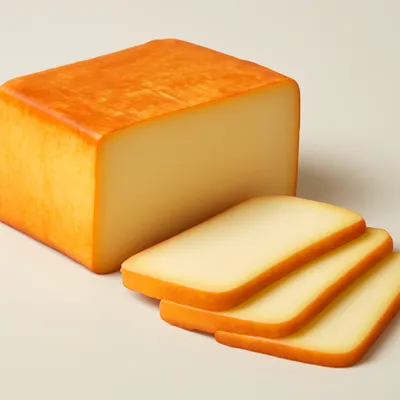




Maroilles is one of France's oldest cheeses, a washed-rind cow's-milk cheese with an AOP, made since the early Middle Ages by the monks of the Abbey of Maroilles in the Thiérache, on the border of the Nord and the Aisne. The tart built on it is the everyday dish of the surrounding countryside, the so-called ch'ti table, and is closely related to the older goyère and flamiche of the Flemish and Hainaut plains. It belongs to the same northern tradition as the savory cheese tarts of Belgium just over the border, but is defined by the specific strength of Maroilles.
The smell hits first — barnyard, ammoniac, unmistakable — but the first bite is a surprise: the baked Maroilles is creamy and savoury, salty and faintly sweet, far gentler than its rind warns. It sits in a soft set custard over a crust that is bready and yielding rather than crisp. Warm, the cheese pulls in soft threads; the crème fraîche underneath rounds out the sharpness. A green salad with a sharp vinaigrette cuts the richness, and the regional way is to wash it down with a blond beer.
Maroilles is a washed-rind cheese: through ripening its rind is brushed with brine, which favours the orange Brevibacterium that produces the strong aroma and the soft, supple paste. That high-moisture paste melts smoothly in the oven, and gentle heat is key — too hot and the fat splits and the cheese turns oily and bitter. The crème-fraîche custard sets around the melting cheese to hold it, while a bread dough enriched with butter gives a soft base that soaks up the savoury juices without going soggy. Baking browns the cheese surface through the Maillard reaction, deepening the flavour while the heat tames the raw pungency.
Variations
Where bakers use a bread dough it leans toward goyère; with a short or puff pastry and a thicker custard it is closer to flamiche. Some recipes blend in a milder cheese or a little beer or crème to soften the Maroilles; the cheese may be left whole-slabbed on top or stirred through the custard. A smaller, younger Maroilles called Gris de Lille — locally nicknamed puant, the stinker — gives an even stronger version. The savoury cheese tart is a northern type shared with the goyère and flamiche of Belgian Hainaut, distinguished here by Maroilles.
On the Palate
Where Tarte au Maroilles sits in the French flavor cloud
Ingredients
Serves 6

How it's made
7 steps · 35 min active + 1 hour 55 min waiting
- 190 min
Make a soft enriched bread dough or a short pastry, knead briefly and let it rest and rise.
- 210 min
Roll out the dough and line a tart tin, pressing it up the sides.
- 35 min
Whisk eggs with crème fraîche, salt and pepper to a smooth custard.
- 45 min
Cut the Maroilles into thick slices, leaving the rind on.
- 55 min
Pour the custard into the lined tin and lay the cheese slices over the top.
- 628 min
Bake at about 200 degrees Celsius for 25 to 30 minutes until set, melted and golden-brown.
Watch outBake at a moderate 200 until just set and golden — gentle heat melts this washed-rind cheese smooth; too hot and the fat splits, turning it oily and bitter.
- 77 min
Rest the tart a few minutes, then cut into wedges and serve warm with a sharp green salad.
Archive tool suggestions — not reviewed
These legacy suggestions have not been evidence-reviewed and are not presented as required tools.


