Salsa de jumiles is a molcajete salsa of Taxco, in Guerrero's silver-mining sierra, made from jumiles — small wild stink bugs gathered live from the oak forests — ground with roasted tomato, chile, and garlic. The insects are used alive or freshly toasted, and they carry an intense aroma often described as cinnamon-and-anise with an iodine, herbal edge, a flavor strong enough that a handful seasons a whole bowl of salsa. It is a seasonal delicacy tied to the cool months around Day of the Dead, when the bugs are in season and Taxco holds its jumil festival on the hillside. Spooned over tacos, eggs, or beans, it is one of Mexico's most striking living-insect condiments.





Jumiles (edible stink bugs of the family Pentatomidae) have been eaten in the Taxco region since pre-Hispanic times, gathered from the oak forests of the surrounding sierra as a seasonal wild food. Their harvest peaks in the cool months around late autumn, and Taxco marks it with an annual Fiesta del Jumil held on the Cerro del Huizteco on the Monday after Day of the Dead — a documented local festival celebrating the insect as both food and tradition. The salsa is a folk preparation of the region rather than a dish with a recorded inventor: the bugs are simply ground with the everyday molcajete trio of tomato, chile, and garlic. Their strong cinnamon-anise aroma is the documented draw, and they have long been valued as a concentrated seasonal seasoning rather than an everyday staple — eaten where and when they are gathered, in and around Taxco.
A rough, dark molcajete salsa flecked with the ground bugs, served in the stone it was made in. The aroma hits before the taste — a sharp, distinctive cinnamon-and-anise perfume with a green, iodine, almost medicinal edge that is unlike anything else on a Mexican table. On the tongue it is intense and a little bitter, the bugs' spice riding over the roasted tomato-and-chile base; a small spoonful is plenty. Live jumiles are sometimes scooped straight into a warm tortilla and rolled while still moving, but ground into salsa they spread their flavor across the whole bowl. Best mopped with a tortilla, over eggs, or on a simple bean taco.
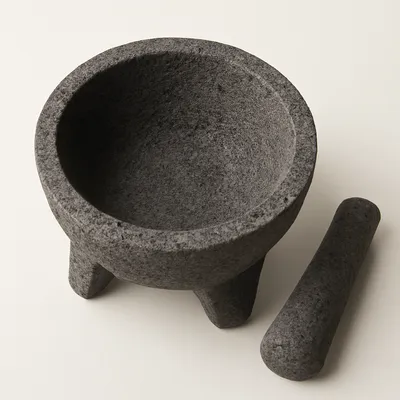
The molcajete — a basalt mortar — does the work: grinding the toasted tomato, chile, and garlic against the rough volcanic stone tears cell walls and releases juice the way a blade never quite does, building a coarse salsa with real body. The jumiles are added live or lightly toasted and crushed in, and their punch comes from defensive compounds in the insect: stink bugs concentrate aromatic aldehydes (the same chemical family behind cinnamon and anise notes) in their scent glands, which is exactly the flavor they lend the salsa — a built-in spice the cook doesn't have to add. They are used in tiny quantity because that aroma is so concentrated; a small handful flavors a whole molcajete. Toasting the tomato and chile first deepens the base with Maillard sweetness so it can carry the bugs' assertive, slightly bitter intensity.
Variations
Jumiles are eaten beyond the salsa: scooped live and alive into a taco, toasted and ground into a powder, or stirred into guacamole, and the species and exact aroma shift a little with the harvest. The salsa itself flexes with the molcajete base — a redder roasted-tomato build or a greener tomatillo one, more or less chile to taste. The constant is the bug and its cinnamon-anise signature. It sits beside Mexico's other wild-insect foods — Oaxacan chapulines, the chinicuiles and escamoles of the maguey — as a regional, seasonal, foraged delicacy rather than an everyday condiment, and it is most itself in Taxco during the festival weeks.
On the Palate
Where Salsa de Jumiles sits in the Mexican flavor cloud
Ingredients
Serves 6How it's made
8 steps · 20 min
- 13 min
Gather or obtain jumiles in season; if using them lightly cooked, toast them briefly on a dry comal until just fragrant.
- 26 min
Roast the tomatoes, chiles, and garlic on a hot comal until blistered and softened.
Watch outPull the tomatoes, chiles, and garlic when the skins are blistered and blackened in patches and they smell toasty — that char is the smoky backbone of the salsa.
- 31 min
Heat the molcajete or have a clean basalt mortar ready.
- 43 min
Grind the roasted garlic and chiles with a little salt into a rough paste.
- 52 min
Add the roasted tomato and grind to a coarse, juicy salsa with body.
Watch outGrind until it's a coarse, juicy mash with visible flecks — a rough texture with real body, not a smooth puree.
- 62 min
Add the jumiles — live or toasted — and crush them in just enough to spread their aroma through the salsa.
- 71 min
Taste and adjust salt and chile; the bugs bring their own intense cinnamon-anise note, so add them sparingly.
Watch outAdd the jumiles a few at a time and taste as you go — their cinnamon-anise punch builds fast and too many will overwhelm the salsa.
- 82 min
Serve in the molcajete with warm corn tortillas, over eggs, or on bean tacos.
Archive tool suggestions — not reviewed
These legacy suggestions have not been evidence-reviewed and are not presented as required tools.