
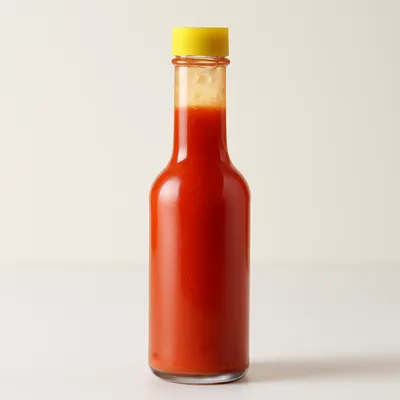
A sweet-hot condiment built on the datil, a fiercely hot but fruity pepper grown almost only around St. Augustine, Florida. Simmered with vinegar, a little sugar, garlic, and onion and blended smooth, the sauce reads sweet-tart-hot — habanero-class heat with an apricot-bright perfume. It is the signature heat of St. Augustine's Minorcan community and the spark in their clam chowder.




The datil (Capsicum chinense, the same species as the habanero) registers a searing 100,000 to 300,000 Scoville units, yet is sweeter and fruitier than its cousins. It is overwhelmingly concentrated in St. Augustine and St. Johns County, localized there by some two centuries of selective growing — a UF horticulturist has called the county the only place on earth the datil comes from. The pepper is bound to the Minorcans, descendants of the Mediterranean colonists Andrew Turnbull brought to New Smyrna in 1768 and who fled north to St. Augustine in 1777. But how the pepper itself reached Florida is genuinely contested: the romantic tale that the Minorcans carried the seeds is almost certainly legend, since this New-World species was not grown in Menorca; the best paper trail is a single 1937 newspaper account crediting a St. Augustine preserve-maker, S.B. Valls, with importing seed from Santiago, Cuba around 1880. The Minorcan people and their cuisine are well documented; the seed's arrival with them is folklore.
Up front a bright, fruity sweetness, almost apricot or melon — then a clean, fast, fierce heat that floods the back of the mouth and lingers. In a vinegar sauce it reads sweet, tart, and hot at once, less the burning-rubber blast of a straight habanero and more perfumed. A few drops electrify a bowl of tomato-based Minorcan clam chowder; a spoonful wakes up rice, eggs, or grilled fish.
The heat is capsaicin and its relatives, concentrated in the pepper's inner placental tissue, but what sets Capsicum chinense apart is a cluster of fruity, floral volatile esters carried alongside that heat — the source of the datil's sweet-and-hot duality. A vinegar sauce is the quick route: acetic acid drops the pH below about 4.6, which both preserves the sauce and gives it a sharp tang, and a little sugar is added to amplify the pepper's own sweetness. A fermented version takes the slower road, packing the peppers in salt so lactic-acid bacteria sour them over weeks into a rounder, funkier heat before any vinegar goes in.
Variations
Datil sauces split along the same line as most hot sauces: a quick vinegar simmer versus a weeks-long ferment. Many cooks push the fruity side further with tomato, mango, or peach. The pepper also goes well beyond sauce into Minorcan relish, datil mustard, and pepper jelly, and above all into Minorcan clam chowder, the tomato-based chowder the datil defines. St. Augustine makers such as Dat'l Do-It and Datil B Good have carried the pepper to a wider market.
On the Palate
Where Datil Pepper Hot Sauce sits in the American flavor cloud
Ingredients
Serves 12How it's made
5 steps · 20 min active + 5 min waiting
- 15 min
Wearing gloves, stem the datil peppers, which run a fierce 100,000 to 300,000 Scoville units.
- 28 min
Simmer the peppers with vinegar, water, garlic, onion, sugar, and salt until soft, five to ten minutes.
Watch outSimmer the peppers just until soft, five to ten minutes — long enough to meld the vinegar and sugar, not so long you cook off the datil's bright fruity aroma.
- 33 min
Blend the mixture smooth, straining it if you prefer a finer sauce.
- 42 min
Taste and balance the sweet, tart, and hot, adjusting vinegar, sugar, or salt.
- 52 min
Bottle and refrigerate. For a fermented version instead, pack the peppers in a two to three percent salt brine, ferment one to four weeks until sour, then blend with vinegar.
Watch outBalance the sweet, tart and hot by tasting — the datil's own sweetness needs the sugar and acid tuned to it, or the sauce reads flat or harsh.
Archive tool suggestions — not reviewed
These legacy suggestions have not been evidence-reviewed and are not presented as required tools.



