A darkly fragrant baked wheat cake from Tongzhou — yeasted dough spread with a sesame paste, brown sugar, and osmanthus filling, rolled into a cylinder, portioned, pressed flat, and fired in a cylindrical crock oven; sealed in wooden boxes after baking until the crust yields to a uniformly meltingly soft interior.



Brown-sugar sesame flatcake was born on the Grand Canal waterfront of Tongzhou. By family tradition and local account, a Hui Muslim named Liu Dashun migrated from Nanjing northward by grain barge during the Chongzhen reign of the Ming dynasty — most sources name the 13th year, around 1640 — settling in Tongzhou's southern canal district. He opened a two-room shop named Dashun Zhai after himself and initially sold oil-sugar flatcakes; the recipe gained its definitive form when he added sesame paste and brown sugar, staples favoured by northern consumers. By the Qianlong era of the Qing dynasty, Dashun Zhai sugar flatcakes had become renowned throughout Beijing and its surrounding region — a reputation sustained for over three hundred years.
Dense yet meltingly soft with a matte caramel exterior — each bite releases a warm interplay of toasted sesame, caramelised brown sugar, and a faint floral whisper of osmanthus, with a lingering yeasty depth from the fermented dough.
The textural contrast — matte-dry crust against pillowy crumb — emerges from a two-stage cooking process. First, the cakes are baked in a crock oven (缸炉) at high heat; rapid surface evaporation produces a dry exterior while the brown sugar in the filling undergoes Maillard browning, creating the characteristic caramel aroma and colour. Crucially, after baking the cakes are sealed in wooden boxes for at least two hours; residual steam redistributes through the crumb, slowing starch retrogradation and softening the crust from within. Brown sugar's reducing sugars and invert-sugar constituents also prevent the filling from crystallising, keeping the sesame paste filling smooth and pliable at room temperature.
Variations
Sesame-paste flatcake (麻酱火烧): sesame paste without red sugar, producing a plainer, savoury-leaning version with a paler colour. Osmanthus variant: increased dried osmanthus and rock sugar replace red sugar, giving a lighter colour and a pronounced floral note.
On the Palate
Where Brown Sugar Sesame Paste Flatcake sits in the Chinese flavor cloud
Ingredients
Serves 8
How it's made
7 steps · 1 hour 30 min
- 160 min
Combine flour with old starter (老面) and water; knead into smooth dough; cover and rest 45–60 minutes until doubled; knead in alkaline water until no sour smell remains.
Watch outKnead in the alkaline water until no sour smell remains — leftover sourness from the starter carries straight into the baked cake.
- 25 min
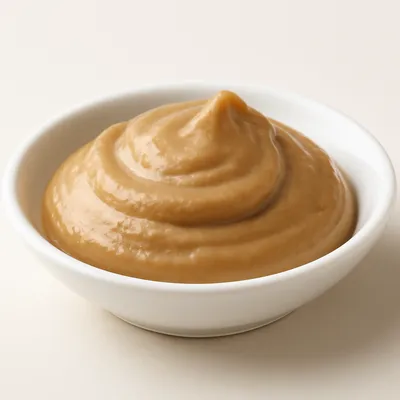
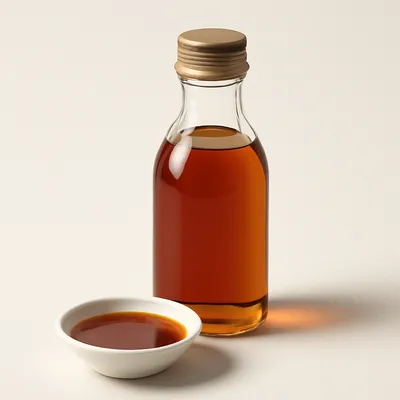
Meanwhile, mix red sugar with a small amount of roasted flour; add sesame paste, dried osmanthus, and sesame oil; stir to form a smooth, spreadable filling paste.
- 35 min
Roll the dough into a long rope and flatten into a thin sheet about 3 mm thick; spread the filling evenly across the surface, leaving a 1 cm border on all sides.
- 48 min
Roll the sheet tightly into a cylinder; pinch off 50 g portions; roll each into a ball, then press flat into a disc about 7 cm in diameter and 1.5 cm thick.
- 515 min
Arrange the discs on a baking tray; bake in a crock oven or oven preheated to 220°C for 12–15 minutes until the surface is lightly bronzed and dry to the touch.
Watch outBake just until the surface is lightly bronzed and dry to the touch — overbaking hardens the crust past the point that resting can soften.
- 6120 min
Remove from the oven; cool on a rack for 10 minutes, then transfer to a sealed wooden box or lidded container; leave undisturbed for at least 2 hours so steam redistributes and softens the crust.
Watch outSeal the cakes in a covered box at least 2 hours after baking — the trapped steam redistributes and softens the crust from within; skip it and they stay stiff.
- 71 min
Serve at room temperature; the fully rested cake should be uniformly soft and fragrant throughout.
Archive tool suggestions — not reviewed
These legacy suggestions have not been evidence-reviewed and are not presented as required tools.


