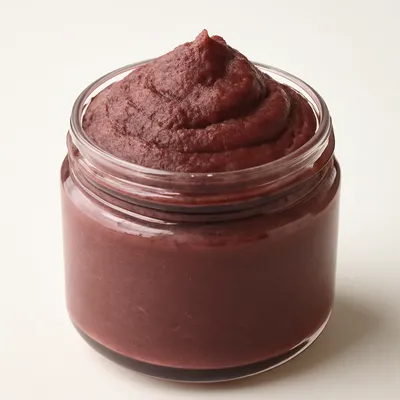
Mắm Ruốc is a thick, reddish-brown paste made by fermenting tiny shrimp with salt for weeks under the tropical sun. The mixture is stirred regularly in large earthenware jars, deepening its umami-rich complexity. Its aroma is intensely pungent, a mix of ocean breeze and earthy depth. To make it, start with equal parts shrimp and salt, and let nature take its course, stirring occasionally until the paste reaches a semi-solid consistency. In dishes like Bún Bò Huế, it brings a savory, umami punch that elevates the broth's richness. In Mì Quảng, it adds a unique depth that unites the herbs and meats. The test for Mắm Ruốc's readiness is when its aroma mellows, becoming a balanced, inviting scent that promises depth without overwhelming. The paste should coat the back of a spoon, smooth yet granular, a testament to its fermentation journey.
Where it comes from
In the 17th century, along the central coast of Vietnam, the abundance of shrimp and the need to preserve them in humid, tropical climates led to the creation of Mắm Ruốc. The coastal city of Huế, the imperial capital, became a culinary hub where this pungent paste took root. The local communities, reliant on the sea, developed techniques to ferment shrimp, transforming them into an ingredient that captured the ocean's essence. As Vietnamese people migrated, Mắm Ruốc traveled with them, becoming a staple in Central Vietnamese cuisine. It found its way into dishes like Bún Bò Huế and Mì Quảng, defining their complex flavors. While variations exist, such as Thailand's shrimp pastes or Malaysia's belacan, Mắm Ruốc remains distinct with its specific fermentation methods and taste profile, deeply tied to the culture and geography of Central Vietnam.
In the kitchen
Mắm Ruốc is the fermented shrimp paste infusing Central Vietnamese dishes with umami depth.
Across cuisines
Mắm Ruốc is a fermented shrimp paste used in Vietnamese cooking to provide umami and depth to dishes. Made by fermenting tiny shrimp with salt, it has a strong aroma and is often used in soups, stir-fries, and as a condiment. Its flavor profile is intense and savory, complementing various Vietnamese dishes.
Nutrition (per 100g)
AI-estimated; model and run unavailable.