Where it comes from
Anadama is a New England loaf, claimed most loudly by Rockport, Massachusetts. Folk etymology says a fisherman married to a lazy wife named Anna threw together cornmeal and molasses muttering Anna, damn her — the real origin is undocumented and the spellings (Anna Dammer, Annadamma) vary across 19th-century coastal cookbooks. What's certain is the ingredient logic: cornmeal (cheap and local from Indigenous foodways) and molasses (cheap because of Caribbean trade triangles into Boston harbor).
On the plate
A dark, almost mahogany loaf with a chewy, slightly slick crust from molasses sugars caramelizing at high heat. Cut, the crumb is even but tight — denser than a milk bread, looser than rye. Smell is hot molasses and toasted corn. Toasted with butter and a smear of jam it earns its place at breakfast; alongside a bowl of New England clam chowder it goes back to its dock-worker roots.
How it works
Cornmeal alone has no gluten, so the bread depends on bread flour for structure — the cooked cornmeal mush mostly contributes flavor, color, and water-holding capacity (which is why anadama stays moist 3-4 days). Molasses is hygroscopic and acidic, slowing yeast slightly but feeding the Maillard reaction at the crust. Salt added before yeast contact would also slow fermentation; mixing salt into the cooled mush before yeast is the safe order.
A Rockport, Massachusetts loaf with a folk-etymology origin story (a fisherman muttering Anna, damn her over a cornmeal-and-molasses dough). The actual story is undocumented; the ingredient logic isn't — cornmeal from Indigenous foodways, molasses from Caribbean sugar trade through Boston harbor.
Variations
Rockport classic with cornmeal mush + dark molasses; Maine coastal version with maple syrup replacing half the molasses; King Arthur Flour test-kitchen version with whole wheat for half the bread flour.
On the Palate
Ingredients
Serves 8







How it's made
6 steps · Show ↓35 min active · 205 min waiting
How it's made
6 steps · Show ↓- 18 min
Whisk 80g yellow cornmeal (stone-ground, e.g., Bob's Red Mill medium-grind) into 360ml boiling water in a heavy saucepan. Cook 5 minutes, stirring, until thick polenta-like. Off heat.
Watch outIf you skip cooking the cornmeal, gritty flecks will stay through baking — bite gets sandy.
- 230 min
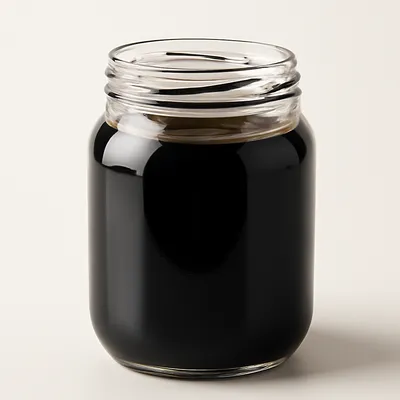
Stir in 80ml dark unsulphured molasses (Grandma's Original or Brer Rabbit Mild, NOT blackstrap — too bitter), 30g unsalted butter, and 1 1/2 tsp salt. Cool to lukewarm (110°F / 43°C maximum) — too hot will kill the yeast.
Watch outUse a thermometer if uncertain — over 115°F kills active dry yeast on contact.
- 38 min
Stir in 7g (one packet) active dry yeast and let sit 5 minutes — it should bubble. Add 480g bread flour in 3 stages, stirring with a wooden spoon, then turning out onto the counter.
- 4100 min
Knead 8-10 minutes until smooth, slightly tacky but not sticky. Add up to 60g more flour if needed. Place in an oiled bowl, cover, rise in a warm spot 90 minutes until doubled.
- 560 min
Punch down, shape into a log, and place in a greased 23 x 13cm loaf pan. Cover, second rise 45-60 minutes until the dough crowns 2cm above the rim.
Watch outPress a finger into the dough — if the dent springs back slowly and partially, it's ready. Fast spring back = under-proofed.
- 640 min
Preheat oven to 350°F (175°C). Bake 35-40 minutes — internal temperature 195°F (90°C), bottom sounds hollow when tapped. Cool in the pan 10 minutes, then on a rack at least 30 minutes before slicing.
What you'll need

Hand-held wire loop tool for beating eggs, whipping cream, emulsifying dressings, and incorporating air into batters. Balloon whisks (large round head) for whipping cream and meringues; French whisks (narrow tear-drop) for sauces in pots; flat whisks (gravy) for pan sauces. Stainless steel is universal; silicone-coated for non-stick pans.

Round metal pot, 14-26 cm diameter, with vertical walls and a long handle, designed for sauces, soups, oatmeal, rice, boiled vegetables. The vertical walls minimize evaporation (vs. a sauté pan). Sizes: 1 qt for melting butter, 2-3 qt for sauces, 4 qt for soups. Stainless-steel-clad aluminum or copper is best for conduction; cast-iron is too thick for delicate sauces.