
Pre-Columbian Zapotec drink of toasted corn masa, cacao, mamey-seed kernel, and dried flor de cacao flowers, hand-whisked in a wooden bowl until a thick white foam rises and skimmed cold from a painted gourd.


Tejate is one of the oldest still-served drinks on earth — the name comes from Nahuatl texātl ('floury water'), while in Zapotec lore the drink was a gift of the gods, and the same recipe of toasted corn, cacao, mamey pixtle, and flor de cacao is depicted on Mixtec codices from before 1521. Today the village of San Andrés Huayápam, in the Etla valley north of Oaxaca, is its capital — every July the Feria del Tejate y del Tamal draws crowds, and tejate vendors at every Oaxacan tianguis trace their lineage to a Huayápam grandmother. The painted gourds (jícaras) it's served in are themselves a craft tradition.
One of the oldest still-served drinks on earth — Zapotec, depicted on Mixtec codices before 1521. The foam is a cold-emulsion phenomenon, not whipped air: cacao butter (~50% of cacao mass) and mamey-pixtle oils re-emulsify with masa starch when cold water is hand-whisked in. Hand temperature matters because cacao butter melts at 35°C.
Cold and chalky-rich, with the gritty mouth-feel of suspended masa and an unmistakable cacao-and-floral perfume from the flor de cacao that no other drink has. The foam is the texture event — dense, almost meringue-like, slowly melting on the tongue back into liquid. Sweetness is added at the cup, not in the bowl, so each drinker controls it. The benchmark is a wooden bowl in San Andrés Huayápam, the village 12km from Oaxaca de Juárez whose tejateras hold the gold standard of the craft.
The foam is a cold-emulsion phenomenon, not whipped air: cacao butter (~50% of cacao mass) and the oils in mamey pixtle melt together in the grinding step, then re-emulsify with masa starch when cold water is whisked in by hand. Hand temperature matters because cacao butter melts around 35°C; if your hand is warm the fat liquefies and the foam collapses. This is why traditional tejateras work with one hand under cold running water and finish in shaded markets at dawn. The flor de cacao is a flavour ingredient and a foam stabiliser — the flower's saponins help hold the bubbles.
Variations
San Andrés Huayápam (12 km north of Oaxaca de Juárez) holds the gold standard and runs the July Feria del Tejate y del Tamal; Mercado Sánchez Pascuas vendors trace lineage back to Huayápam grandmothers; some downtown stalls use industrial cacao paste, which the Huayápam tejateras consider a faux pas.
On the Palate
Where Tejate sits in the Mexican flavor cloud
Ingredients
Serves 6How it's made
7 steps · 1 hour 30 min active + 1 hour 30 min waiting
- 135 min
Toast 200g whole white corn kernels on a clay comal over medium 8 minutes, stirring constantly, until lightly browned and fragrant. Cool, then nixtamalize: simmer with 4g cal (food-grade calcium hydroxide) in 800ml water 25 minutes, drain, rinse three times, soak overnight. (For a same-day shortcut: use 200g masa harina hydrated with 250ml warm water — colour will be paler.)
Watch outCal must be food grade — pickling lime, not garden lime; the alkaline step releases niacin and unlocks the corn's sweetness.
- 212 min
Toast 60g whole cacao beans on the same comal 6 minutes until you smell chocolate and the shells crack. Cool, peel off the papery shells, save the nibs. Toast 40g mamey pixtle (the kernel inside the seed of Pouteria sapota) 4 minutes until it smells of bitter almond.
- 312 min
Grind cacao nibs and pixtle together to a stiff paste — traditionally on a metate (volcanic-stone slab); a granite mortar or food processor works. The fat in cacao seizes the dry pixtle into a chocolate-brown sticky lump.
- 44 min
Crumble in 8g dried flor de cacao (Quararibea funebris, an aromatic Oaxacan flower) and continue grinding 4 more minutes — the flower releases a perfume that is the signature of true tejate, slightly fruity and floral.
- 512 min
Drain the soaked nixtamal and grind to a wet masa, mixing in the cacao-pixtle-flower paste as you go, until you have a thick chocolate-coloured dough. Add 50g sugar and a pinch of salt. Knead 5 minutes.
- 625 min
Place the dough in a wide wooden or earthenware bowl. With one hand under cold running water, beat the dough by hand in a circular motion for 15-25 minutes, slowly adding 1.5L cold water (a cup at a time). The mixture froths up, a thick layer of pale chocolate-and-white foam rises and floats on top — this is what tejate is known for. The foam should be stiff enough to skim with a hand.
Watch outThe temperature of your hand and the water must stay cool — warm water collapses the foam. Wash hands often in iced water.
- 74 min
Stir 200g extra sugar into 1L cold water and mix this sweetener separately on the side. To serve, ladle plain liquid tejate from the bottom of the bowl into a painted gourd or glass, scoop a generous cap of foam on top, then trickle sweet syrup down the side. Drink immediately — the foam settles within 10 minutes.
Archive tool suggestions — not reviewed
These legacy suggestions have not been evidence-reviewed and are not presented as required tools.
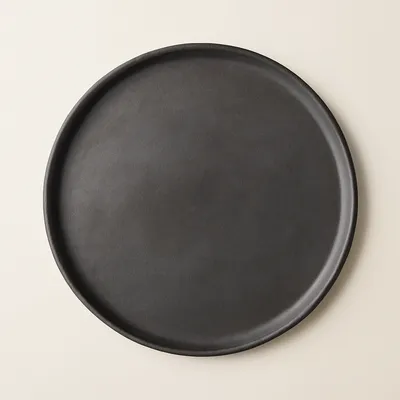
A flat round griddle of steel, cast iron, or unglazed clay, 30-50 cm across, the workhorse of the Mexican kitchen. It sits directly over a flame to toast tortillas (the puff happens in 30 seconds when the heat is right), char chiles for moles, blister tomatoes for salsas, and warm reheated leftovers. Clay comales (especially from Oaxaca) season with each use and impart a faint smoky tang that no metal version can fake.
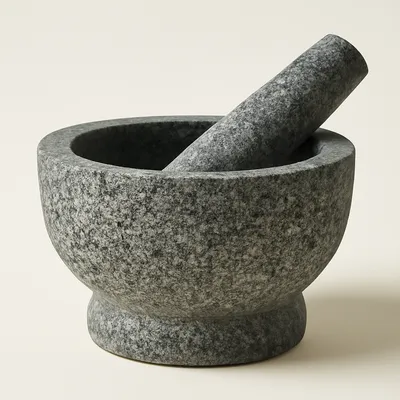
The simplest tool in any kitchen: a heavy bowl and a club to bash things in it. Different cuisines use different stones — Thai cooks pound green papaya in a tall granite mortar (krok hin); pesto Genovese requires the soft-pored Carrara marble; Indian masalas grind down on rough basalt. The bash-don't-cut motion releases volatile oils that a blade keeps sealed in the cell wall.


