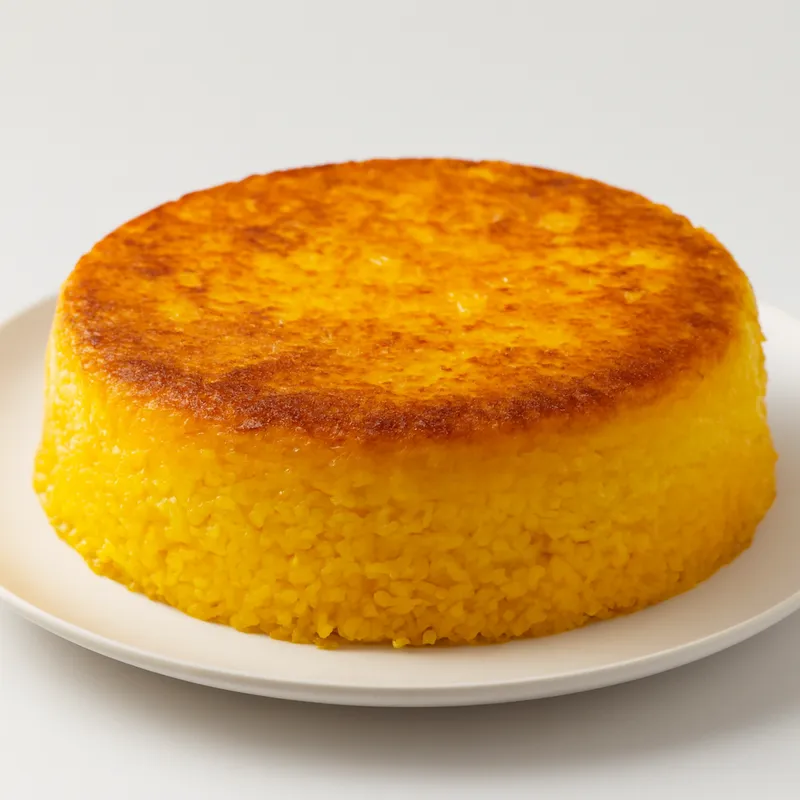

While the rest of Iran cooks the elaborate polo (parboil-then-steam) method, the Caspian region — where rice actually grows — cooks kateh: all-at-once, sticky, pressed into a cake at the bottom of the pot. It's faster, denser, and reflects the Gilani households' preference for getting on with the meal. The bottom forms a soft, golden layer (a moist tahdig, not the crisp crust of chelo), while the top stays soft and moist. Often eaten with smoked fish or yogurt for breakfast.
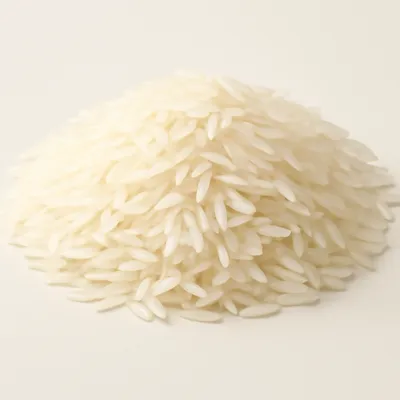
Plain Caspian rice cooked without parboiling — the grains stick together slightly, the bottom forms a soft golden layer rather than a crisp tahdig, the top stays soft. Sliced like a cake, eaten with smoked fish or yogurt.
Kateh is Caspian Iranian rice cooked simply: rinse-not-parboil, cover with water, lid on, cooked over a low flame for 40 minutes. The starch never washes off the grain, so the rice sticks; tahdig forms in the last 10 minutes when the pan dries.
Variations
Gilani kateh is the simplest version; Mazandarani version adds saffron at the end; modern Tehrani rice is parboiled-and-steamed — three rice philosophies.
On the Palate
Where Kateh sits in the Persian flavor cloud
Ingredients
How it's made
5 steps · 45 min
- 12 min
Rinse 2 cups basmati rice in cold water 3 times until water runs clear.
- 28 min
In a heavy non-stick pot, combine rice, 3 cups water, 1 tsp salt, 50g butter. Bring to a boil over high heat.
- 315 min
Reduce heat to medium, simmer uncovered 10 minutes until the water is mostly absorbed and small holes appear on the rice surface.
Watch outWatch for tiny craters opening across the rice surface — that's the signal the water's nearly gone and it's time to trap the steam.
- 410 min
Cover with a clean kitchen towel under the lid (to trap steam). Reduce to lowest heat; cook 25 minutes undisturbed.
Watch outWrap a towel under the lid to soak up the drips — condensation falling back in makes the rice soggy instead of fluffy.
- 55 min
Remove from heat. Place the pot on a wet towel for 2 minutes to release the tahdig. Invert onto a serving platter — the golden crust forms the top.
Watch outSit the hot pot on a wet towel before flipping — the sudden cool loosens the crust so the golden tahdig releases in one piece.
Archive tool suggestions — not reviewed
These legacy suggestions have not been evidence-reviewed and are not presented as required tools.