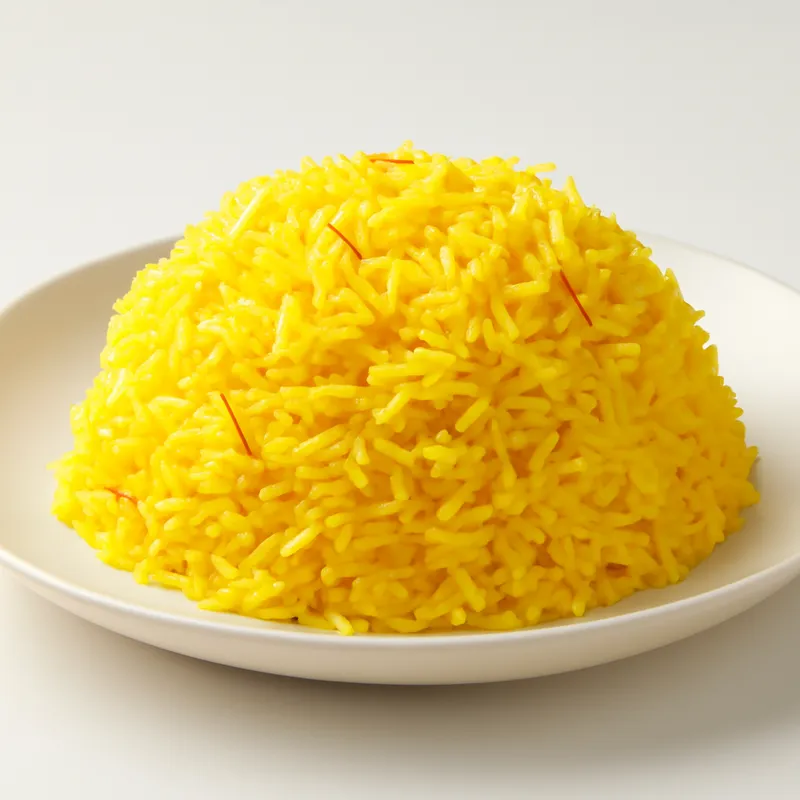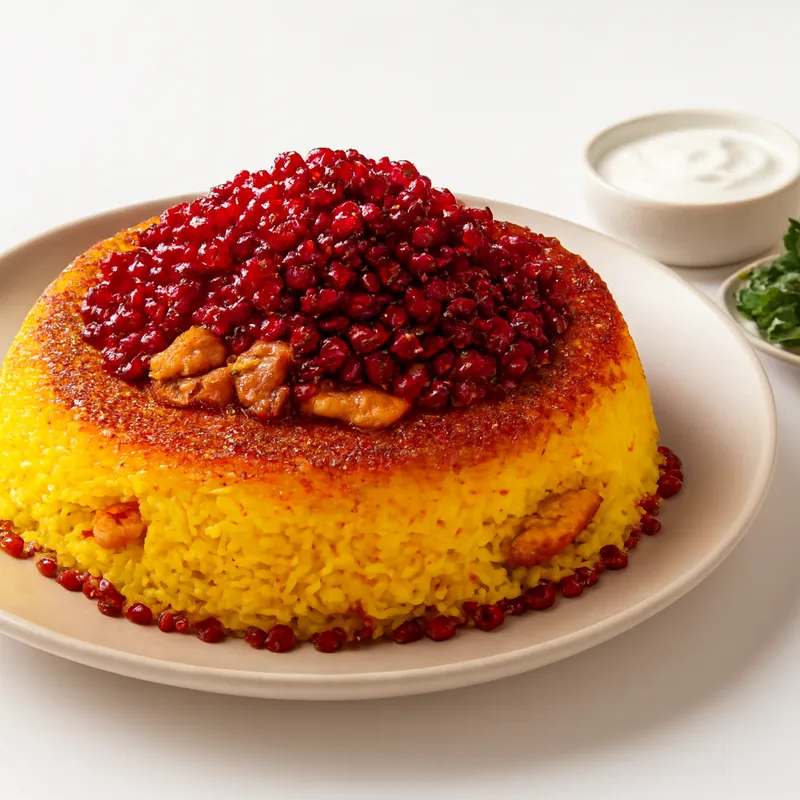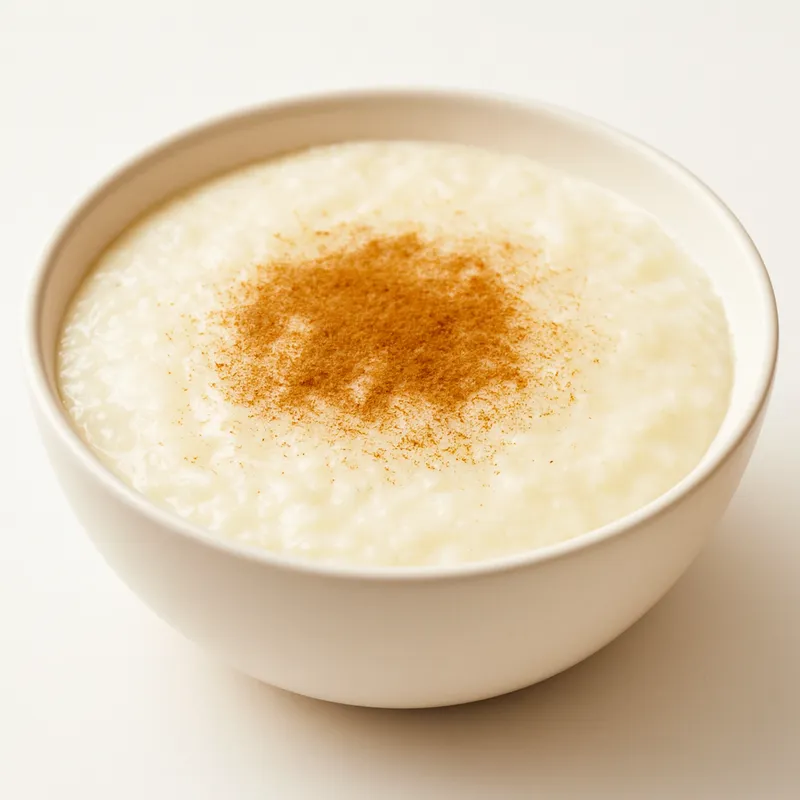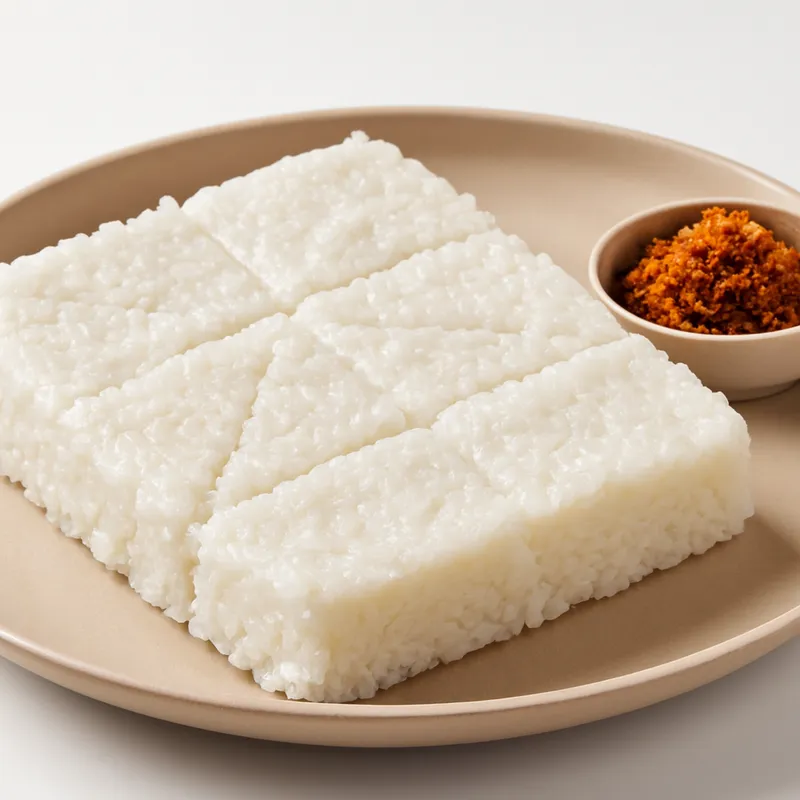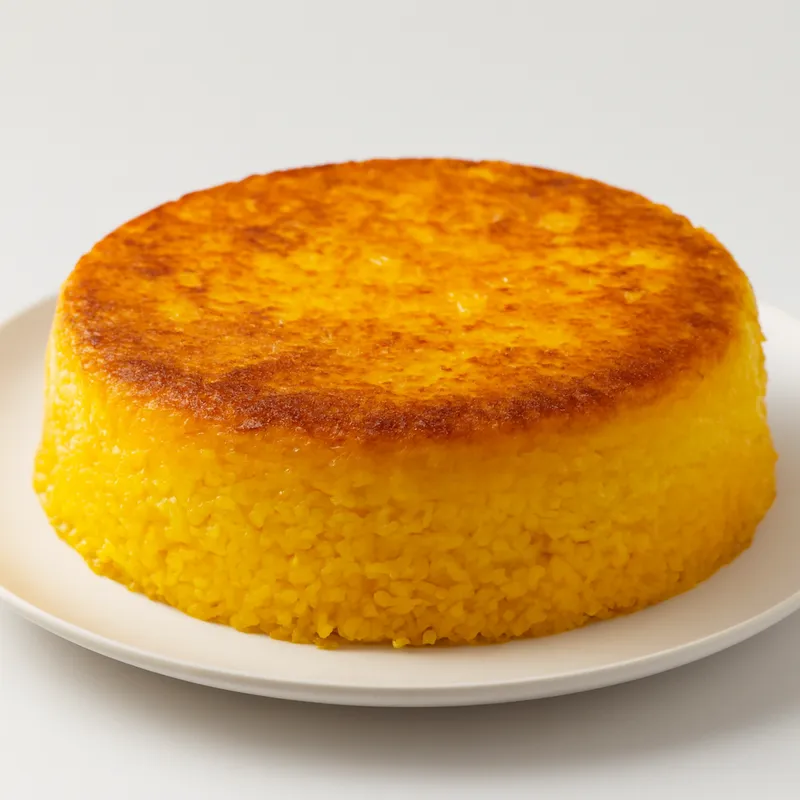

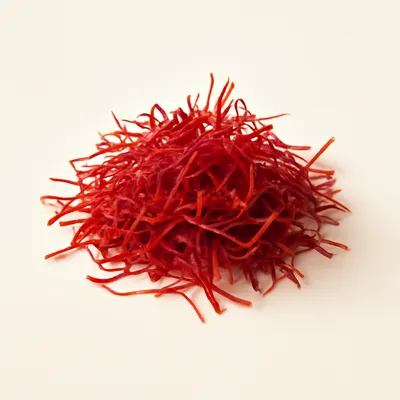


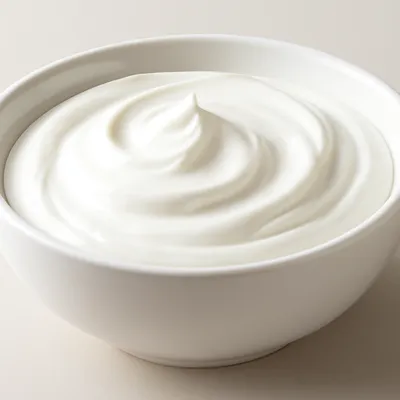

Tahdig ("bottom of the pot") is documented in Persian cookbooks from the Safavid period (16th–17th century) but the technique is older — every rice culture from West Asia eastward has a crusted-bottom variant (Spanish socarrat, Korean nurungji, Iraqi hkaka). What's distinctly Persian is treating it as an honorific course, served separately, and the use of yogurt or saffron in the bottom layer to deepen the color.
The crisp golden crust at the bottom of every Persian rice pot — yogurt-egg-saffron coats the layer touching the metal, then steams under a towel-wrapped lid for 45 minutes. Lavash bread or thinly sliced potato can take the rice's place. Flipping the pot to plate it whole is the Friday-lunch theatrics.
A flat disc of rice fried golden against the bottom of the pot — flipped out whole onto a plate at the end of the meal, cracked into pieces with a spoon. The crust is the size of a dinner plate, crisp like a thin cracker. Eaten by hand or alongside stew. The host always serves it last: it's the prize. A pale, soft tahdig means the cook lifted the pot before the bottom had time.
The cooking is two-stage. Rice is parboiled in salted water and drained al dente; then a layer of yogurt-rice (or saffron-rice, or thin-sliced potato, or lavash bread) is pressed against the bottom of an oiled pot, the rest of the rice mounded on top, a kitchen towel under the lid to absorb steam, and the pot held on low heat for 45 minutes. Done right, the bottom releases in one piece when you invert the pot.
Variations
Plain rice tahdig (basmati only); potato tahdig (sliced potatoes line the pot); lavash tahdig (flatbread); tahchin (tahdig made into a saffron-yogurt rice cake with chicken inside); nan-e tahdig is the Azerbaijani-Iranian crossover.
On the Palate
Where Tahdig sits in the Persian flavor cloud
Ingredients



How it's made
4 steps · 30 min active + 30 min waiting
- 15 min
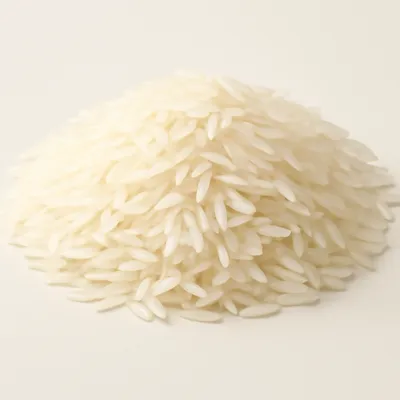
Rinse the basmati rice under cold water until the water runs clear. This removes excess starch for fluffy grains.
- 210 min
Bring a large pot of salted water to a boil. Add the rice and cook until it is just tender, about 6-7 minutes. Drain well.
Watch outGrains bend but still snap at the core — al dente; drain the second they hit that point.
- 35 min
In a non-stick pot, heat oil over medium heat. Mix a few tablespoons of the cooked rice with saffron water and spread this mixture evenly at the bottom of the pot.
Watch outEnsure the oil is hot enough to sizzle but not smoking, to prevent the rice from sticking.
- 410 min
Gently pile the remaining rice over the saffron layer, shaping it into a mound. Cover the pot with a lid wrapped in a clean kitchen towel to catch steam, and cook on low heat for 30-40 minutes until the bottom is golden and crispy.
Watch outNear the end you'll smell toasted rice and hear a faint crackle from the base — that's the crust setting.
Archive tool suggestions — not reviewed
These legacy suggestions have not been evidence-reviewed and are not presented as required tools.