


A dish of northeastern Iran, especially South Khorasan province, where the dry climate of Birjand and Qaen produces over 95 percent of the world's barberries. The pairing of barberries with rice was a delicacy of the Persian royal court (most often associated with the Qajar period, 19th–early 20th century) and remains the standard wedding-banquet rice across Iran today, particularly in the Tehran tradition.
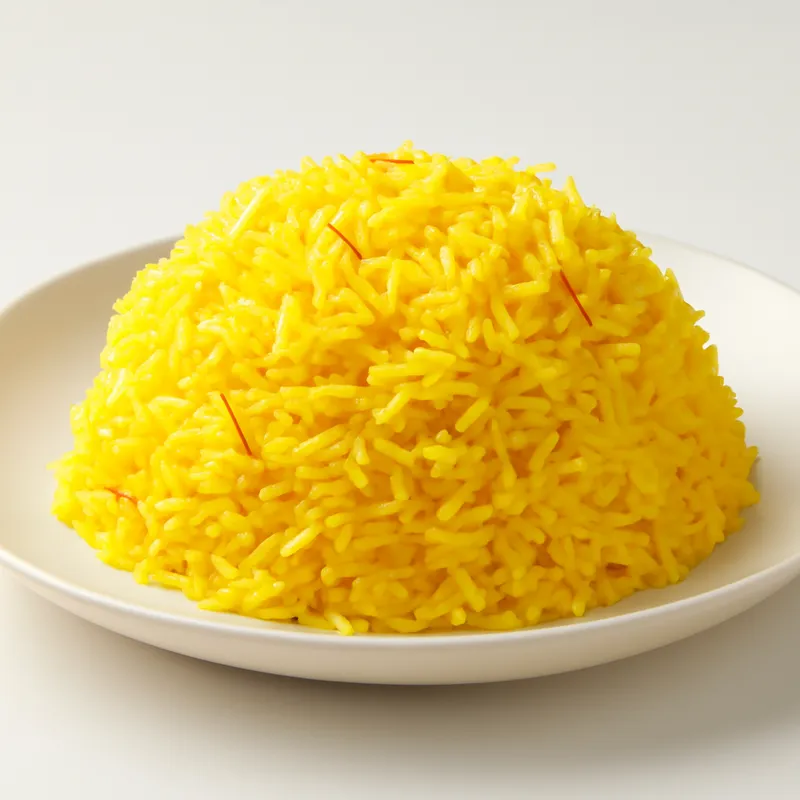
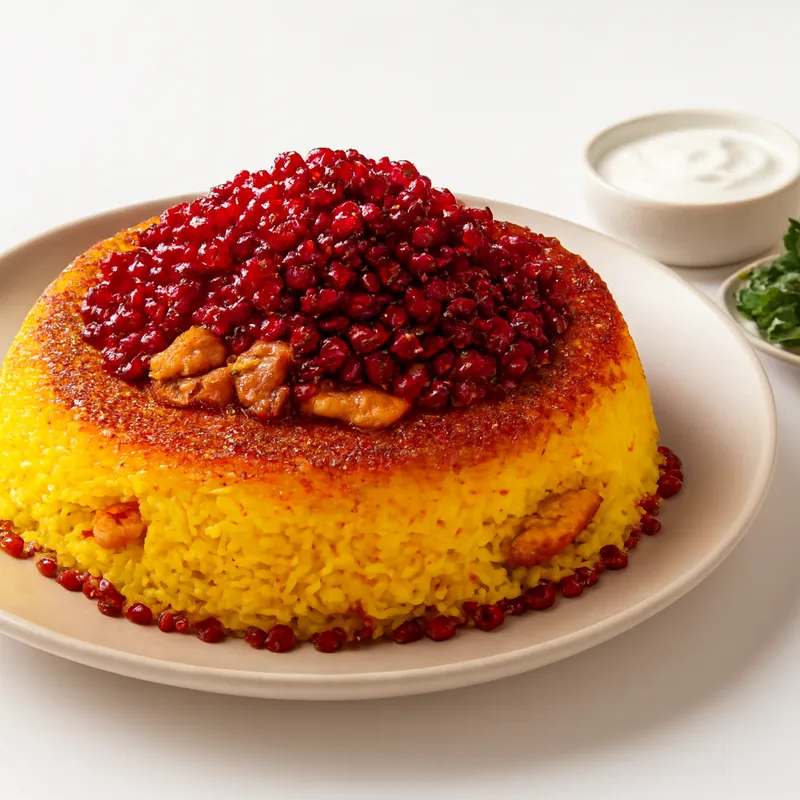
Saffron rice topped with sour-tart barberries (zereshk, native to South Khorasan) bloomed in butter and a pinch of sugar — served with chicken (morgh-e zaferani). The barberries cannot be cooked long; over a minute and they go bitter-black. Wedding-table dish; the red-on-saffron-yellow is the visual signature.
A mound of saffron-streaked basmati topped with a glossy ruby tangle of barberries (zereshk) sautéed in butter and a pinch of sugar. The barberries are tiny, sharp-sour, almost like sour candy in food form. Usually served with saffron-poached chicken on the side. The contrast you want is the rice's perfume against the sting of the berries — every few bites a sour pop.
Barberries burn in seconds — they go in cold butter, over the lowest heat, for under a minute, with sugar to round the sourness. Anything more and they turn black and bitter, ruined. Soak them first in cold water for ten minutes to rinse out grit (they're sold unwashed) and wake up the color. Layered onto the rice off-heat, never cooked into it.
Variations
Standard zereshk polo (with chicken); zereshk polo ba morgh-e zaferani (saffron chicken specifically); vegetarian version substitutes oyster mushrooms; Tehran wedding version layers in slivered almonds and pistachios; Mashhad-style adds barberries directly into the rice mound.
On the Palate
Where Zereshk Polo sits in the Persian flavor cloud
Barberries scorch in seconds — cook them in cold butter over the lowest heat for under a minute with a little sugar, and layer them onto the rice off the heat, never simmered into it.
Ingredients



How it's made
5 steps · 1 hour 25 min active + 5 hours waiting
- 15 min
Rinse the basmati rice three times, then soak in warm water with ¼ cup salt for 5 hours. Drain thoroughly before cooking.
- 210 min
Bring 8 cups of water to a boil in a large pot. Add the drained rice and cook for 8 to 10 minutes, until the grains are slightly soft. Drain in a colander and set aside.
Watch outPull the rice when the grains are just softened at the edge but still firm at the core — it finishes steaming later.
- 320 min
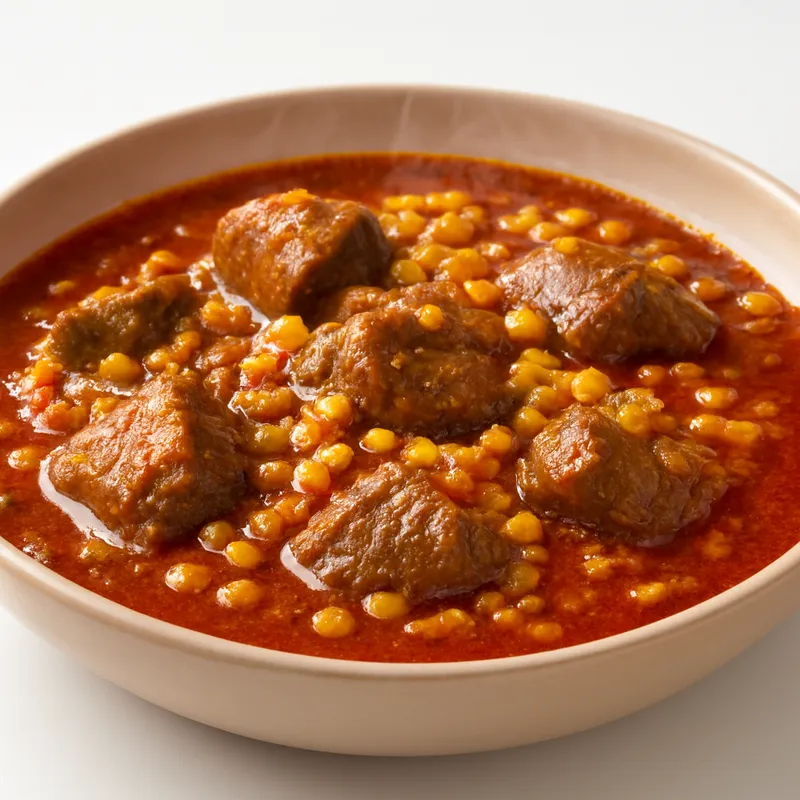
Heat 2 tablespoons of oil in a large skillet over medium heat. Add the chopped onions and sauté until soft and golden. Add chicken, ½ cup water, ½ teaspoon salt, and black pepper. Cover, reduce heat, and simmer until the chicken is cooked through.
Watch outMake sure the chicken is cooked to an internal temperature of 165°F.
- 45 min
Melt butter in a small pot over low heat. Add rinsed barberries and sauté briefly. Stir in sugar and sauté for another minute. Dilute saffron in ½ cup hot water and add to the barberries.
Watch outThe barberries are done the instant they plump and glisten; if they darken past ruby, they're already bitter.
- 545 min
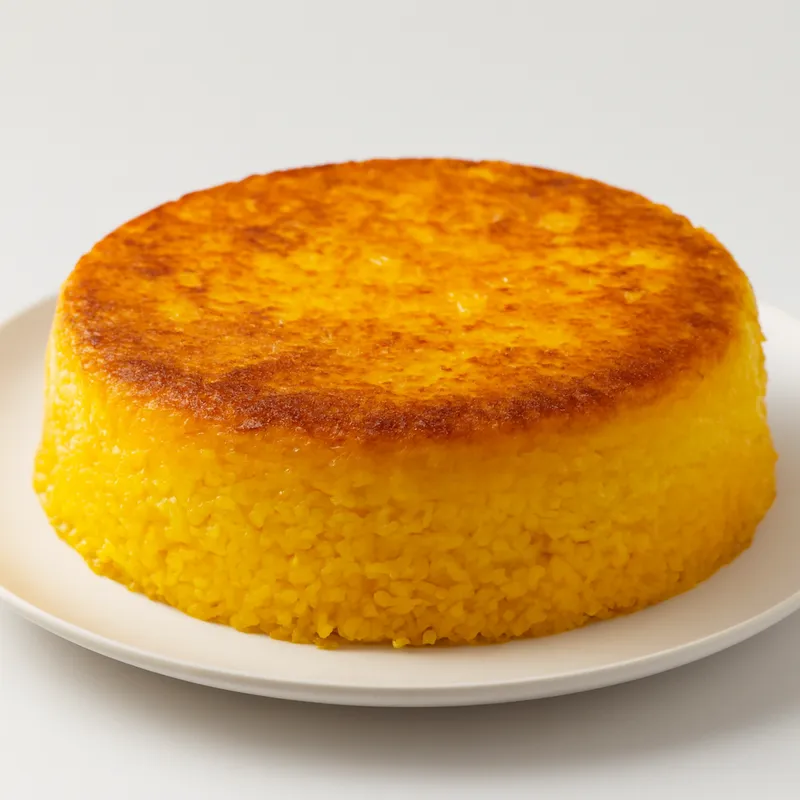
In the pot used for rice, heat 3 tablespoons of oil. Add the cooked rice, fluffing gently with a spoon. Pour the barberry mixture over the rice, cover, and cook on low heat to form a crisp 'ta-dig' at the bottom.
Watch outListen for a faint crackle and smell toasted rice from the bottom — that's the ta-dig crisping; don't let it smell scorched.
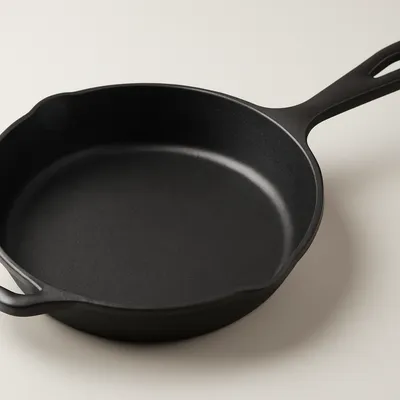
Archive tool suggestions — not reviewed
These legacy suggestions have not been evidence-reviewed and are not presented as required tools.