



Saffron entered Persian cooking by the 10th century, when Khorasan in eastern Iran became a major cultivation zone — Iran still grows over 90 percent of the world's saffron today. Rice arrived later, around the Safavid era (16th–17th century), when polo (pilaf) technique was codified at the royal court in Isfahan. Saffron rice was court food first, then everyday celebration food.
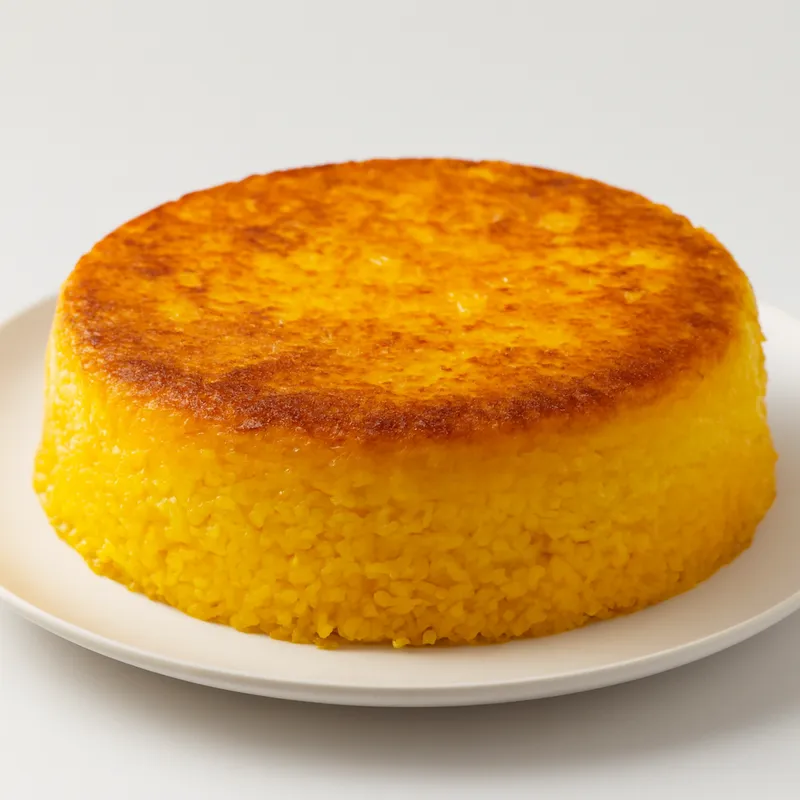
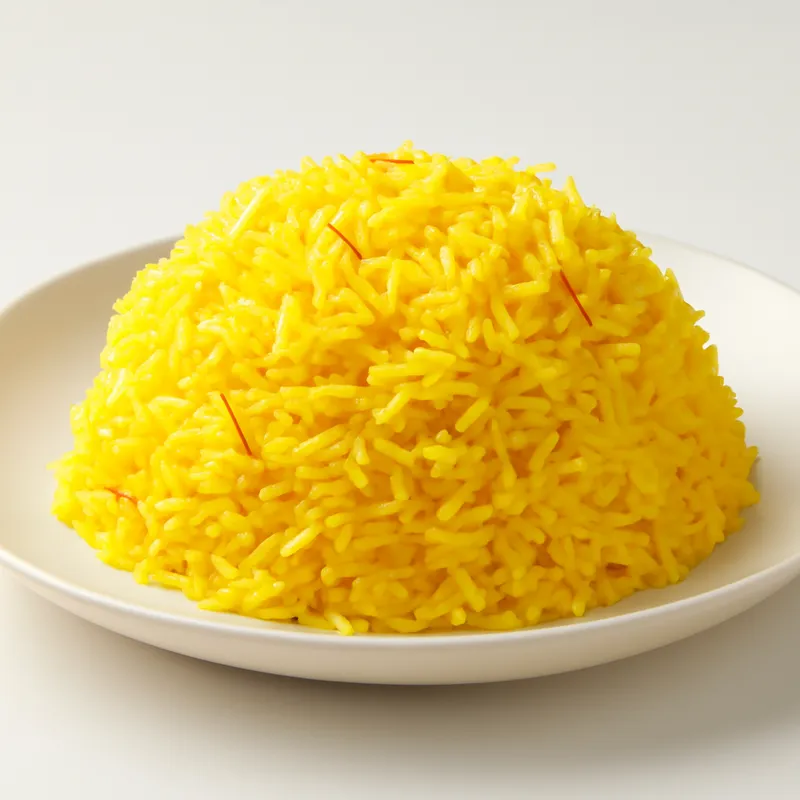
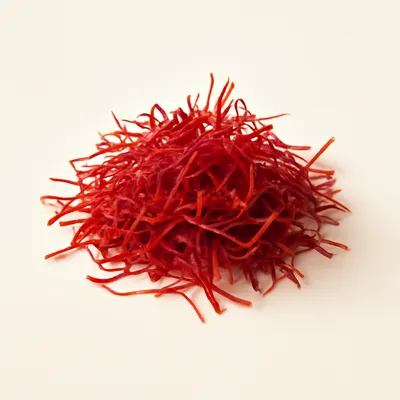
Chelo — rice par-boiled, drained, then steamed mound-style in a tahdig-lined pot for 45 minutes; saffron water (saffron threads bloomed in hot water for 20+ minutes) drizzled over the top before serving. Iranian saffron is mostly Khorasan-grown; one gram is roughly 150 threads.
Long-grain basmati, each kernel separate, dyed two tones — bright orange-gold strands of saffron rice piled on top of plain white. The saffron tops carry a faint hay-and-honey perfume; the bottom of the pot, if cooked right, releases as tahdig: a flat golden crust crackling under the spoon. No crust, the cook rushed the heat.
Saffron is bloomed, never dumped dry. Threads are ground with a sugar cube to dust, then steeped in two tablespoons of hot (not boiling) water for ten minutes — boiling scorches the delicate aroma (safranal) and dulls the color; crocin gives the color, picrocrocin the bitterness. Only that liquid touches the rice, drizzled over the top third of the pot so it stays striped. Mixing it through is a beginner mistake.
Variations
Plain chelo (white with saffron streak); polo (rice mixed with other ingredients — adas polo, baghali polo, sabzi polo, zereshk polo (barberry rice — zereshk is barberry, not sour cherry)); kateh is the northern Gilani non-tahdig boil-and-rest version; damy is similar to kateh but slower.
On the Palate
Where Saffron Rice sits in the Persian flavor cloud
Bloom the saffron in hot-not-boiling water and drizzle only that colored liquid over the top of the rice — boiling scorches the aroma, and stirring it through kills the signature striped look.
Ingredients

How it's made
5 steps · 40 min
- 15 min
Rinse the basmati rice under cool running water until the water runs clear. This removes excess starch and prevents clumping.
- 25 min
Place saffron threads in a small bowl with a tablespoon of boiling water, allowing them to steep and release their color and aroma.
- 35 min
In a heavy saucepan, heat butter over medium heat. Add the rice and sauté, stirring constantly, until the grains are slightly translucent and emit a nutty aroma.
Watch outToast the rice in butter just until the grains turn slightly glassy and smell nutty — don't let them brown.
- 45 min
Pour in 2 cups of water and a pinch of salt. Bring to a boil, then reduce to a low simmer. Add the saffron water, stirring gently to incorporate.
Watch outThe bloomed saffron water should stain the surface a vivid red-gold as you drizzle it — that's the whole payoff.
- 520 min
Cover the saucepan with a tight-fitting lid and simmer for 15-20 minutes, or until the rice is tender and the liquid is absorbed. Fluff with a fork before serving.
Watch outLid on tight and low — you're steaming now, so no peeking until the liquid's gone and the grains stand up when forked.
Archive tool suggestions — not reviewed
These legacy suggestions have not been evidence-reviewed and are not presented as required tools.