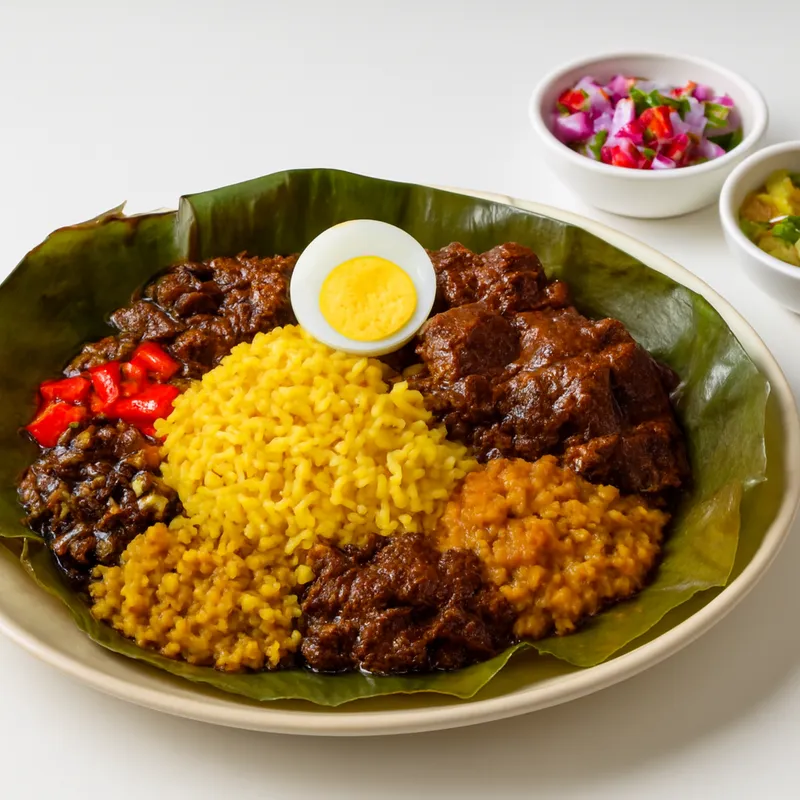





A Sri Lankan ceremonial dish for the Sinhalese and Tamil New Year (Aluth Avurudda, in mid-April) and for any household milestone — first day of school, weddings, the start of a new business. References to milk-rice in this region appear in chronicles back to at least the 5th century; the prosperity association comes from the use of milk and rice together, both signs of agricultural plenty.
Sinhalese-Tamil New Year milk-rice, also pulled out for first day of school, weddings, new-business openings — milk-rice references in the chronicles go back to at least the 5th century. Two-stage cook: rice almost done in water first, then thick coconut milk and salt finish it.
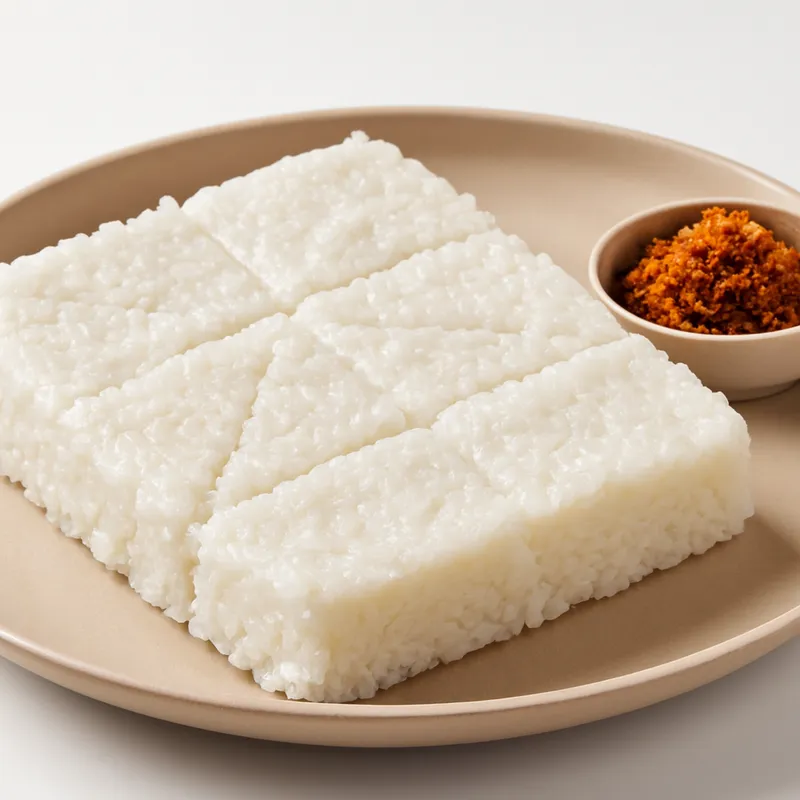
A pale block of rice, cut into diamonds or squares, dense and just sticky enough to hold its shape. The smell is straight coconut milk, faintly sweet, faintly salted. Eaten with lunu miris (chili-onion paste) for savory or with jaggery and banana for sweet. Texture is everything — too wet and it slumps, too dry and it crumbles. The clean cut edge is the test.
The technique is a two-stage cook. Rice is first boiled in plain water until almost done, then thick coconut milk is added with salt and the pot finishes on very low heat — adding coconut milk too early causes the fat to coat the grains and prevent them from softening. The block is pressed flat in a tray while still hot so the starches set together; cutting once cool gives the clean diamonds.
Variations
Plain kiribath cut into diamonds with lunu miris; mung kiribath folded with cooked mung dal; imbul kiribath stuffed with pani-pol (jaggery-coconut); Bandarawela hill version uses red kekulu rice for a darker, nuttier block.
On the Palate
Where Kiribath sits in the Sri Lankan flavor cloud
Ingredients
How it's made
4 steps · 30 min
- 15 min
Rinse the rice under cold water until the water runs clear. In a pot, combine the rice with 2 cups of water and a pinch of salt. Bring to a boil over medium-high heat.
- 215 min
Once boiling, reduce the heat to low and cover the pot. Cook until the rice is tender and the water is absorbed, about 15 minutes.
Watch outRice should be just tender with the water fully absorbed before the coconut goes in — no puddle left in the pot.
- 35 min
Stir in the coconut milk until fully absorbed by the rice. The mixture should be creamy and slightly sticky.
Watch outStir until it looks creamy and just clings to itself, glossy but not soupy.
- 45 min
Transfer the rice mixture to a flat dish and spread it evenly. Allow it to cool slightly, then cut into diamond or square shapes for serving.
Watch outPress flat while hot so the surface is smooth and level; let it cool before cutting.
Archive tool suggestions — not reviewed
These legacy suggestions have not been evidence-reviewed and are not presented as required tools.