A soft, translucent starch-and-sugar jelly studded with walnuts, scented with rosewater and dusted in powdered sugar — the Persian cousin of Turkish delight. It is a confection of the Turkish-speaking north-west of Iran, set out on the celebration tables of Yalda and Nowruz and sold as a regional souvenir. Where lokum leans purely on sugar, baslogh works in wheat or corn starch for a chewier, springier bite and folds whole walnuts through the set. Cut into cushiony squares or rolled around the nuts in a log, it is sweet, fragrant and just resistant to the tooth.



A traditional sweet of the Azeri north-west of Iran — most often linked to the East Azerbaijan region around Tabriz, Ardabil and Maragheh, among the country's Turkish-speaking communities. It sits squarely in the Turkish-delight family, sharing roots and method with lokum, and is also known by the old Arabic-derived name rahat-ol-holghoom, 'soother of the throat.' Older home versions thickened the sweet with doshab, a boiled-down grape syrup, in place of refined sugar; the modern recipe more often relies on sugar with wheat or corn starch. A precise town of origin is not firmly settled.
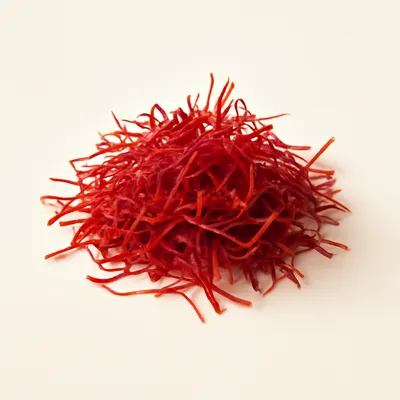
Soft and yielding with a gentle spring, somewhere between a firm jelly and a chew — it gives under the tooth, then slowly lets go. The flavor is clean sugar lifted by rosewater, sometimes a thread of saffron, and a dusting of powdered sugar that melts on contact. The walnuts cut the sweetness with their oily, faintly bitter crunch and give the smooth set something to bite against. It leaves the mouth perfumed rather than cloying.
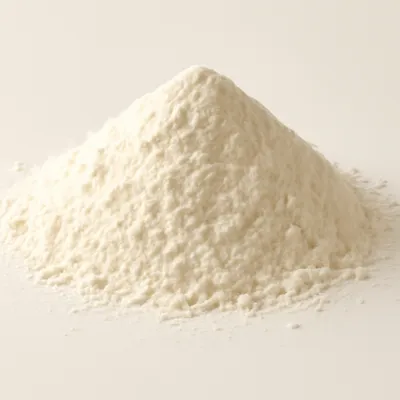
The texture comes from starch, not from boiling sugar to the hard stages of lokum. Wheat or corn starch is whisked into water and cooked slowly with sugar syrup, stirred without pause as it thickens to a thick, glossy, translucent paste — the constant stirring keeps it from scorching or going lumpy as the starch granules swell and gelatinize. Rosewater goes in late so its perfume is not driven off by the heat, walnuts are folded through once the paste pulls away from the pan, and the slab is left to set firm for hours before it is dusted and cut, the powdered sugar coat keeping the sticky pieces from fusing.
Variations
Walnut is the classic and most prized version, but pistachio, almond or coconut baslogh are common, and the color and flavor shift with rosewater, saffron or fruit. The older Maragheh style is associated with a doshab (grape-syrup) base, while city confectioners now lean on sugar and refined starch. Some roll the paste around a line of whole walnuts into a swirled log that is sliced into rounds; others set it in a tray and cut plain cushions, and the dusting may be powdered sugar, starch or shredded coconut.
On the Palate
Where Baslogh sits in the Persian flavor cloud
Ingredients
Serves 10How it's made
8 steps · 20 min
- 15 min
Whisk wheat or corn starch into cold water until smooth and free of lumps.
- 28 min
Cook sugar with water into a light syrup, stirring until the sugar fully dissolves.
- 35 min
Pour the starch slurry into the syrup and cook over low heat, stirring constantly.
- 412 min
Keep stirring as the mixture thickens into a glossy, translucent paste that pulls from the pan.
Watch outStir without pause until the paste turns thick, glossy and translucent and pulls from the pan — constant stirring is what keeps the starch from scorching or lumping.
- 52 min
Stir in rosewater, and a little saffron if using, near the end of cooking.
- 63 min
Fold in coarsely chopped or whole walnuts and mix evenly through the paste.
- 7240 min
Spread into an oiled tray (or roll around a line of walnuts) and leave to set firm for several hours.
Watch outSpread it out and let it set firm for several hours before dusting and cutting — cut it too soon and the pieces are too sticky-soft to hold shape.
- 85 min
Dust generously with powdered sugar, then cut into squares or slice the log into rounds.
Archive tool suggestions — not reviewed
These legacy suggestions have not been evidence-reviewed and are not presented as required tools.

