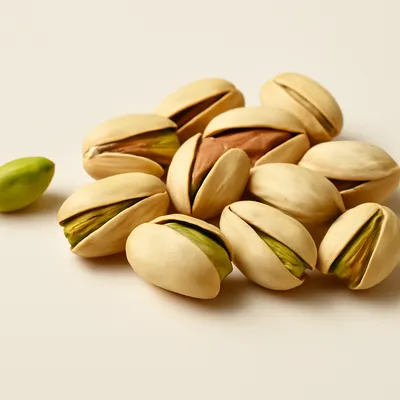
Isfahan's signature nougat, whipped from angebin — a sweet manna gathered from tamarisk shrubs — together with egg white, sugar, rosewater and whole pistachios. The result is a soft, chewy white candy, dusted with flour and studded green with nuts, traditionally cut into rounds or sold as a powdered loose form. It is the gift travelers carry home from Isfahan and a fixture at Nowruz and on every guest tray. The name is a clipping of gaz-angabin, 'gaz honey'.


Gaz comes from the Isfahan region and its modern form is dated to the Safavid era, roughly four and a half centuries ago. Its defining ingredient is gaz-angabin, a sweet exudate long believed to be sap of the tamarisk or 'Persian manna' shrub but in fact a honeydew secreted by a plant louse that feeds on Astragalus growing wild on the Zagros foothills, notably around Khansar in Isfahan Province. The Safavid-era French traveler Jean Chardin, writing under Shah Abbas I, described the various kinds of manna and named gaz-angabin among them. Industrial gaz today often substitutes glucose and corn syrup for the costly wild manna.
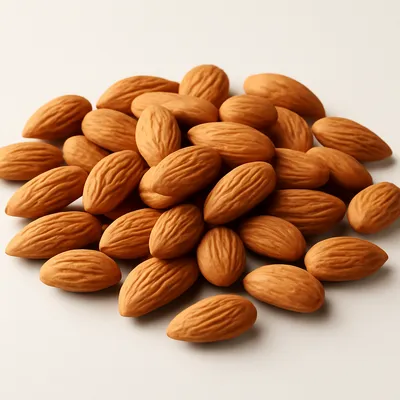
Soft and yielding, pulling slightly as you bite, somewhere between a marshmallow and a chew. Sweet through and through, scented with rosewater, the manna lending a faint honeyed, almost herbal note behind the sugar. Whole pistachios and sometimes almonds break the give with their snap. A coating of flour keeps the pieces from sticking and leaves a dry dusting on the lips. Best with bitter tea, which cuts the sweetness.
Gaz is a meringue-based confection: egg whites are whipped to a stiff foam, then a hot sugar syrup cooked to the soft-ball stage is streamed in while beating, which stabilizes the foam and gives the chew. The manna or its syrup substitute is cooked in for body and flavor. The mass must be worked hot and fast before it stiffens; pistachios fold in last. Temperature is everything — under-cooked syrup stays sticky and weeps, overcooked turns brittle instead of chewy.
Variations
Sold two ways: pressed and cut into flat rounds (gaz-e loghmei), or as a loose, flour-dusted powder. Pistachio is the prized nut; cheaper grades use almond or a mix. Premium gaz still made with real Khansar manna is costly and prized; everyday versions lean on glucose syrup. Some makers scent more heavily with rosewater or add saffron for color, and a chocolate-coated style appears in modern shops.
On the Palate
Where Gaz sits in the Persian flavor cloud
Ingredients
Serves 12How it's made
8 steps · 30 min
- 18 min
Whip egg whites to a stiff, glossy foam.
- 220 min
Cook sugar, glucose and the manna syrup to the soft-ball stage.
Watch outCook the syrup exactly to the soft-ball stage — undercooked it stays sticky and weeps, overcooked it sets brittle instead of chewy; temperature is everything here.
- 36 min
Stream the hot syrup into the whites while beating continuously.
Watch outStream the hot syrup into the whipping whites in a thin thread while beating without stop — dump it in and you cook the whites into lumps and the foam collapses.
- 412 min
Continue beating until the mass is thick, white and elastic.
- 54 min
Stir in rosewater and fold through whole pistachios.
- 65 min
Spread the hot mixture onto a flour-dusted surface or mold.
- 74 min
Dust the top with flour and press level while still warm.
- 8120 min
Cool fully, then cut into rounds and dust off excess flour.
Archive tool suggestions — not reviewed
These legacy suggestions have not been evidence-reviewed and are not presented as required tools.