Swiss-German potato cake — coarsely grated potatoes (par-boiled the day before, or raw) seasoned, pressed into a wide pan, and cooked low-and-slow in butter or lard until the bottom develops a deep golden crust, then flipped and crisped on the second side. Eaten as the canonical Swiss side dish to Zürcher Geschnetzeltes and alpine sausages, or topped with bacon, onion, cheese or a fried egg as a complete meal. Originally a Bernese farmers' breakfast, now a national dish eaten across Switzerland.





Rösti originated in the Bernese alpine farming communities as a workmen's breakfast — using leftover boiled potatoes from the previous day, grated and fried with bacon fat into a crispy cake. As it spread to become a national dish, raw grated potato versions emerged (the Zurich style, which gives a fluffier interior) alongside the older Bernese par-boiled method, and both coexist today. The dish is so culturally significant that the linguistic and cultural divide between German-speaking Switzerland (Deutschschweiz) and French-speaking Switzerland (Romandie) is jokingly called the 'Röstigraben' (rösti ditch). Properly made rösti has a crisp golden crust and a tender interior; over-cooked it is dry, under-cooked it is gummy.
First bite: the deep-golden bottom crust shatters audibly; inside, the grated potato is tender, slightly moist, lightly buttered. The combination of crispy edge + tender interior is the entire point. A spoonful of apple sauce alongside provides the canonical Swiss sweet-tart counterpoint. With Zürcher Geschnetzeltes (veal in mushroom-cream sauce) on top, it becomes the iconic Swiss Sunday lunch. With a runny egg and bacon, it's the perfect breakfast. With a glass of cold Swiss white wine (Chasselas), it's a complete meal.
Two technical principles: (1) Water removal from grated potatoes is essential — raw potatoes have ~80% water; if not pressed out, the potatoes steam rather than crisp. The starch released during grating + pressing creates the binding for the pancake shape. (2) Low-and-slow cooking on the first side (12-15 min at medium-low) is critical — high heat burns the surface before the center cooks; low heat dehydrates + Maillard-browns the surface evenly. The 2.5cm thickness is functional: too thin and it's all crust; too thick and the center stays raw.
Variations
Bernese canonical (with apple sauce); Zurich version uses raw potatoes (vs Bernese pre-boiled); 'Rösti mit Speck' (with bacon mixed in); 'Bauernrösti' (farmer's rösti with cheese + onion); 'Schinken-rösti' (with ham); modern 'Rösti aufgemotzt' (loaded with everything — egg, bacon, cheese, mushrooms); the rösti is famously the centerpiece of Zürcher Geschnetzeltes; vegetarian rösti omits bacon — uses just butter.
On the Palate
Where Rösti sits in the Swiss flavor cloud
Squeeze every drop of water out of the grated raw potato before it hits the pan — wet potato steams and turns gummy, dry potato crisps into the golden crust that defines a rösti.
Ingredients
Serves 4How it's made
10 steps · 30 min active + 30 min waiting
- 13 min
Choose 800g starchy potatoes (Bintje or russet). Peel; rinse.
- 28 min
Option A (canonical): use RAW potatoes — grate on coarse box-grater into a clean kitchen towel. SQUEEZE OUT all water (this is critical — wet potatoes won't crisp). Repeat squeezing.
Watch outAfter squeezing, the potato shreds should feel dry and springy in your hand and stop dripping — that's when they'll crisp.
- 314 min
Option B (traditional Bernese): boil potatoes whole 15 min until just tender; cool completely 1 hour or overnight; peel and grate.
- 43 min
Season the grated potatoes: 1 tsp salt + 1/2 tsp white pepper. Toss gently to combine. Add 2 tbsp melted butter; toss again.
- 52 min
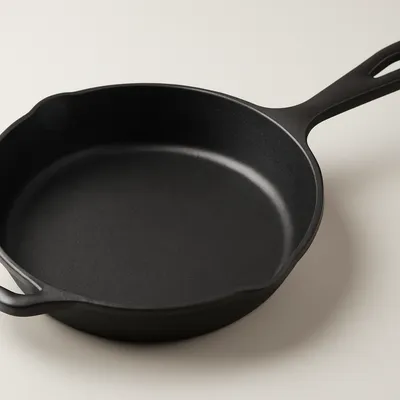
In a 25cm heavy non-stick or cast-iron skillet, heat 60g butter + 2 tbsp neutral oil over medium-low heat.
- 62 min
Add the grated potato mixture; press FIRMLY into a uniform pancake using a spatula (the pressing develops the crust). Don't overload — single layer 2.5cm thick max.
- 714 min
Cook UNDISTURBED 12-15 min until the bottom is deeply golden-brown and crispy. Resist the urge to peek before 10 min.
Watch outDon't touch it for 12-15 min; the first side is ready only when the bottom is deeply golden-brown and slides freely in the pan.
- 82 min
Flip the rösti: slide it onto a large plate; invert the pan over the plate; flip together; slide the rösti back into the pan (cooked-side now up). Alternative: cut into wedges and flip individually.
Watch outWhen you flip, the cooked face should be one intact golden crust — if it's tearing, it wasn't set long enough.
- 912 min
Add another 30g butter to the pan; cook the second side another 10-12 min.
- 104 min
Slide onto a serving plate. Cut into wedges. Serve immediately with: applesauce on the side (canonical), or as a base for Zürcher Geschnetzeltes, or topped with crispy bacon + a sunny-side egg for breakfast.
Archive tool suggestions — not reviewed
These legacy suggestions have not been evidence-reviewed and are not presented as required tools.