
Nepali festival ring-shaped fried bread — rice flour batter fermented overnight, swirled into hot ghee in a circle and fried into a delicate ring. Tihar, Dashain, Maghe Sankranti centerpiece; sweet, slightly fermented, addictive.




Sel roti is the festival staple of Nepal's hill country, deep-fried in big batches above all for Tihar (the festival of lights) and Dashain — the two great Hindu festivals — as well as for Tij and weddings. In the festival it serves double duty: as prasad, an offering to the gods, and as a gift shared with relatives and sent to family who cannot make it home — its faint fermented tang and lightness, and the fact that it keeps for up to two weeks, make it travel well through the festival season. The ring shape carries an auspicious sense of wholeness and renewal in Hindu custom. Its origin is uncertain: the name's 'sel' may come from a variety of rice grown in the Nepali foothills ('roti' meaning bread), or from 'saal,' the Nepali word for 'year,' hinting it was first a New Year food — both readings circulate, neither settled. Beyond Nepal it is also made by the Nepali diaspora in Sikkim, Darjeeling, Kalimpong, Kumaon (Uttarakhand) and parts of Bhutan, where Sikkim and Darjeeling cooks often fry it as a double ring.
Tear a piece of sel roti — crisp outside, faintly chewy inside with a slight tang from fermentation, warm cardamom-fennel aroma. Sweet enough for celebration but not cloying. Pair with milk tea on Tihar morning.
Resting the rice batter to ferment for a few hours is the whole trick. Wild lactic-acid bacteria and yeast work the batter together: the bacteria produce acid, dropping the batter's pH to roughly 4.5 — the range where the yeast is most active — while the yeast leavens it and works air bubbles into the slurry. That acidity is not just flavor: acidified rice batter absorbs less oil when fried, so the ring comes out less greasy and more economical (a documented food-science effect). Dropped into oil at about 180°C, the outside sets instantly and seals; the trapped CO2 expands sharply with the heat while the rice starch gelatinizes and sets, leaving an airy, sponge-like crumb inside a crisp shell. The shape is all in the wrist — poured in a steady circle so each loop joins the next into one ring, then turned and lifted with two ~30 cm sticks (jhir in Nepali).
Variations
Plain Sel Roti (no banana, less sweet). Banana Sel Roti (most common). Coconut Sel Roti (with coconut shavings). Mini Sel Roti (small festival size).
On the Palate
Where Sel Roti sits in the Nepali flavor cloud
Ingredients
Serves 6
How it's made
8 steps · 1 hour active + 7 hours waiting
- 1480 min
Soak 2 cups raw rice in water overnight (8+ hours). Drain.
- 25 min
Grind soaked rice with 1/2 cup water in a blender to a smooth thick batter.
- 33 min
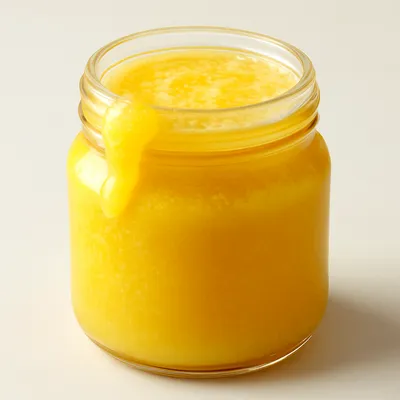
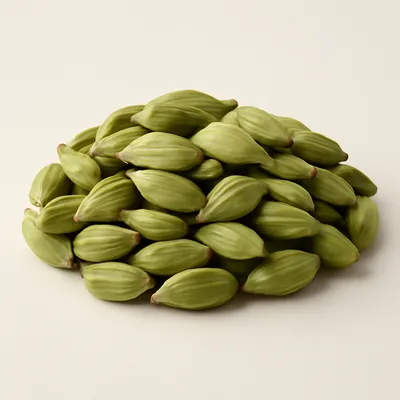
Mix in 1/2 cup sugar, 1/2 cup ghee (melted), 1/2 tsp cardamom, 1/4 tsp fennel powder, 1 tsp salt, 1 ripe mashed banana (optional, traditional).
- 4360 min
Cover; let ferment in a warm spot 6-8 hours (or overnight). Batter should be slightly bubbly.
Watch outThe batter's ready when it's turned slightly bubbly and smells faintly sour — that ferment is what makes the ring puff and soak up less oil.
- 53 min
Heat 5cm vegetable oil or ghee in a wide deep pan to 165°C.
Watch outBring the oil to a medium heat where a drop of batter sizzles up right away — too cold and the ring drinks oil and goes greasy.
- 65 min
Pour batter into a small bottle with a small nozzle. Squeeze batter into the hot oil in a continuous circle (like a doughnut shape).
- 74 min
Fry 2 minutes until ring sets and turns golden; flip and fry 2 more min until both sides are deep gold.
Watch outFry until the ring firms up and turns golden before you flip — nudge it too early and the soft batter breaks apart.
- 81 min
Drain on rack. Serve fresh — the texture is best within 4 hours.
Archive tool suggestions — not reviewed
These legacy suggestions have not been evidence-reviewed and are not presented as required tools.


