
Imarti is a deep-fried syrup sweet of North India, piped from a fermented black-gram (urad dal) batter into a dense, symmetrical flower with a ringed centre and a circle of petals, then fried crisp and soaked in saffron sugar syrup. It is jalebi's stockier, deeper-coloured cousin: where jalebi is a thin, random spiral of refined-flour batter, imarti is a deliberately patterned wheel of ground lentil paste, chewier inside and a deep reddish-orange. Eaten warm, it is a fixture of sweet shops and festivals across Uttar Pradesh, Rajasthan and Bengal, where it also goes by amriti, jhangiri and jaangiri.


Imarti belongs to the same family of fried-batter-in-syrup sweets as jalebi, both descended from the medieval Persian and Arab zulbiya carried into India through Muslim trade and courts. The two diverged in their base: jalebi settled on a fermented refined-wheat batter, while imarti is made from ground, fermented urad dal, which gives a denser, protein-rich coil. The dish is documented across North India under several regional names — imarti or amriti in the Hindi belt, and the closely related jhangiri or jaangiri in Tamil Nadu and the south — and is old halwai (confectioner) work whose precise origin within the broader zulbiya lineage is not separately recorded.
A flat, lacy flower the size of a palm, deep orange-red and glassy with set syrup. The first bite snaps through a thin fried crust, then meets a firmer, chewier interior than jalebi — the lentil paste gives it body and a faint savoury-nutty backbone under the saffron sweetness. Syrup floods out as you chew. It is sweet and warm but grounded by the urad dal, less brittle and less purely sugary than its wheat-flour cousin.
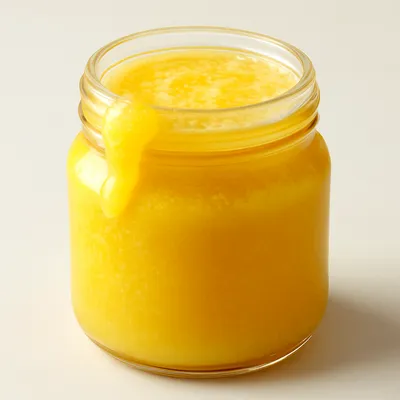
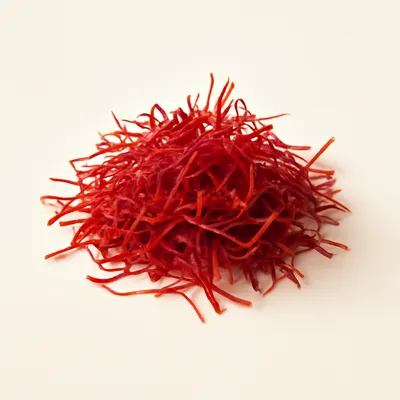
Skinned urad dal is soaked, ground to a stiff, airy paste and fermented briefly so it lightens; the batter must be thick enough to hold a piped shape, unlike jalebi's runnier flour batter. It is piped through a cloth or bottle directly into hot ghee or oil in concentric rings and petals, where the protein-rich paste sets fast into a rigid lattice. The fried flowers are then dropped into warm — not boiling — sugar syrup; the porous fried structure draws syrup in by capillary action, while keeping the syrup below a hard ball stage keeps the surface crisp rather than soggy. Saffron and sometimes a little colour give the deep hue.
Variations
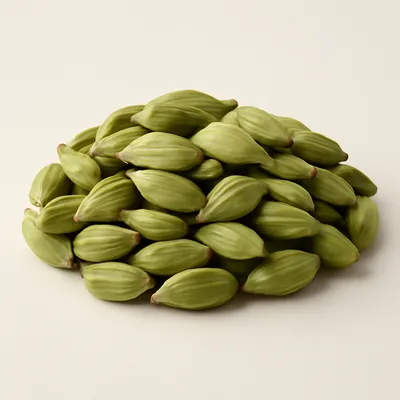
In Tamil Nadu and much of the south the same sweet is made smaller and tighter and called jhangiri or jaangiri, often served at weddings and during Diwali. The Hindi-belt imarti tends to be larger and a deeper red. Some shops add a pinch of rice flour for extra crunch, tint the batter with saffron or food colour, and scent the syrup with cardamom or rose water; imarti is also paired with rabri (thickened sweet milk) much as jalebi is.
On the Palate
Where Imarti sits in the Indian flavor cloud
Ingredients
Serves 6How it's made
6 steps · 30 min
- 1360 min
Soak skinned urad dal for 4-6 hours, then grind to a thick, fluffy, smooth paste with minimal water.
Watch outGrind the batter thick and fluffy, not runny — it has to hold a piped ring without spreading; too thin and the flower shape slumps into a puddle in the oil.
- 2180 min
Whip the batter well to aerate it and let it rest a few hours to ferment slightly; tint with a little saffron or colour.
- 315 min
Make a one-string sugar syrup with cardamom and saffron and keep it warm.
- 420 min
Fill a piping cloth or bottle with batter and pipe concentric flower shapes directly into medium-hot ghee or oil.
- 58 min
Fry, flipping once, until crisp and set but not dark, then lift out and drain briefly.
- 65 min
Soak the hot fried flowers in the warm syrup for 1-2 minutes, lift out glistening, and serve warm.
Watch outSoak the hot fried flowers in warm — not boiling — syrup for a minute or two — the porous fried lattice wicks the syrup in while a cool-enough syrup keeps the surface crisp instead of soggy.
Archive tool suggestions — not reviewed
These legacy suggestions have not been evidence-reviewed and are not presented as required tools.


