
Ghevar is a Rajasthani disc-shaped sweet with an open honeycomb lattice, made by drizzling a thin, ice-cold flour-and-ghee batter into a deep ring of very hot ghee, where it sets into a crisp, porous, golden wheel riddled with holes. The fried disc is then soaked in or drizzled with sugar syrup; richer versions are topped with rabri (thickened sweetened milk), saffron, nuts and silver leaf. Crunchy at the edge and syrup-soft in the middle, it is the signature sweet of the monsoon festivals Teej and Raksha Bandhan across Rajasthan and neighbouring regions.



Ghevar is a traditional Rajasthani festival sweet, strongly associated with Teej and Raksha Bandhan and with the confectioners of Jaipur, and is widely documented as a regional speciality of Rajasthan and the surrounding Hindi belt. Its defining feature — a porous honeycomb disc formed by drizzling cold batter into hot fat — is an old halwai technique; no single inventor or founding date is reliably recorded for it. Plain (sada), syrup-glazed (mawa) and milk-topped (malai) forms are all long-established within the Rajasthani sweet repertoire.
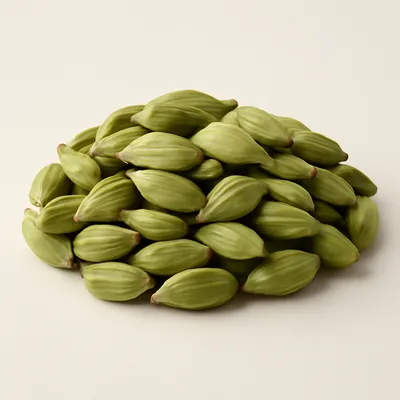
A thick, golden disc that looks like a fried sponge or a coral — a stiff rim of crunchy lattice giving way to a softer, syrup-logged centre full of open holes. The edge crackles and shatters; the middle is wet and sweet where syrup has pooled in the cavities. Plain ghevar is biscuit-crisp and lightly sweet; the malai version layers cool, milky rabri and chopped nuts over the warm crisp base, so each bite runs from crunchy to creamy. Cardamom and saffron thread through.
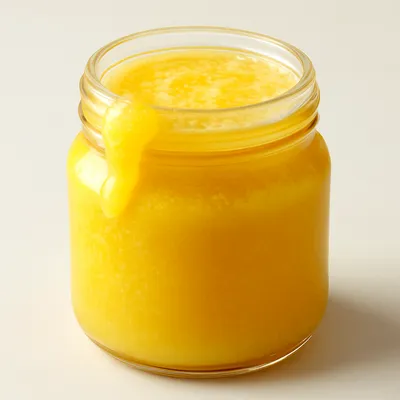
The batter must be very thin and very cold — flour, a little ghee rubbed in, and iced water or even ice cubes — and it is poured in a slow trickle from a height into ghee held very hot. The huge temperature shock makes the batter splatter and instantly set in lacy threads around the ring mould; the cold fat in the batter and the hot fat in the pan create steam and rapid frying that leave a rigid, open honeycomb. Building the disc up in repeated thin drizzles is what gives the height and the airy holes. Once fried and cooled, the porous structure soaks syrup, while the crisp rim resists going soft.
Variations
Sada (plain) ghevar is just the syrup-soaked crisp disc; mawa ghevar incorporates khoya into the batter for a richer, denser wheel; and malai or rabri ghevar is crowned with thick sweetened milk, saffron, slivered nuts and silver leaf, the most festive form. Some makers scent the syrup with cardamom, rose or kewra; sizes range from individual discs to large platters cut into wedges. The technique is also the base for related lattice sweets in the wider region.
On the Palate
Where Ghevar sits in the Indian flavor cloud
Ingredients
Serves 6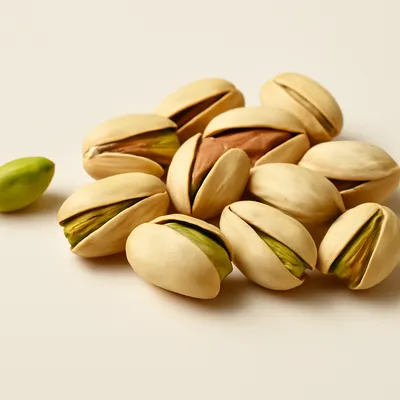
How it's made
6 steps · 40 min
- 115 min
Rub a little ghee into flour, then whisk in iced water (with ice cubes) to a thin, cold, lump-free batter.
Watch outWhisk the batter thin and ice-cold — the cold fat is what steams and splatters into lacy threads; a warm or thick batter fries into a dense pancake.
- 210 min
Heat ghee in a tall, narrow ghevar mould or deep pan until very hot, almost smoking.
- 325 min
Drizzle the cold batter in a thin stream into the centre; let it splatter and set, repeating in layers to build a porous disc.
Watch outDrizzle the cold batter in a thin stream from a height into the near-smoking ghee — the temperature shock is what makes it splatter and set into the open honeycomb.
- 410 min
Clear the central hole with a stick and fry until golden and crisp; lift out carefully and drain.
- 512 min
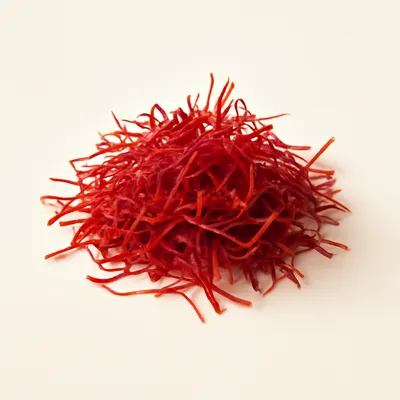
Make a one-string saffron-cardamom syrup and pour or dip the disc to soak it.
- 68 min
Top as desired with rabri, chopped nuts and silver leaf; serve.
Archive tool suggestions — not reviewed
These legacy suggestions have not been evidence-reviewed and are not presented as required tools.


