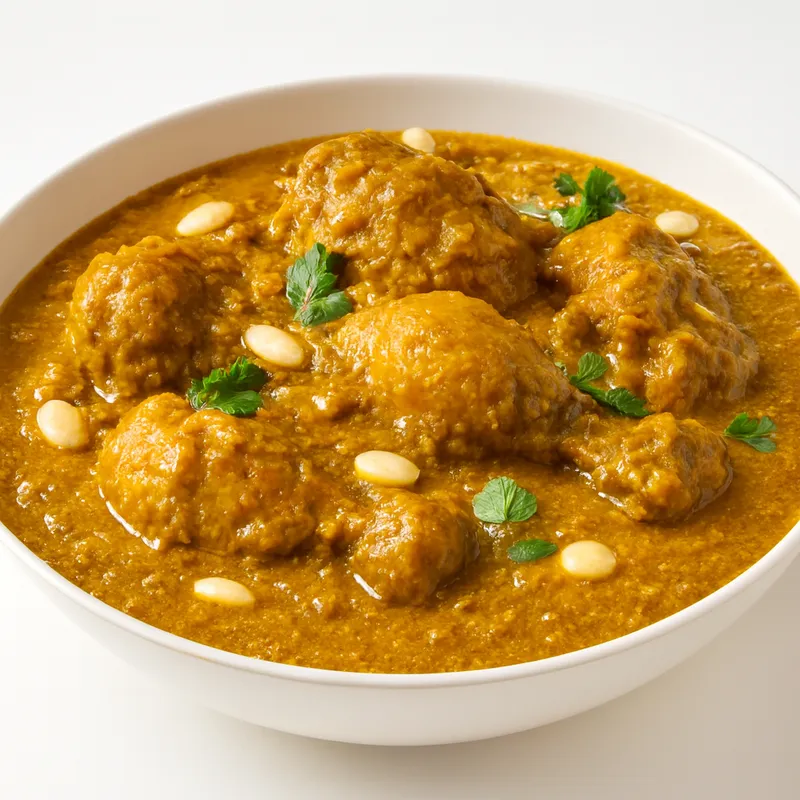
A temple-born Odia sweet of flattened chhena (fresh curd cheese) patties, deep-fried in ghee to a reddish brown, then soaked in thickened, cardamom-scented milk until they turn soft and spongy. It originated as a daily offering at the Baladevjew Temple of Kendrapara and is also one of the 56 offerings of the Jagannath Temple at Puri.
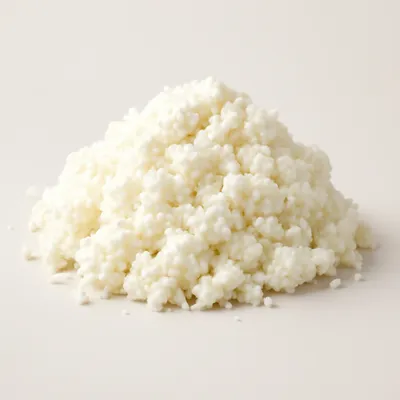
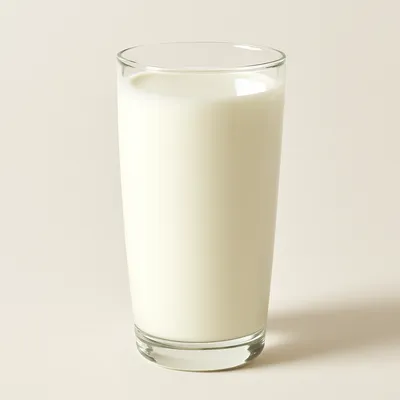

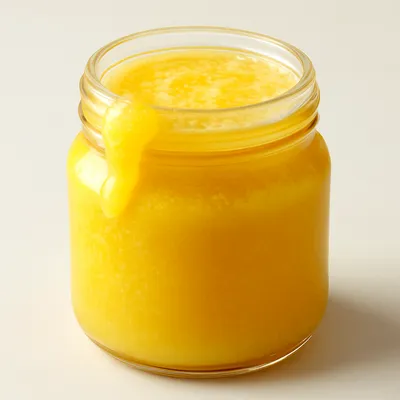
Rasabali is a sweet of the Baladevjew Temple at Ichhapur (Tulasi Kshetra) in Kendrapara district, Odisha, where it is offered daily as bhog to the presiding deity Baladevjew (Balarama). The present shrine was constructed in 1761 during the Maratha rule in Odisha, under Moharani Kalyani, though the Tulasi Kshetra site it stands on is far older; the sweet's association with the temple is thus tied to at least that 18th-century foundation. Rasabali is also one of the Chappana Bhoga — the 56 offerings — of the Jagannath Temple at Puri, which places it within the oldest continuous temple-kitchen tradition in India. The sweet itself is built from chhena (fresh acid-set curd cheese) kneaded and pressed into flat round patties, deep-fried in ghee until reddish-brown, and then simmered in thickened, sweetened, cardamom-scented milk (rabri) until they soften and absorb it. In October 2023, Kendrapara Rasabali was awarded a Geographical Indication tag, registered to Kendrapara district.
Soft, spongy, ghee-warm cheese patties swimming in thick, cool, cardamom-scented milk that has turned faintly caramel from the frying.
The texture is fixed by two stages that mirror rasgulla's logic with a fried twist. Kneading the chhena develops its casein proteins into a network that holds the patties together through frying; without kneading, the loose curd would crumble in the hot ghee. Deep-frying at roughly 150–160°C sets the surface through Maillard browning on the milk proteins and caramelization of the residual milk sugars, giving the patties their reddish-brown color and a thin, flavorful crust. Simmering those fried patties in the thickened milk then rehydrates them: the porous, crust-bound structure wicks the sweet milk inward by capillary action, softening the interior to a spongy texture while the crust holds long enough to keep the patties intact. The milk itself is thickened by slow evaporation, concentrating its lactose and proteins until it coats the tongue.
Variations
Home versions use paneer or ricotta in place of fresh chhena; the temple form is firmer and more uniformly reddish, and the milk is sometimes finished with saffron.
On the Palate
Where Rasabali sits in the Indian flavor cloud
Ingredients
Serves 6How it's made
6 steps · 30 min
- 110 min
Bring milk to a boil, curdle it with a mild acid, and drain the chhena; knead it smooth.
Watch outKnead the drained chhena until smooth — un-kneaded curd stays loose and the patties crumble apart in the hot ghee.
- 25 min
Shape the chhena into flat, round patties and set aside.
- 312 min
Thicken a separate quantity of milk with sugar and cardamom to a creamy rabri consistency.
- 48 min
Deep-fry the patties in ghee over moderate heat until reddish-brown on both sides.
Watch outDeep-fry on moderate heat to an even reddish-brown — too hot burns the surface before the inside sets; too cool and they soak up grease.
- 55 min
Slide the hot patties directly into the warm thickened milk.
- 65 min
Simmer briefly until the patties soften and absorb the milk, then serve warm or chilled.