
Ripe plantains (ndizi) sliced into 1.5-cm rounds and shallow-pan-fried in oil until both sides are caramelized golden-mahogany, with the natural sugars fully caramelized into a sweet-savory glaze. Served as a starchy side to fish curry, beef stew, or pilau; eaten with rice and beans as a quick light meal.
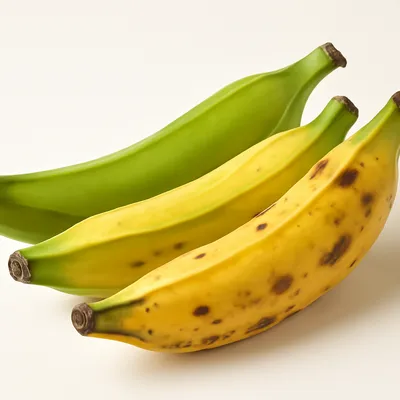


Ndizi kaanga ('fried bananas' in Swahili) is the universal Tanzanian-Swahili-coast side dish made from East African banana cultivation. Bananas are the most-cultivated fruit in Tanzania, especially the Kilimanjaro region. The dish is simple, fast, and accommodates the natural sweetness of ripe plantains. Sold from street stalls in Dar-es-Salaam as a quick snack with a side of beans or rice. Restaurants always have ndizi kaanga as a side, regardless of the main; it's the Tanzanian equivalent of fries.
Bite into a slice — outside is dark-caramelized and slightly crisp; inside is custard-soft with the natural plantain sweetness amplified by the caramelization. The contrast of dark-brown caramelized edge vs. pale-gold tender interior is the visual signature. Eaten alone, it's dessert-adjacent; eaten with fish curry or pilau, the sweet-savory plays beautifully. The Tanzanian side dish that everyone — kids, adults, tourists — adores.
Ripe plantains (with black spots) have converted most of their starch to sugar — this is what allows the deep caramelization in the pan. Unripe plantains can't caramelize and would taste flat. Medium-high heat with sufficient oil creates a fast Maillard browning crust before the interior overcooks. The slight salt at the end isn't just seasoning — it amplifies the perception of sweetness by contrast.
Variations
Coconut-oil ndizi kaanga (Swahili-coast version) uses coconut oil for an additional aromatic layer. Sweet ndizi kaanga doubles down with a sprinkle of sugar in the final 30 seconds for a candy-like glaze (children's variant). Spicy version sprinkles cayenne or red chili flakes for sweet-and-spicy. Modern Dar-es-Salaam bistros serve ndizi kaanga as dessert with a scoop of vanilla ice cream and a drizzle of honey.
On the Palate
Where Ndizi Kaanga sits in the Tanzanian flavor cloud
Ingredients
Serves 4How it's made
10 steps · 20 min active + 10 min waiting
- 13 min
Choose 4 large ripe plantains (yellow with black spots; if all-yellow they're not ripe enough — the sugars are still mostly starch). Black-spot plantains are perfect.
Watch outPick plantains that are yellow flecked with black — all-yellow ones are still starchy and won't caramelize, they'll just taste flat.
- 24 min
Peel each plantain by scoring the skin lengthwise (3 shallow cuts), then peeling sideways — the skin is thicker than a banana so it requires this technique.
- 33 min
Slice each peeled plantain diagonally into 1.5-cm thick rounds. This gives more surface area for caramelization than straight rounds.
- 42 min
Heat 4 tbsp vegetable oil (or coconut oil for the Swahili-coast version) in a wide cast-iron or non-stick skillet over medium-high. Oil should be hot enough that a test plantain piece sizzles immediately.
- 51 min
Place plantain slices in a single layer; don't overcrowd. Reduce heat to medium so the bottoms have time to caramelize without burning the surface.
Watch outSingle layer, then drop to medium — crowding steams them and too-high heat burns the surface before the sugars caramelize.
- 64 min
Cook 3-4 min on the first side until deeply golden-brown with visible caramelization. Flip carefully with a spatula.
Watch outLeave the first side alone until it's deep golden-brown with dark shiny patches — that caramel crust is the whole point; flip too early and it tears.
- 73 min
Cook 3 min on the second side. The plantain interior should be soft (poke gently with a fork to test) and both sides should be golden-mahogany with darker caramelized patches.
- 82 min
Lift onto paper towels briefly. Sprinkle very lightly with salt (about ¼ tsp total).
Watch outSalt while hot but keep it to a pinch — just enough to make the caramel sweetness pop, not to taste salty.
- 92 min
Serve immediately as a side dish — alongside fish curry, beef stew, pilau, or with rice and beans for a lighter meal. The slight saltiness balances the caramel sweetness.
- 102 min
Tanzanian street-stall presentation often serves them piled in a paper cone with a small dish of fresh chopped chili-tomato sauce for dipping.


