A lacy southern sweet from Nakhon Si Thammarat: a thin, golden web of rice-flour batter drizzled in fine criss-crossing threads onto a hot greased pan, where it sets into a delicate openwork sheet that is then folded into a soft half-moon. The batter is enriched with egg, which gives the lace its gold colour and tender chew. Among the most distinctive of the southern temple sweets, khanom la is best known as one of the five ritual desserts offered to ancestors during the Tenth Lunar Month festival.


Khanom la is a traditional sweet of Nakhon Si Thammarat in southern Thailand, made of rice flour with egg yolk drizzled into a fine golden web. It is best known as one of the five symbolic desserts of the Sat Thai festival, the Tenth Lunar Month merit-making held in September or October that is central to the southern provinces; within that offering the lacy khanom la stands for cloth or clothing presented to the spirits of departed ancestors. Its name is thought to come from kala, the Thai word for coconut shell, after the perforated half-shell once used to drizzle the threads. In villages around Pak Phanang it is still made communally for the festival, families gathering to pour the delicate webs by hand.
Held to the light it is all holes and threads, like a scrap of golden lace. The first bite is soft and slightly chewy, not crisp — the egg-rich strands have a tender, almost noodle-like give — with a clean sweetness and the round flavour of coconut and egg behind it. Folded over, the layers cling lightly so the whole piece pulls apart in fine fibres. There is a faint toast at the edges where the lace browned on the pan. It is gentle and a little fragile, meant to be eaten in unhurried bites with tea.
The web is a controlled set: a thin egg-and-rice-flour batter is drizzled in fast, crossing threads through the holes of a perforated cup or shell held above a hot, lightly greased pan, and each thread must gel on contact and fuse where the lines meet, building an open lattice rather than a solid sheet. Batter consistency is everything — too thin and the threads break and won't join, too thick and they clog the holes and pool into a pancake. The egg yolk is doing real work: its proteins set the fine strands quickly and hold the lattice together, and they give the colour and the tender, slightly chewy bite that tells khanom la apart from a brittle fried lace. The pan is kept moderate so the threads cook through and fuse without browning hard; the finished sheet is folded while still warm and pliable, before it can dry and crack. The thicker, less oily la chet sets soft into a half-moon, while la krop is made crisp with extra sugar and drying.
Variations
The two main forms are la chet — thicker, less oily, folded soft — and la krop, made crisp by adding more sugar and sun-drying or rolling on a stick. Some cooks scent the batter with coconut cream for richness or pandan for fragrance. Beyond the Tenth Lunar Month offering, khanom la is now made and sold year-round across the south as an everyday sweet, though the festival version remains the one tied to merit-making and to memory.
On the Palate
Where Khanom La sits in the Thai flavor cloud
Ingredients
Serves 8How it's made
8 steps · 45 min active + 15 min waiting
- 18 min
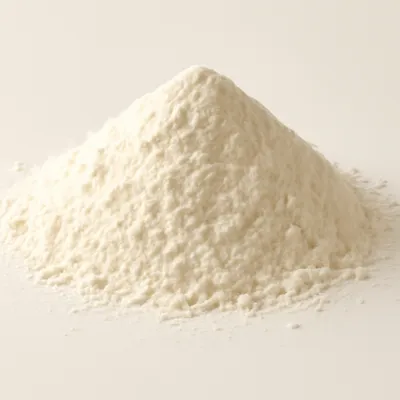
Whisk rice flour with egg yolk, sugar, a little coconut milk and water into a smooth, thin batter.
- 25 min
Rest the batter briefly, then check it falls in fine unbroken threads from a fingertip.
Watch outTest the batter off a fingertip — it must fall in fine unbroken threads; too thin and they snap, too thick and they clog the holes into a pancake.
- 34 min
Heat a flat pan over moderate heat and wipe it with a thin film of oil.
- 43 min
Pour the batter into a cup pierced with several small holes, or a perforated coconut shell.
- 56 min
Drizzle the batter over the pan in fast criss-crossing passes to lay down a lacy web.
- 65 min
Let the threads set and fuse into an openwork sheet, cooking through without hard browning.
Watch outCook the web through without hard browning — you want a pale, pliable lace; brown it and it turns brittle and cracks when you fold.
- 74 min
While still warm and pliable, fold the lace sheet into a soft half-moon and lift it out.
Watch outFold while still warm and pliable — let it cool and stiffen first and it cracks instead of bending into a half-moon.
- 85 min
Cool slightly and arrange; serve as a teatime sweet or stack for a festival offering.