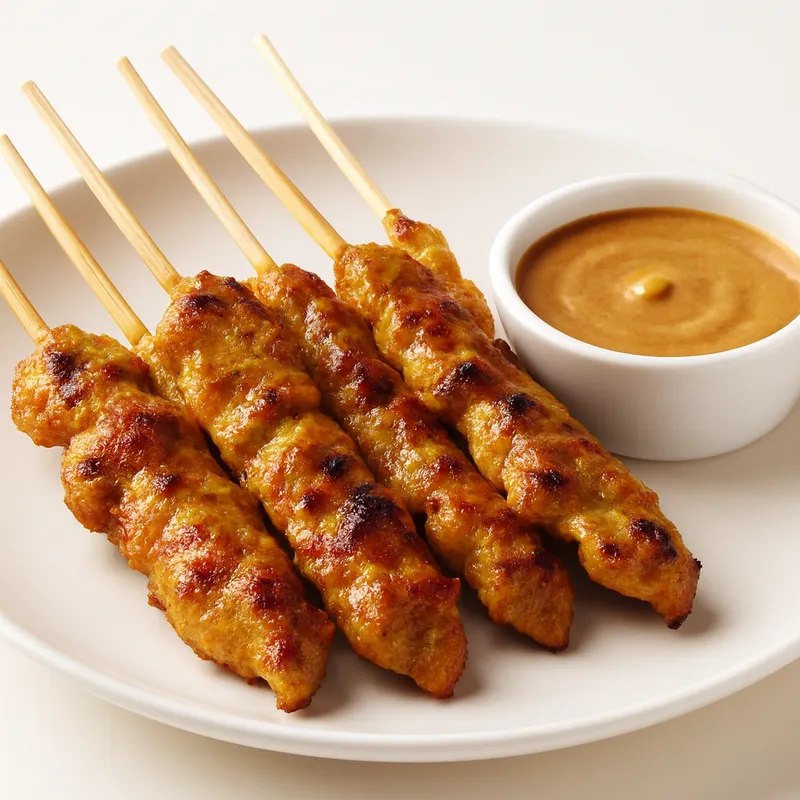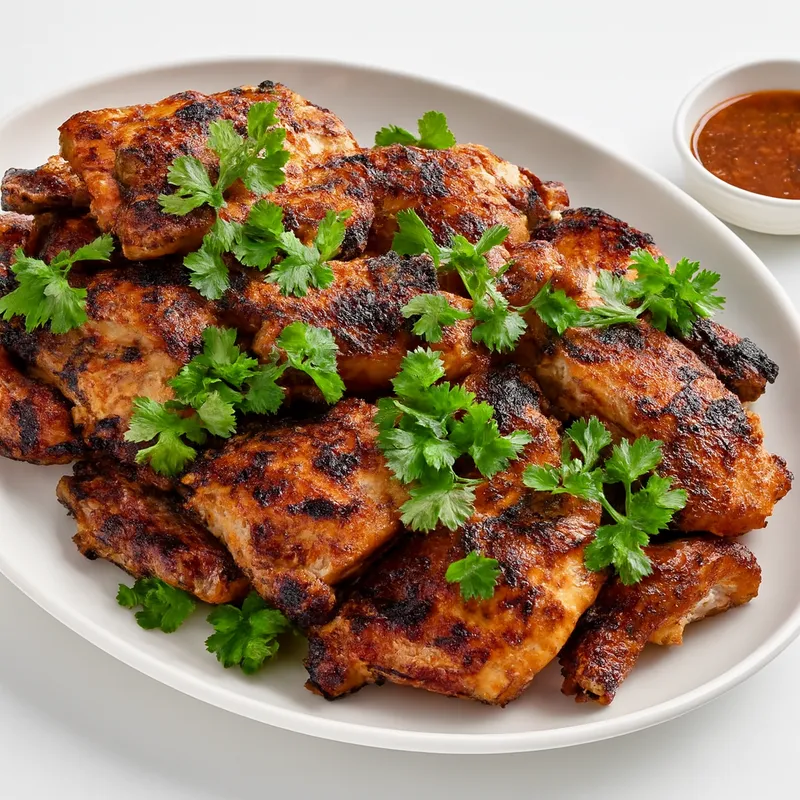
Succulent grilled chicken marinated with fragrant lemongrass, earthy cilantro root, and a touch of coconut milk, giving it a smoky, sweet, and savory finish.



Isaan and Lao street food, originally cooked by Lao-speaking villagers along the Mekong well before modern Thai borders existed. The dish migrated into Bangkok in the 1970s alongside som tum as Isaan workers opened streetside grill stalls. The cilantro-root-and-white-pepper marinade is the Lao-Isaan signature; coconut-milk basting is a Central Thai softening adopted later.
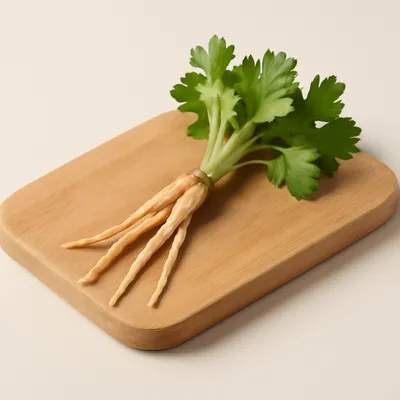
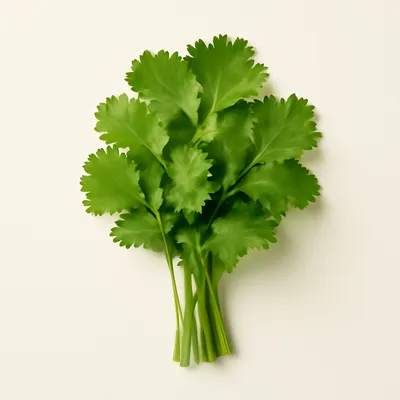
Mekong Lao-Isaan grill that walked into Bangkok in the 1970s with the som tum stalls. Cilantro root — not leaf — is the load-bearing aromatic; it's the only part with the resinous compound that survives charcoal heat.
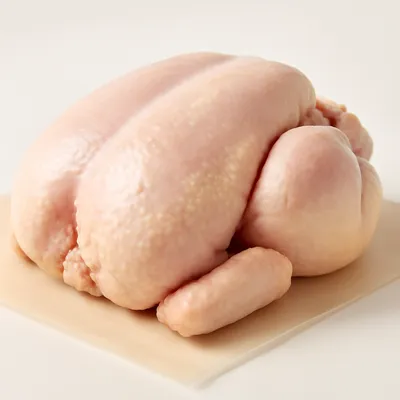
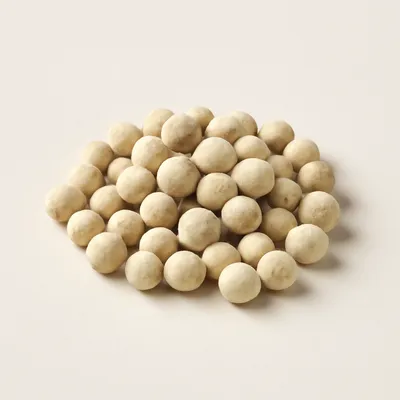
Butterflied chicken — usually a whole bird split flat — marinated in cilantro root, white pepper, garlic, fish sauce, and a splash of coconut milk, then grilled slow over charcoal until the skin is bronze-mahogany and crackles. Served with sticky rice and jaew (a roasted-chili-lime-fish-sauce dip). The meat is dry-firm, not juicy in the European roast-chicken sense; you tear it with your hands. Smoke goes deep; cilantro root gives a green-pepper bite.
Cilantro root is load-bearing, not the leaf — it's the only part with the resinous, peppery compound that survives charcoal heat. The bird is butterflied so it cooks evenly over indirect coals; direct flame chars the skin before the thigh meat hits 75°C. Coconut-milk basting is for color, not moisture — the milk solids brown into that mahogany skin.
Variations
Bangkok's Soi Polo (Polo Fried Chicken), a half-century-old shop by Lumpini Park, is famous for the Central-Thai Isaan repertoire including the softer coconut-basted grilled style (though its bestseller is garlic fried chicken); Khon Kaen and Udon Thani street grills keep it dry and Lao-style; jaew is the Isaan dip, while nam jim kai (sweet chili) is the Bangkok adaptation.
On the Palate
Where Gai Yang sits in the Thai flavor cloud
Ingredients







How it's made
6 steps · 4 hours
- 115 min
Pound lemongrass, cilantro root, and kratiem into a coarse paste using a krok.
Watch outPound until the fibers break down into a damp, fragrant paste, not just bruised chunks.
- 29 min
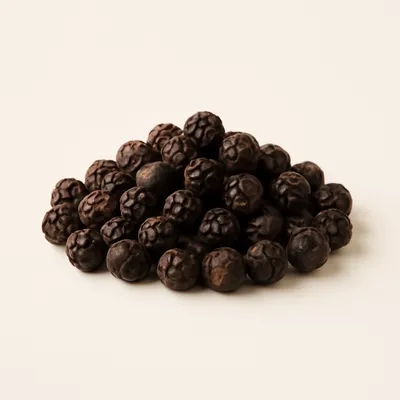
Mix the paste with black pepper, nam pla, soy sauce, palm sugar, and coconut milk to create a marinade.
- 36 min
Thoroughly coat the chicken with the marinade, ensuring it seeps into every crevice.
- 4180 min
Let the chicken marinate for at least two hours, allowing the flavors to infuse deeply.
- 524 min
Grill the chicken over medium heat, basting occasionally with leftover marinade until golden and cooked through.
Watch outBaste only near the end; brush too early and the coconut-milk sugars scorch black before the meat is done.
- 66 min
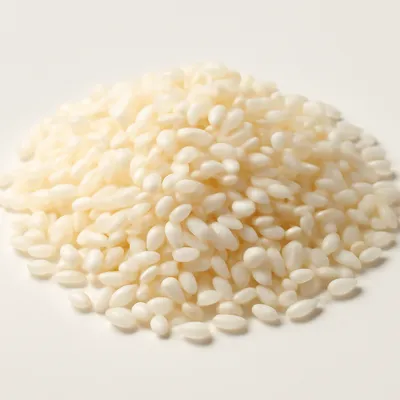
Serve hot, traditionally accompanied by sticky rice and a tangy chili dip.
Watch outSkin should read deep mahogany and juices run clear at the thigh joint before it comes off.
Archive tool suggestions — not reviewed
These legacy suggestions have not been evidence-reviewed and are not presented as required tools.
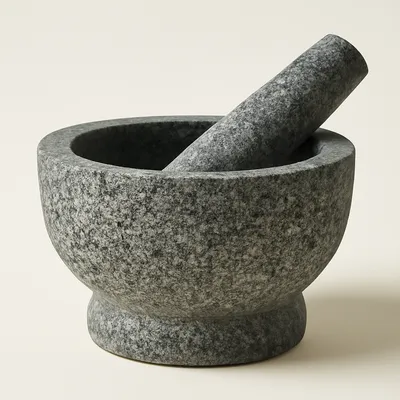
The simplest tool in any kitchen: a heavy bowl and a club to bash things in it. Different cuisines use different stones — Thai cooks pound green papaya in a tall granite mortar (krok hin); pesto Genovese requires the soft-pored Carrara marble; Indian masalas grind down on rough basalt. The bash-don't-cut motion releases volatile oils that a blade keeps sealed in the cell wall.
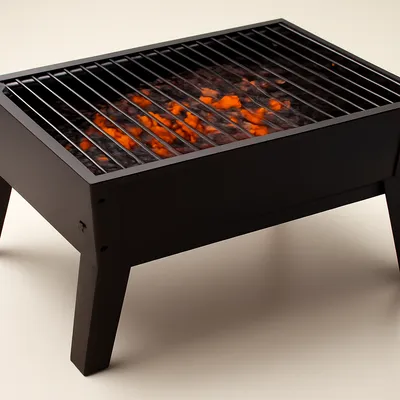
An open or hooded metal frame holding a bed of glowing charcoal embers, with a grate above. Charcoal burns at 700°C+ on the surface and emits short-wave infrared, which cooks proteins faster and with deeper Maillard browning than gas. Hardwood lump charcoal (oak, mesquite, fruitwood) lends its own smoke; cheap briquettes do not. Mastery is mostly heat zoning — direct over coals for searing, indirect off-coals for slow-roasting.