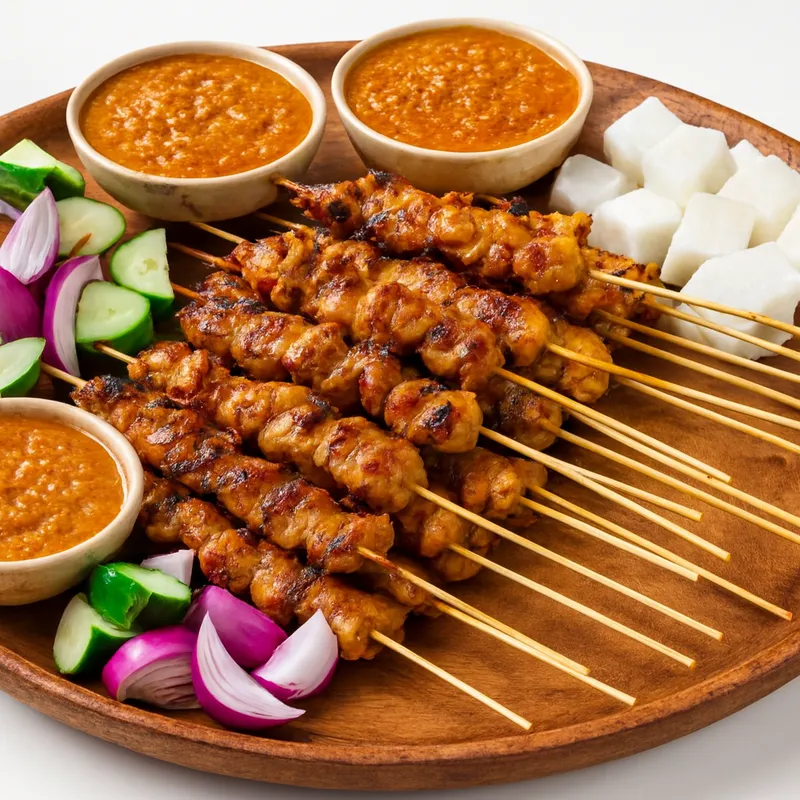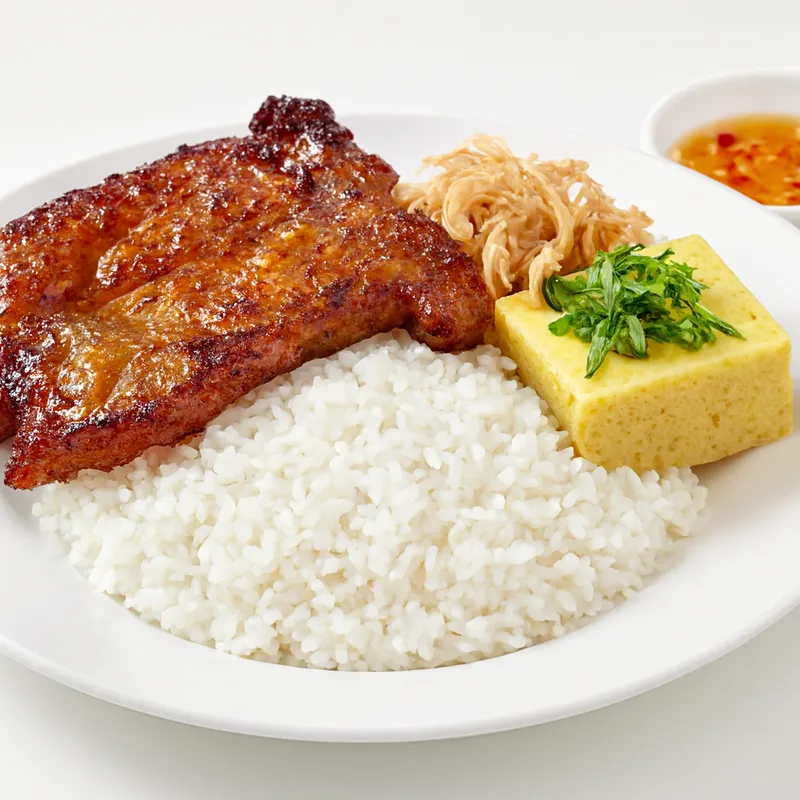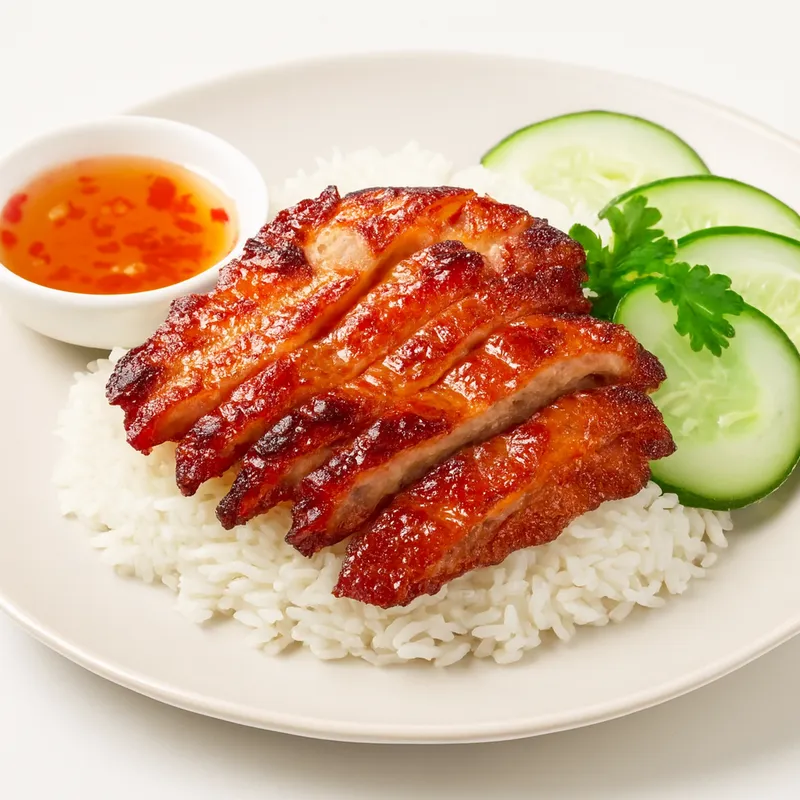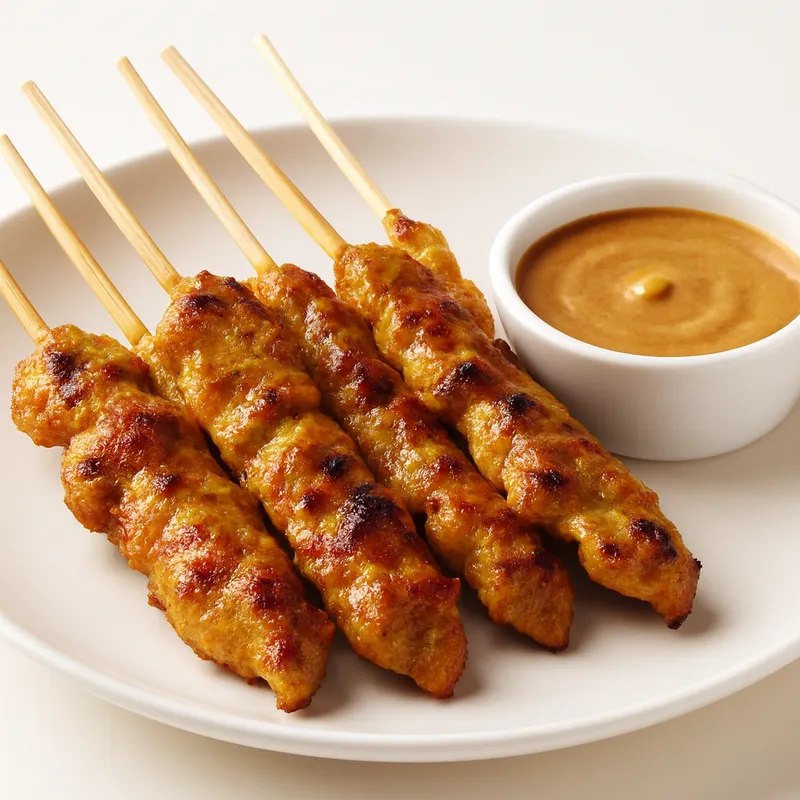
Thai-style grilled meat skewers marinated in turmeric and lemongrass, served with rich peanut dipping sauce.



Originated in Java around the early 19th century — Indonesian sate, often credited to street vendors adapting Indian kebab technique brought by Tamil Muslim traders. It moved across the Malay archipelago and into southern Thailand by the late 1800s, where Thai cooks rebuilt it around turmeric and coconut. The Thai version is sweeter and more lemongrass-forward than the Indonesian original.
Javanese sate migrated through Malaysia into Thailand and picked up turmeric and coconut milk en route. The peanut sauce is a Thai addition; Indonesian sate uses kecap manis.
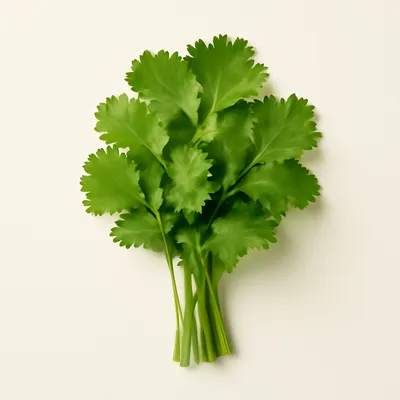
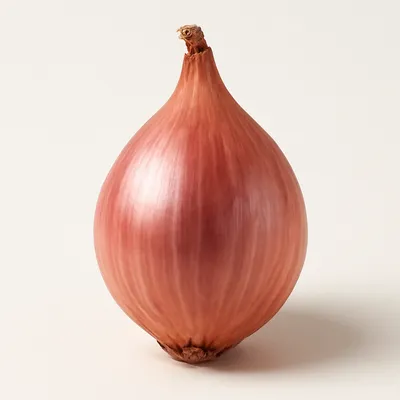
Bamboo-skewered strips of pork or chicken marinated in turmeric, lemongrass, coriander root, and coconut milk, grilled over charcoal until the edges char and the marinade glazes yellow. Peanut sauce on the side — peanuts ground with red curry paste and coconut milk, not the sugary stuff in jars. A little salad of cucumber, shallot, and chili in vinegar cuts the fat.
Marinating in coconut milk does two things: its mild acidity tenderizes more gently than yogurt — without yogurt's lactic acid and calcium, it won't toughen the meat even after hours, and the fat carries fat-soluble turmeric and lemongrass compounds into the meat. Skewers must be grilled hot and fast — slow heat dries the lean strips into jerky. The peanut sauce is a separate red curry, not a dip; tasting it raw on a spoon should read as savory-spicy, not candy.
Variations
Sate Madura (Indonesia, sweet soy); sate Padang (yellow turmeric gravy, no peanut); Malaysian sate kajang (richer marinade); Thai moo satay leans heavier on coriander root and curry powder.
On the Palate
Where Satay sits in the Thai flavor cloud
Grill lean skewers hot and fast: the coconut-milk marinade keeps the meat tender for hours, but slow, cool heat dries these thin strips into jerky — you want a quick char over hot coals while the inside stays juicy.
Ingredients





How it's made
5 steps · 42 min active + 1 hour waiting
- 110 min
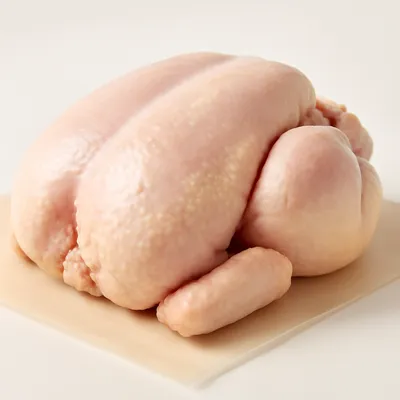
Cut the meat into small, thumb-sized cubes and thread them onto skewers, leaving space between each piece for even cooking. If using bamboo skewers, soak them in water for at least 30 minutes beforehand to prevent burning.
Watch outEnsure the skewers are soaked long enough to prevent burning.
- 210 min
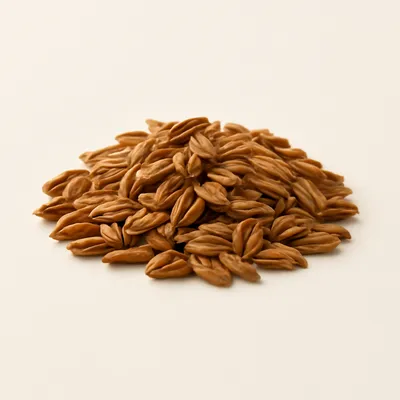
In a bowl, combine turmeric, lemongrass, coconut milk, garlic, and cumin. Add sugar and fish sauce to taste, creating a fragrant marinade. Coat the skewered meat thoroughly with this mixture and let it marinate for at least 1 hour in the refrigerator.
Watch outRub the marinade into every side and let it sit a full hour — the meat should take on a deep yellow from the turmeric before it hits the grill.
- 312 min
Preheat a charcoal grill to medium-high heat. Grill the skewers over the hot coals, turning occasionally, until the meat is cooked through and has a nice char, about 10-12 minutes.
Watch outKeep the coals hot and turn often; pull the skewers the moment the edges char and the juices run clear, not a minute past.
- 45 min
While the satay is grilling, prepare the peanut sauce by blending peanuts with coconut milk, a pinch of sugar, and a splash of fish sauce until smooth. Heat gently to meld flavors, but do not let it boil.
Watch outWarm the peanut sauce just to a lazy simmer to meld it; if it climbs to a boil the coconut splits and slicks with oil.
- 55 min
Serve the satay hot off the grill with a side of peanut sauce for dipping, and garnish with fresh cucumber slices and crispy fried shallots for added texture and flavor.
Archive tool suggestions — not reviewed
These legacy suggestions have not been evidence-reviewed and are not presented as required tools.

The simplest tool in any kitchen: a heavy bowl and a club to bash things in it. Different cuisines use different stones — Thai cooks pound green papaya in a tall granite mortar (krok hin); pesto Genovese requires the soft-pored Carrara marble; Indian masalas grind down on rough basalt. The bash-don't-cut motion releases volatile oils that a blade keeps sealed in the cell wall.
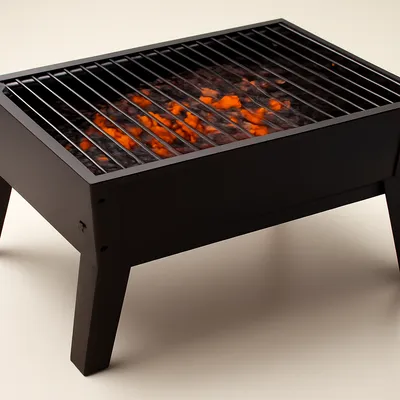
An open or hooded metal frame holding a bed of glowing charcoal embers, with a grate above. Charcoal burns at 700°C+ on the surface and emits short-wave infrared, which cooks proteins faster and with deeper Maillard browning than gas. Hardwood lump charcoal (oak, mesquite, fruitwood) lends its own smoke; cheap briquettes do not. Mastery is mostly heat zoning — direct over coals for searing, indirect off-coals for slow-roasting.