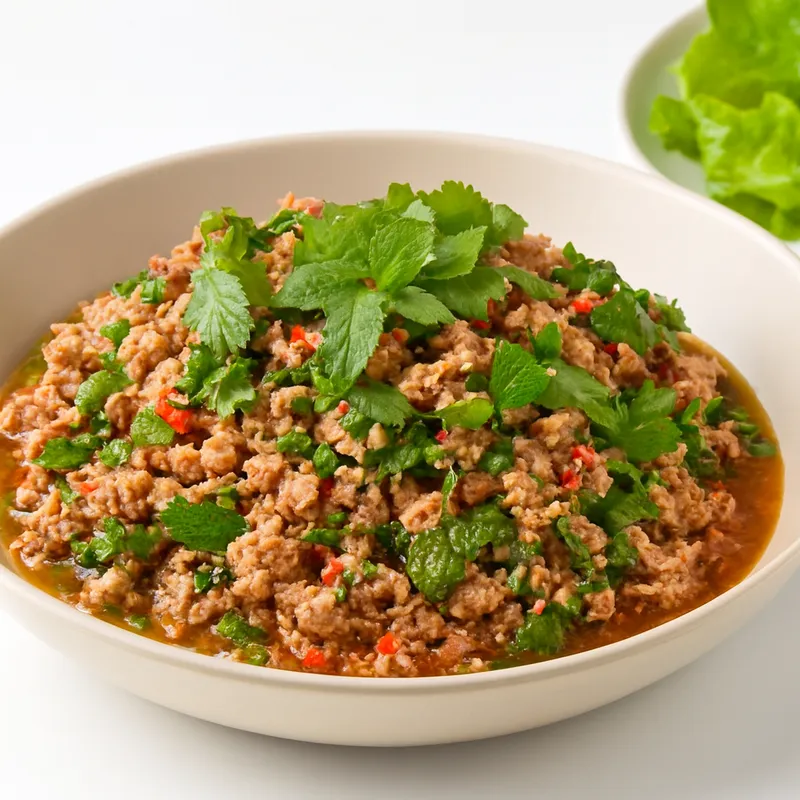
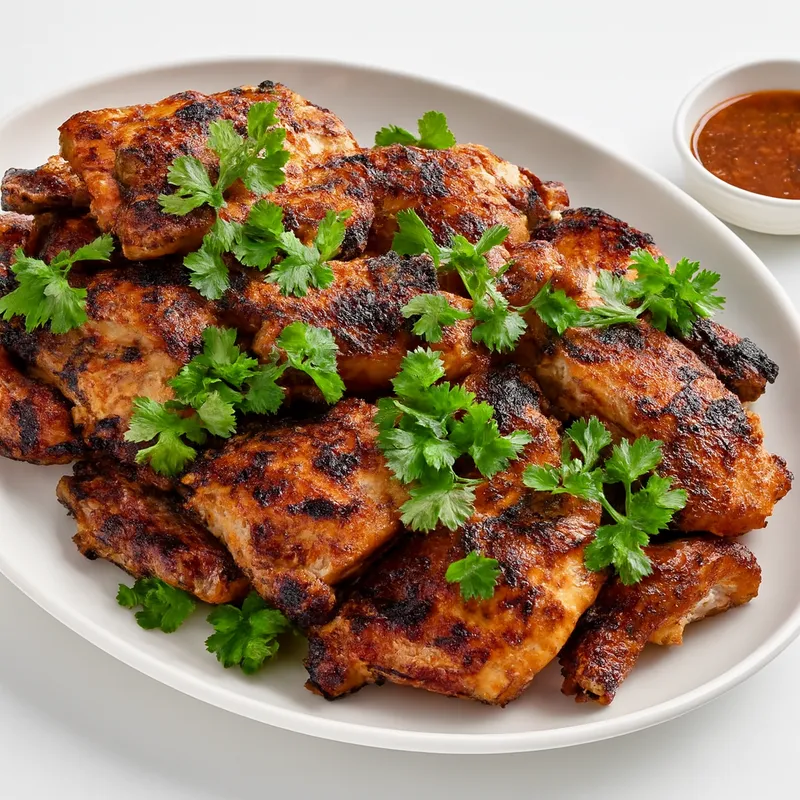
Charcoal-grilled beef brisket sliced thin against the grain, served warm with nam jim jaew — a toasted-rice, chile-flake, lime, and fish-sauce dip.
Suea rong hai is Isaan grilled beef — the name literally means 「crying tiger」, with several folk explanations — the most common being that the jaew dip is so fiery even a tiger weeps, alongside others that the brisket is so tough a tiger weeps chewing it, or that the tiger weeps having eaten everything but the best cut. The dish belongs to the Lao-Isaan grilling repertoire alongside kor moo yang (grilled pork neck) and is always paired with nam jim jaew, the toasted-rice dip that defines northeastern Thai-Lao border cooking. Served on bamboo trays with sticky rice and raw vegetables in roadside grills (raan moo krata) across Khon Kaen, Udon Thani, and Nong Khai.
「Crying tiger」 — folk story says the brisket is so tough even a tiger weeps. Always paired with nam jim jaew, the toasted-rice dip of the Khon Kaen-Udon-Nong Khai grill belt. Slice 3mm across the grain or the cut eats stringy.
Charred-edged beef slices, warm not hot, with a deep red centre that bleeds slightly onto the plate. Dip a slice into the jaew and the toasted-rice powder grits against the meat — that gravelly texture is the whole point. Mouth gets salt, sour-lime, smoke from the chile flakes, then the slow heat. Sticky rice ball cools each bite. If the beef is grey through, the cook over-grilled it; if the jaew tastes one-note salty, the rice powder was under-toasted.
Two load-bearing details. First, the cut: brisket and skirt have long parallel muscle fibres — slicing across them, 3mm thin, is what makes a tough cut chewable. A thick or with-the-grain slice ruins it. Second, the toasted-rice powder (khao khua) — toasting glutinous rice past golden, almost to the brink of burning, develops the smoky-nutty aroma. Under-toasted rice powder makes jaew taste flat and pasty. The grind should be sandy, not floury, so it grits against the meat.
Variations
Suea rong hai with brisket (the canonical, toughest cut); skirt-steak version (more common in Bangkok); Northern-Thai version uses sai oua sausage scraps and a milder jaew; restaurant chains like Tueng Tuek serve it with three-jaew flights (toasted-rice, tamarind, chile-vinegar).
On the Palate
Where Suea Rong Hai sits in the Thai flavor cloud
Ingredients
Serves 4






How it's made
5 steps · 25 min active + 15 min waiting
- 15 min
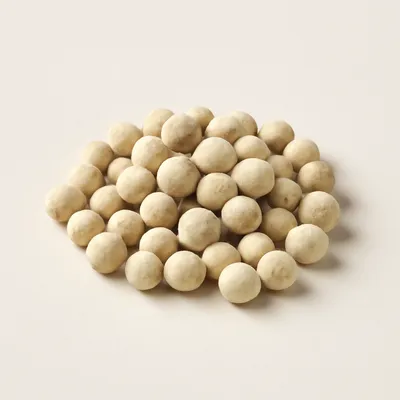
Pat 600g beef brisket (or skirt/flank) dry. Rub with 2 tbsp fish sauce, 1 tbsp Thai thin soy, 1 tsp white pepper, 1 tsp sugar. Rest 15 minutes at room temp — do not over-marinate, the salt will draw out moisture and toughen it.
- 26 min
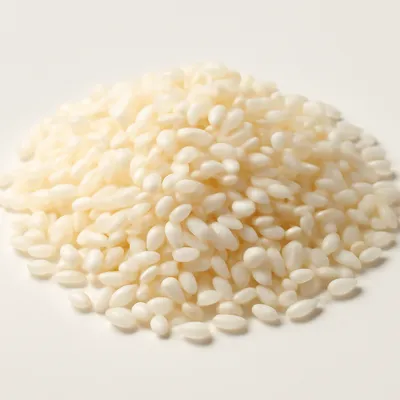
Toast 3 tbsp glutinous rice (khao niao) in a dry pan over medium heat, shaking, until deeply golden — 5 minutes. Pound or grind to a coarse sandy powder (khao khua). This is the textural backbone of jaew.
Watch outToast the glutinous rice past golden to the brink of scorching, then grind it sandy not floury — under-toasted it makes the jaew taste flat and pasty.
- 34 min
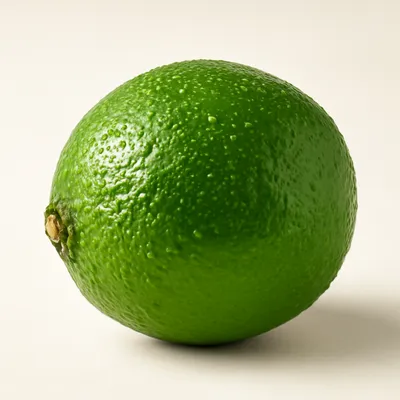
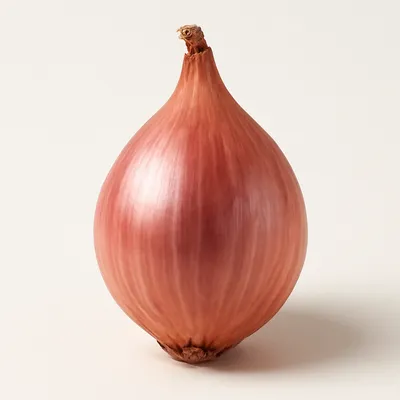
Mix the dip: 3 tbsp fish sauce, 3 tbsp lime juice, 1 tbsp palm sugar (dissolved), 2 tsp Thai chile flakes (phrik pon), 2 tbsp sliced shallot, 2 tbsp chopped cilantro and sawtooth coriander, 2 tbsp toasted-rice powder. Taste — should be sharp salty, sour, smoky.
- 410 min
Build a hot charcoal fire — coals glowing white. Grill the brisket over direct heat 4 minutes per side for medium-rare, basting once with leftover marinade. Centre should hit 52°C; the cut needs char on the outside but pink inside or it gets tough.
Watch outGrill over glowing-white coals to a charred crust but pink centre, about 52 degrees inside — take it past medium and this cut turns tough and chewy.
- 55 min
Rest the steak 8 minutes on a board — uncovered. Slice 3mm thick across the grain, fan onto a plate. Serve warm with the jaew on the side and a basket of sticky rice.
Watch outRest it uncovered, then slice a thin 3mm across the grain — cut thick or with the grain and even a rested brisket eats stringy and tough.
Archive tool suggestions — not reviewed
These legacy suggestions have not been evidence-reviewed and are not presented as required tools.
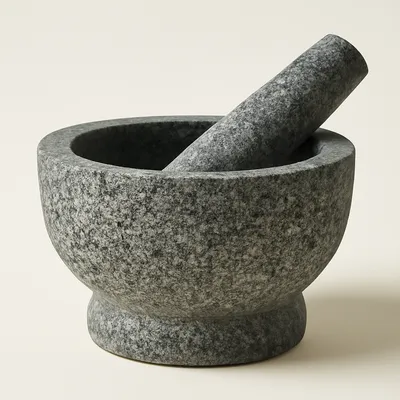
The simplest tool in any kitchen: a heavy bowl and a club to bash things in it. Different cuisines use different stones — Thai cooks pound green papaya in a tall granite mortar (krok hin); pesto Genovese requires the soft-pored Carrara marble; Indian masalas grind down on rough basalt. The bash-don't-cut motion releases volatile oils that a blade keeps sealed in the cell wall.
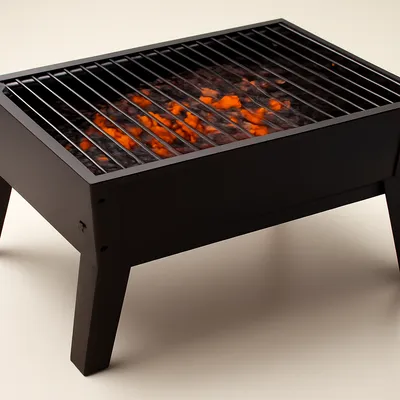
An open or hooded metal frame holding a bed of glowing charcoal embers, with a grate above. Charcoal burns at 700°C+ on the surface and emits short-wave infrared, which cooks proteins faster and with deeper Maillard browning than gas. Hardwood lump charcoal (oak, mesquite, fruitwood) lends its own smoke; cheap briquettes do not. Mastery is mostly heat zoning — direct over coals for searing, indirect off-coals for slow-roasting.