
Khanom babin is a small pan-griddled Thai coconut cake: a thick batter of grated coconut, glutinous and rice flour, eggs, and palm sugar dropped onto a lightly greased griddle and cooked slowly until the outside caramelizes to a freckled gold and the inside stays soft and chewy. Each cake is a flattened disc a few centimeters across, eaten warm as a teatime sweet or a market snack. The flavor is squarely coconut and palm sugar, with a faint smoky-toasty edge from the seared surface. It belongs to the large family of khanom — Thai flour-and-coconut sweets — and is among the plainer, more home-style members.



Khanom babin is an old home-style Thai sweet with no recorded inventor; it is the kind of coconut-flour cake made in domestic kitchens and at temple fairs rather than a documented court confection. It predates modern recording and is best understood as a folk preparation that varies house to house. The name 'babin' is sometimes linked to a Malay or Mon root, but the etymology is unsettled and claims should be treated cautiously. What is clear is its place in the broad khanom tradition: simple griddled and steamed sweets built on the three staples of the Thai pantry — grated coconut, palm sugar, and rice or glutinous-rice flour.
Bite through a freckled, slightly crisp caramel crust into a dense, moist, chewy crumb shot through with shreds of coconut. It is sweet but grounded — palm sugar gives a rounded brown-sugar depth rather than a sharp white-sugar hit — and the coconut keeps it from cloying. Eaten warm the edges have a faint griddle-char bitterness that plays against the sugar; cooled, it firms up and the chew turns more taffy-like.
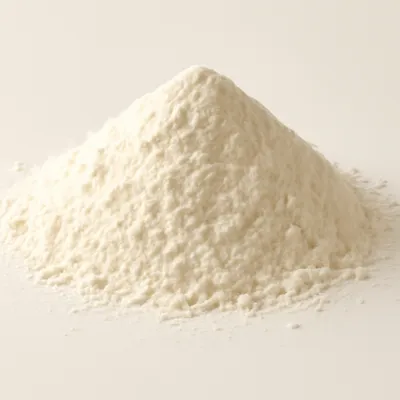
Two things define the texture. First, the flour blend: glutinous-rice flour brings the chew, while a portion of ordinary rice flour keeps the cake from going gummy, so the crumb sets soft but cohesive rather than sticky. Second, the slow griddle: cooking the batter gently on a greased pan lets the palm sugar at the surface undergo caramelization and the proteins and reducing sugars in the egg-and-sugar batter brown via the Maillard reaction, which is the source of the freckled crust, the toasty aroma, and the faint bitterness at the edges. Palm sugar, less refined than white sugar, carries its own caramel and molasses notes that deepen further under heat; cooking too hot scorches the surface before the inside sets, while too low leaves it pale and bland.
Variations
Recipes vary in the flour ratio (more glutinous-rice flour for a chewier cake, more rice flour for a lighter one) and in the coconut: young grated coconut gives a softer, juicier crumb, mature coconut a firmer, more fragrant one. Some cooks scent the batter with pandan or fold in toasted sesame; others griddle the cakes thicker and cake-like, or thinner and crisper. A closely related cousin is khanom khrok, the coconut-rice batter cooked in a dimpled pan into soft-centered half-spheres rather than flat discs.
On the Palate
Where Khanom Babin sits in the Thai flavor cloud
Ingredients
Serves 4
How it's made
8 steps · 30 min active + 10 min waiting
- 18 min
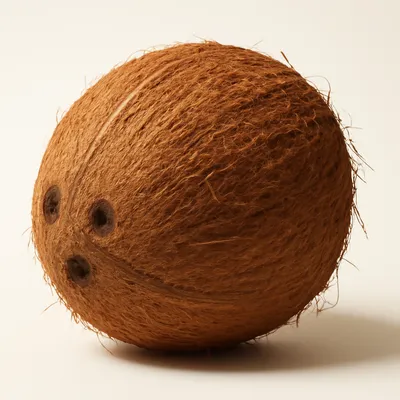
Grate fresh coconut (or use unsweetened shredded coconut, lightly moistened); if using mature coconut, the firmer shreds give more fragrance.
- 24 min
Whisk eggs with shaved palm sugar until the sugar largely dissolves, then stir in glutinous-rice flour, a smaller amount of rice flour, a pinch of salt, and a little coconut milk to loosen.
Watch outWhisk the eggs with the palm sugar until the sugar has mostly dissolved — undissolved grains leave gritty spots and uneven browning.
- 32 min
Fold the grated coconut through the batter until evenly coated; the mixture should be thick and spoonable, not pourable.
- 43 min
Heat a flat griddle or heavy pan over low-medium heat and wipe with a thin film of oil or coconut oil.
- 52 min
Drop spoonfuls of batter onto the griddle and flatten each into a small disc a few centimeters wide.
- 67 min
Cook slowly until the underside is freckled deep gold and caramelized, then flip and cook the second side the same way.
Watch outCook slowly until the underside is freckled deep gold — that low, patient griddle is what caramelizes the palm sugar without burning it bitter.
- 73 min
Press lightly so the centers cook through while the edges crisp; the cakes should stay soft inside.
Watch outPress just enough to cook the center through while the edges crisp — the cakes should stay soft and chewy inside.
- 81 min
Lift off and cool slightly on a rack; serve warm, ideally within a few hours while the chew is at its best.


