
Cooked plantains, cassava, or yam pounded together with a heavy mortar and pestle (or food processor) into a smooth, dense, slightly stretchy dough served as the staple alongside Ivorian stews and sauces. Pulled off in chunks with the right hand, used to scoop up sauce graine, kedjenou, or peanut stew. The forest-region Ivorian counterpoint to coastal attiéké.
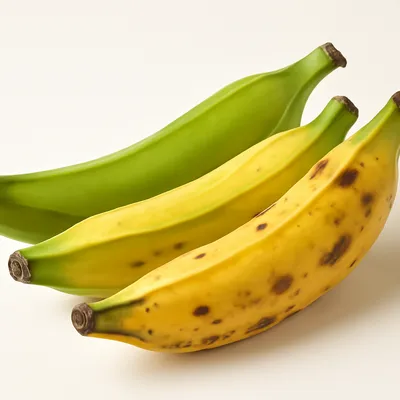
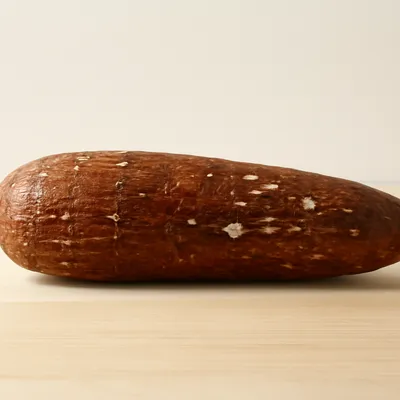


Foutou (also fufu, futu) is shared across West African forest-region cuisines from Côte d'Ivoire through Ghana, Togo, and Nigeria. Each country has slight variations — Ivorian foutou is typically a combination of green plantain and cassava (or yam in central regions). The dish predates colonial contact; pounding starchy roots into dough is one of the oldest African food traditions. The mortar-and-pestle technique is communal — traditionally one person pounds while another moistens and turns the dough.
Pull a chunk of foutou with your right hand — it stretches slightly before tearing off cleanly. The texture is dense but smooth, slightly elastic from the cassava starch, gentle-sweet from the plantain. Plain on its own it's bland; dipped into a Sauce Graine or peanut stew it absorbs the surrounding flavor and the combination becomes one of West Africa's defining experiences. The eat-with-hands-and-sauce communal model is the dish's core.
Pounding (or processing) hot plantain-and-cassava develops the starch's gel structure — gives foutou its dense-elastic quality. Cooking the plantain and cassava together (rather than separately) ensures uniform softness for even pounding. Adding small amounts of cooking water adjusts texture — too little and foutou is dry-crumbly; too much and it loses its hold. The traditional mortar-and-pestle achieves the smoothest texture; modern food processor works but produces slightly more elastic dough.
Variations
Yam foutou (foutou d'igname) uses pounded yam instead of plantain/cassava — common in central Côte d'Ivoire's Bouaké and Yamoussoukro regions. Pure plantain foutou is sweeter; pure cassava foutou is firmer. Ghanaian fufu uses cassava + plantain at 50/50; Ivorian leans more cassava. Nigerian iyán is pure pounded yam. Modern instant fufu flour exists but produces a notably inferior result.
On the Palate
Where Foutou sits in the Ivorian flavor cloud
Ingredients
Serves 4How it's made
10 steps · 40 min active + 20 min waiting
- 15 min
Peel 3 green plantains and 300 g cassava. Cut both into 4-cm chunks. Place in a large pot.
- 228 min
Cover with cold water (about 1.5 L) and add 1 tsp salt. Bring to boil. Simmer 25-30 min until plantain and cassava are very tender — fork should pierce easily.
Watch outSimmer until a fork pierces both plantain and cassava with zero resistance — undercooked chunks won't pound smooth and leave hard lumps in the foutou.
- 32 min
Drain thoroughly (reserve a half-cup of cooking water just in case).
- 41 min
Place hot drained plantain and cassava into a heavy mortar (or food processor or stand mixer with paddle).
Watch outPound while the mixture is still hot — hot starch binds into a smooth stretchy dough, but once it cools it turns crumbly and won't come together.
- 516 min
Pounding method (traditional): with a heavy wooden pestle, pound the mixture vigorously, rotating the mortar between pounds. The dough will form gradually — uniform, smooth, slightly stretchy. Continue pounding 15 min until completely smooth with no visible chunks. Add a tablespoon of cooking water at a time if too stiff.
Watch outKeep pounding until the dough is completely uniform with no visible chunks and pulls back slightly when pressed — add cooking water a spoon at a time only if it's too stiff to move.
- 64 min
Food processor method (modern): process the hot drained mixture in a food processor 3-4 min, stopping to scrape down the sides. Add water as needed.
- 78 min
Stand mixer method (easiest): use the paddle attachment on medium speed for 8 min. Most uniform result.
- 81 min
The finished foutou should be a smooth dense ball, slightly elastic, holding its shape on a plate.
Watch outThe finished ball should hold its shape standing on the plate — if it slumps and spreads, it's too wet; too dry and the surface cracks.
- 92 min
Shape: wet your hands. Take a fist-sized portion of foutou; smooth into a ball or oval mound. Place on each serving plate.
- 103 min
Serve immediately with sauce graine, peanut stew, kedjenou, or any Ivorian sauce. Pull off chunks with the right hand, dip into the sauce, eat. Foutou should be eaten warm — cold foutou becomes hard.


