
Sudan's signature paper-thin sorghum flatbread — sorghum flour fermented with water 36-48 hours into a slightly-sour batter, then cooked on a hot griddle into transparent, almost translucent, paper-thin sheets the diameter of dinner plates. Eaten with ful medames, mulah stews, or sorghum porridge. The Sudanese household-defining bread.
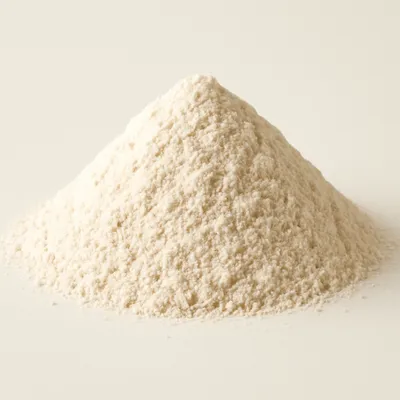


Kisra is the Sudanese name for sorghum-fermented flatbread — a tradition dating to ancient Nubia and the Kingdom of Kush. Sorghum is drought-resistant and grew abundantly in the Nile Valley; the bread technique allows preservation of the grain in a digestible, shelf-stable form. The 36-48 hour ferment develops both the characteristic slight sourness and the structural integrity of the bread. Kisra is so thin (almost like crepe) that you can read newsprint through it. Traditional preparation uses a saj (large hot dome) or doka (flat clay griddle); the bread is poured-and-spread in a thin layer with a curved wooden tool called a goorraasa. Khartoum's old-town bakeries still make kisra by hand.
Tear off a piece of paper-thin kisra — pale-tan, semi-transparent, soft-flexible like crepe. Fold it around a scoop of ful medames or mulah; the bread soaks up the sauce without dissolving. Bite: the sorghum's distinct earthy-tangy flavor blooms (the 48-hour ferment is unmistakable), the texture is delicate and almost silky compared to thicker breads. With ful and a glass of karkade tea on the side, this is the Khartoum morning that fuels the country. Sudanese grandmothers will tell you kisra is the test of a household: a good cook makes kisra so thin you can see her hand through it.
Long fermentation (36-48 hours) at warm temperatures develops lactic acid (from wild Lactobacillus) and CO2 (from wild yeast) — the classic sourdough mechanism. Sorghum lacks gluten (unlike wheat), so the bread relies entirely on this fermentation for its structural integrity. Cooking on only one side, very briefly, preserves the moisture and prevents the bread from becoming brittle. The paper-thin spread is achievable only because the batter is very thin (more like crepe batter than pancake batter). The bread's flexibility comes from the moisture sealed inside during the quick cook.
Variations
Mixed-flour kisra (modern shortcut) uses 70% sorghum + 30% all-purpose flour for easier handling. White kisra uses bleached sorghum flour for paler bread. Quick kisra (no fermentation) uses baking powder for leavening — less complex flavor. Sweet kisra adds 2 tbsp honey to the batter — for tea-time. Mini kisra (15-cm) is for individual restaurant plating. Dried kisra is sun-dried for shelf-stability and travels well.
On the Palate
Where Kisra sits in the Sudanese flavor cloud
Nail the 36-48 hour ferment and a crepe-thin batter — that sourness and flexibility come entirely from the wild fermentation, not from any leavener, because sorghum has no gluten to build structure.
Ingredients
Serves 6How it's made
11 steps · 30 min active + 2 days 1 hour 30 min waiting
- 13 min
Day 1: in a non-reactive bowl, combine 500 g fine sorghum flour + 1 tsp salt + 1 tsp sugar.
- 23 min
Add 1.2 L warm water, whisking until smooth. The batter should be very thin — like crepe batter.
- 32670 min
Cover loosely. Let ferment at warm room temperature 36-48 hours. The batter should rise slightly, become slightly bubbly, and smell distinctly sour-tangy.
Watch outThe batter should look slightly risen and bubbly and smell clearly sour-tangy — that's the ferment telling you it's ready.
- 45 min
Day 3, 30 min before cooking: stir down the batter. Add ½ tsp more salt and an additional 200 ml warm water if too thick.
- 54 min
Heat a flat saj griddle or large heavy non-stick pan over medium-high heat. Test with a drop of water — it should sizzle.
- 61 min
Brush the hot griddle with a paper towel dipped in oil — just enough to season, not pool.
- 72 min
Pour ½ cup batter onto the hot griddle. Using a curved spatula (or the back of a measuring cup), quickly spread the batter outward in a circular motion into a paper-thin 30-cm disc.
Watch outSpread fast in one circular sweep while the griddle is hot, so it sets thin before it can pool thick.
- 81 min
Cook 30-45 seconds on ONE SIDE ONLY — the kisra is so thin it only needs one side. The bread should set quickly, develop a few light-brown spots, and lift easily.
Watch outIt's done when a few light-brown spots show and the edge lifts on its own — no need to touch the top.
- 930 min
Slide off with a spatula. Stack between two clean kitchen towels to keep flexible.
- 10270 min
Repeat with remaining batter — makes about 12 large kisra.
- 115 min
Serve room-temperature, alongside ful medames, mulah, or sorghum porridge. Tear pieces and use to scoop.


