
Air-dried, salt-cured lean beef (eye of round or tenderloin) pressed flat and coated in a thick, fragrant crust of fenugreek, garlic, paprika and chili. After weeks of drying it is sliced tissue-thin and eaten as a meze, in sandwiches or fried with eggs. The chemen crust is as prized as the meat itself.
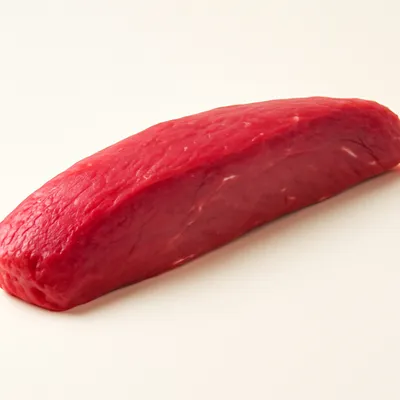




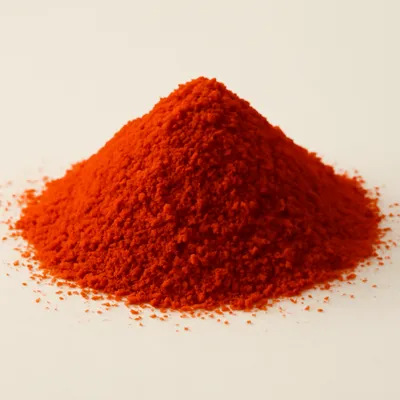
A celebrated cured meat across Armenian, Anatolian and Levantine kitchens, basturma's name comes from the Turkic verb meaning 'to press.' A well-worn legend holds that nomadic horsemen cured the meat by pressing it under their saddles on long rides — a popular story, but an unverified one. What is documented is older: the Armenian word for dried cured meat, apoukht, appears in the fifth-century Armenian translation of the Bible, and the Byzantine cured beef paston lent the dish its later name. Its most famous center is Kayseri — the ancient Roman Caesarea in central Anatolia — where production was run by Armenian masters and was singled out by name in an 1893 British Foreign Office report. After 1915, the Armenian diaspora carried the craft to Egypt and the Levant, where Cairo's basterma is still an Armenian specialty. It remains a centerpiece of Armenian appetizer spreads.
Deep, concentrated beefy flavor with a firm, slightly chewy bite and a salty edge. The fenugreek-garlic crust is pungent, warm and almost curry-like, perfuming the whole slice. A little goes a long way.
Basturma is a sustained campaign against water. The lean beef is first cured for about two days in salt plus a little sodium nitrite: the salt draws out moisture and suppresses spoilage, while the nitrite inhibits pathogens such as Clostridium botulinum and fixes the meat's signature deep-red color. It is then pressed hard — traditionally under hundreds of kilograms, even close to 8 bar for some ten hours — to force out residual blood and water and shape a dense, flat slab. Two stages of air-drying over roughly a month bring the water activity (the moisture available to microbes) down from about 0.995 in raw meat to roughly 0.87-0.91, too low for most spoilage and pathogenic bacteria, concentrating flavor and firming the texture. The chemen crust is a final safeguard: fenugreek, garlic and red pepper are all mildly antimicrobial, and as the paste dries onto the meat it forms a dense shell that seals out air, slows surface moisture loss so the interior dries evenly, and works its aroma into the meat.
Variations
Made with beef eye of round or tenderloin, spicier crusts with extra chili, milder versions for sandwiches, served fried with eggs (basturma-and-eggs)
On the Palate
Where Basturma sits in the Armenian flavor cloud
Ingredients
Serves 8How it's made
8 steps · 30 min
- 115 min
Trim a whole beef tenderloin or eye of round and rub thoroughly with coarse salt.
- 25760 min
Press the meat under a weight in the fridge for several days, draining liquid daily.
Watch outRub coarse salt into every surface so no spot is bare — any missed patch is where the meat spoils instead of curing.
- 310080 min
Rinse off the salt, pat dry, and hang the meat in a cool, airy place for about a week until firm.
Watch outPour off the pooled blood-water every day — leave it sitting and the meat reabsorbs moisture and won't firm up.
- 410 min
Make chemen paste by mixing ground fenugreek, crushed garlic, paprika, chili and water into a thick spread.
- 510 min
Coat the dried meat completely in a thick, even layer of the chemen paste.
Watch outCoat the meat in a thick, even blanket of chemen with no gaps — thin or bare spots dry out cracked and let air in.
- 620160 min
Hang again to dry for one to two more weeks until the crust sets hard and the meat is dense.
- 710 min
Slice as thinly as possible against the grain with a sharp knife.
Watch outSlice paper-thin against the grain — thick or with-the-grain slices chew tough and rubbery.
- 85 min
Serve at room temperature with lavash, cheese and herbs, or fry briefly with eggs.


