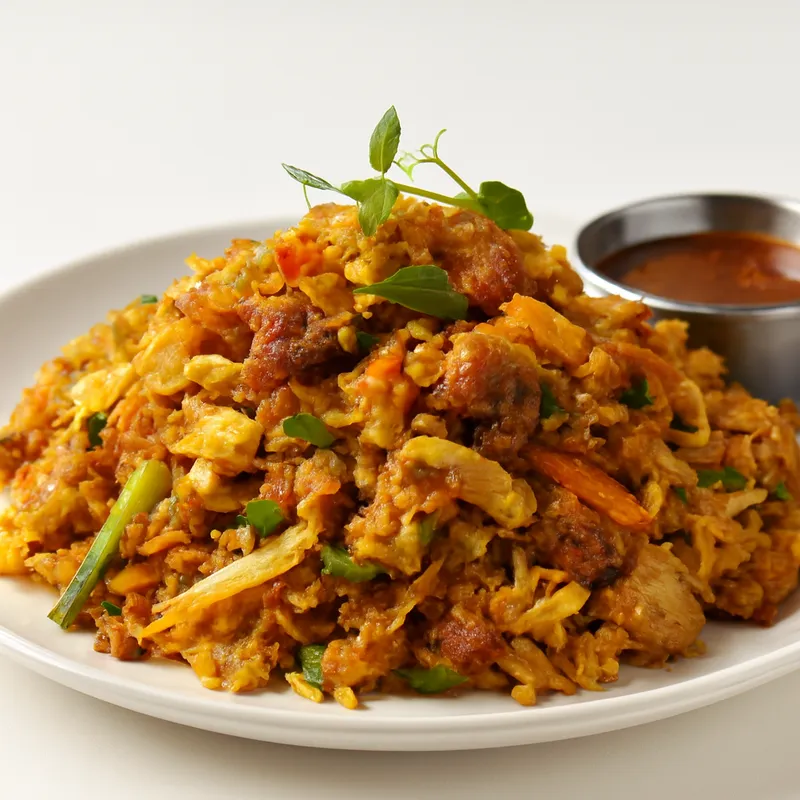
A deep-fried rice-flour sweet soaked in kithul palm treacle, with a soft puffed centre and a distinctive raised topknot. The defining oil cake of the Sinhala and Tamil New Year.


Kevum is among the oldest recorded sweets of Sri Lanka, named in ancient texts such as the Ummagga Jatakaya and made for the Aluth Avurudu New Year table for centuries. Cooks treasure the konda kevum, with its proud central peak coaxed up in the oil, as a symbol of prosperity and a test of a maker's skill.
Crisp and lacy at the edges, soft and spongy within, drenched in dark, smoky-sweet palm treacle. Tastes of toasted rice and caramel, with the deep molasses note of kithul.
Treacle in the batter caramelises and aerates the rice flour as it fries, creating the lacy, puffed crumb, while constant basting with hot oil sets the climbing peak. A well-rested batter hydrates evenly so the cake cooks through without a raw centre.
Variations
Konda kevum with topknot, mung kevum, athirasa flat style, naran kevum
On the Palate
Where Kevum sits in the Sri Lankan flavor cloud
Ingredients
Serves 8How it's made
8 steps · 30 min
- 15 min
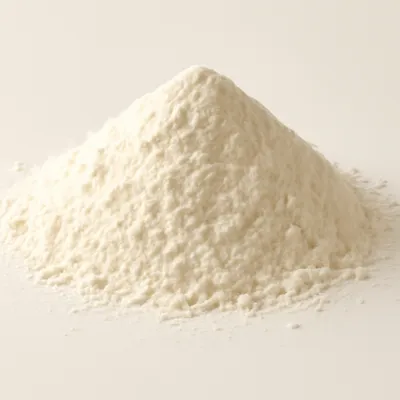
Warm the kithul treacle until runny, then stir it into rice flour.
- 23 min
Add a pinch of salt and a little coconut milk to form a thick, pourable batter.
- 360 min
Rest the batter for an hour so the flour fully hydrates.
Watch outGive the batter a full hour to hydrate until it falls off the ladle in a smooth thick ribbon — under-rested and the center fries raw.
- 45 min
Heat oil in a deep, narrow pan until moderately hot.
Watch outThe oil is right when a drop of batter sizzles and rises slowly — too hot browns the outside before the peak can climb.
- 51 min
Pour a ladle of batter into the centre of the oil.
- 64 min
Using a skewer, gather the edges inward and coax up the central peak as it fries.
- 74 min
Spoon hot oil over the top until the cake puffs and sets golden.
Watch outKeep spooning hot oil over the top so the cake puffs and the central peak sets golden before you lift it out.
- 85 min
Lift out, drain well and cool before serving.