
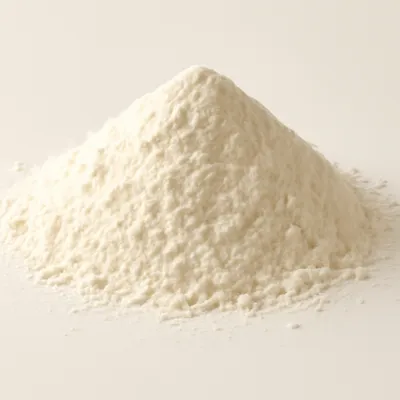
Dango are small, round, chewy dumplings made from rice flour, boiled until they float and usually threaded three to five onto a bamboo skewer. The dough is built from rice flours of two kinds: joshinko, milled from ordinary short-grain rice, gives body and a clean bite, while glutinous shiratamako (or mochiko) lends the springy chew; many recipes blend the two. Once cooked the dumplings are dressed in different ways depending on the type, from a sweet-savoury soy glaze to toasted soybean flour, sweet bean paste, or simply tinted and left plain. They are an everyday sweet and a fixture of seasonal festivals and tea stalls.



Dango is an old and pan-Japanese sweet whose exact beginnings are unrecorded; rice-flour dumplings of this kind are documented well back into the medieval and early-modern periods, and the form became tied to seasonal observances and roadside tea stalls. The well-known proverb hana yori dango — 'dumplings rather than blossoms' — captures the everyday, practical place the sweet holds: a preference for the dumpling in hand over the flowers overhead. Particular named types carry their own documented histories, such as the maple-leaf-viewing and cherry-blossom traditions, and the literary fame of the Matsuyama bocchan dango.
A good dango is soft and elastic with a gentle resistance — it should stretch slightly and bounce back, not collapse into paste or turn gluey. The plain dumpling itself is barely sweet and mildly milky from the rice, a neutral base for whatever dresses it. Eaten fresh and just-cooled it is at its springiest; left to sit it firms and dries, which is why grilled types are best straight off the heat. Three to five to a skewer, it is eaten in bites pulled off one at a time.
Texture is a matter of which rice flour, and in what proportion. Glutinous rice (shiratamako, mochiko) is almost pure amylopectin starch, which gelatinises into a sticky, elastic network and gives the chew; non-glutinous joshinko contains amylose, which firms the dough and keeps it from being merely gummy. Kneading the flour with hot or warm water, then boiling the shaped balls until they float and briefly after, fully gelatinises the starch so the dumpling sets springy rather than raw or chalky. A shock in cold water after boiling tightens the surface and stops carry-over cooking.
Variations
Types are distinguished mostly by the dressing and the occasion. Hanami dango, eaten at cherry-blossom viewing, threads three dumplings coloured pink, white and green, said to read as the progression of the blossom from bud to bloom to leaf. Bocchan dango from Matsuyama (Ehime) sets three colours from red-bean paste, egg and green tea on one skewer, and takes its name from Natsume Soseki's 1906 novel Botchan. Kibi-dango of Okayama is made with millet (kibi) flour and is bound up with the Momotaro folk tale. Mitarashi dango, grilled and coated in a soy-and-sugar glaze, is a separate well-known type; others include kinako dango dusted in soybean flour and anko dango under sweet bean paste.
On the Palate
Where Dango sits in the Japanese flavor cloud
Ingredients
Serves 4
How it's made
7 steps · 25 min
- 12 min
Combine joshinko and shiratamako rice flours in a bowl.
- 28 min
Add warm water a little at a time, kneading to a smooth dough about the firmness of an earlobe.
Watch outKnead the flours with warm water to a dough about as firm as an earlobe — too dry and it cracks, too wet and it won't hold its shape.
- 36 min
Roll the dough into even balls, about three to five per skewer's worth.
- 45 min
Drop the balls into boiling water and cook until they float, then a minute or two more to set.
Watch outBoil the balls until they float, then a minute or two more to set — floating means the starch has gelatinised; pull too early and the centre's chalky.
- 52 min
Lift the dumplings into iced water to firm the surface, then drain well.
Watch outShock them in iced water right after — this tightens the surface and stops carryover cooking so they stay springy, not gummy.
- 64 min
Thread three to five dumplings onto each soaked bamboo skewer.
- 73 min
Dress as desired — glaze, toasted soybean flour, or sweet bean paste — and serve fresh.
Archive tool suggestions — not reviewed
These legacy suggestions have not been evidence-reviewed and are not presented as required tools.


