Chateaubriand is a thick center-cut of beef tenderloin, cut large enough to serve two, pan-roasted and carved into slices at the table. In the classic preparation it is finished with sauce béarnaise — a warm egg-and-butter emulsion sharpened with tarragon, shallot and vinegar — and a garnish of château potatoes, turned barrel shapes sautéed in butter. It is a dish of the formal French restaurant rather than the home kitchen, served as a single grand piece and divided between diners. The cut is from the heart of the fillet, so the meat is exceptionally tender and lean.



Larousse Gastronomique credits the dish to Montmireil, personal chef to the Vicomte François-René de Chateaubriand, the writer and diplomat, and dates it to about 1822, when Chateaubriand was France's ambassador in London; the steak is named for him. Several accounts of the original exist, but the most detailed traces it to Montmireil. In the earliest method the central fillet was cooked between two outer pieces of meat that were then discarded, having shielded and flavored the prime cut; by the late 19th century the name had attached firmly to the thick center cut of the tenderloin.
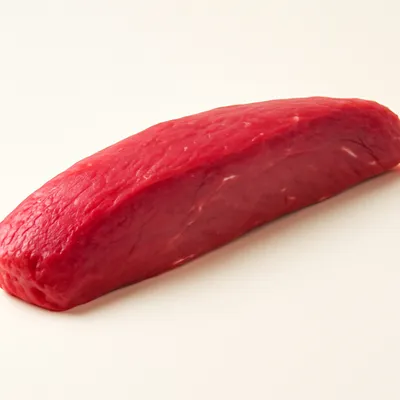
Tenderloin is the leanest, most tender part of the steer, so a Chateaubriand cuts like butter and yields a fine, soft grain with little chew — but with almost no marbling it dries out fast if overcooked, and is best kept rare to medium-rare. Carved into thick slices, the meat is rosy through the middle under a thin seared crust, mild and clean in flavor rather than fatty. The béarnaise is the foil: warm, buttery and loosely set, tart with vinegar and fragrant with tarragon, it supplies the richness the lean cut lacks. The château potatoes add a soft, golden, butter-roasted counterpoint.
Because the tenderloin is lean and very tender, the cook's task is to brown the outside without drying the inside. A hard sear builds a Maillard crust for flavor, then a gentle oven finish brings the thick piece evenly to a rare-to-medium-rare core before the lean muscle can toughen; a rest lets the juices settle back through the meat. The béarnaise works on the same principle as hollandaise: egg yolks and clarified butter are whisked warm into a stable emulsion, the yolk's lecithin holding the fat in suspension, while a reduction of vinegar, shallot and tarragon flavors and acidifies it — held too hot, the emulsion breaks and the butter separates out.
Variations
Some kitchens serve Chateaubriand with a sauce chateaubriand — a reduction of white wine, shallots and demi-glace finished with butter and tarragon — instead of, or alongside, the béarnaise. The original technique of cooking the fillet between two sacrificial cuts is largely historical; today the center cut is simply seared and roasted. The same prime middle section of the tenderloin underlies filet mignon and tournedos, which are cut from it as smaller individual portions rather than one shared piece.
On the Palate
Where Chateaubriand sits in the French flavor cloud
Ingredients
Serves 2

How it's made
7 steps · 30 min active + 20 min waiting
- 18 min
Make a béarnaise reduction: simmer white wine vinegar with chopped shallot, tarragon stalks and crushed pepper until nearly dry, then strain.
- 212 min
Whisk egg yolks with the cooled reduction over gentle heat, then slowly beat in warm clarified butter to a thick, glossy emulsion; fold in chopped tarragon, season, and keep just warm.
Watch outWhisk warm clarified butter into the yolks slowly to a thick, glossy emulsion — add it too fast or too hot and the béarnaise breaks and turns oily.
- 315 min
Turn the potatoes into small barrel shapes and sauté in butter until golden and tender.
- 48 min
Season the thick tenderloin and sear it hard in butter and oil on all sides to a deep crust.
Watch outSear the tenderloin hard on all sides to a deep crust before it goes in the oven — that Maillard crust is the flavor on this lean, mild cut.
- 518 min
Finish the beef in a hot oven to rare or medium-rare, then rest it loosely covered for at least 10 minutes.
Watch outPull it at rare to medium-rare and rest at least 10 minutes — the lean muscle toughens fast if overcooked, and resting settles the juices back in.
- 62 min
Carve the Chateaubriand into thick slices across the grain.
- 72 min
Plate with the château potatoes and serve the béarnaise alongside.
Archive tool suggestions — not reviewed
These legacy suggestions have not been evidence-reviewed and are not presented as required tools.