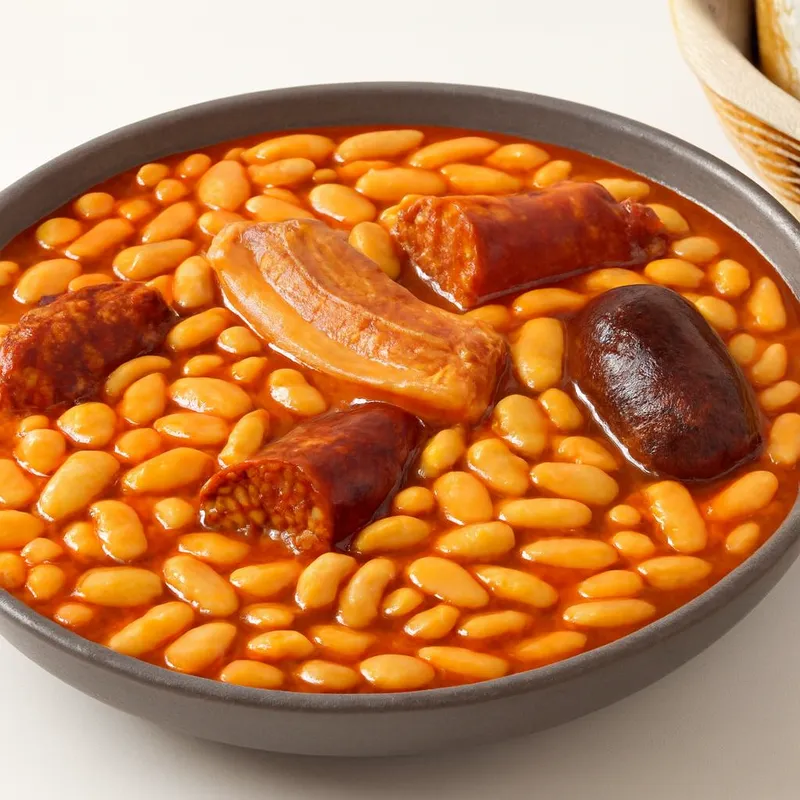
A Basque one-pot dish built on the alubia de Tolosa — a small, oval bean from Tolosa in Gipuzkoa whose thin, glossy skin is so dark purple it reads almost black. Soaked and then simmered very gently for hours, the beans release starch and skin pigment that thicken the cooking liquid into a glossy, near-black broth without the beans breaking apart. The beans are served on their own and the rich extras — the 'sacramentos' — come alongside on a separate plate: morcilla (blood sausage), pork rib or belly, and chorizo, plus a dish of cabbage stewed with garlic. Pickled green guindilla peppers (piparra) are set on the table to cut the richness. It is a classic Basque plato de cuchara (spoon dish), eaten at home and in the region's gastronomic societies.




Tolosa, an inland market town in Gipuzkoa in the Spanish Basque Country, whose damp, mild Atlantic climate suits the bean. The local alubia de Tolosa — a small, almost-black bean — received the Eusko Label (Euskal Label) quality mark in 1999, the Basque Country's regional certification of origin and quality administered by the Fundación Kalitatea; it is a quality label, not a Spanish DOP or EU PGI. The bean was named a Slow Food Praesidium in 2002, reportedly the first such product in Spain. Tolosa holds an annual bean fair (Tolosako Babarruna) in late autumn with producers' and cooking competitions, and the bean is grown and sorted by the Tolosako Babarruna producers' association. As a cooked dish it is everyday Basque home and gastronomic-society cooking rather than a single documented invention.
A bowl of small, almost-black beans in a glossy, faintly thick broth so dark it looks like loose chocolate. The beans have thin skins and a creamy, buttery inside; the eating rhythm is a spoon of dark broth, then a bean. The sacramentos are taken from the side plate — a slice of rich, soft blood sausage, a piece of pork, a coin of chorizo — and the cabbage comes through sharp and garlicky. A whole pickled piparra pepper, sour and gently hot, is bitten between mouthfuls to cut the fat. Properly cooked, the beans stay intact rather than collapsing into mush.
The bean does the thickening. The alubia de Tolosa has an unusually thin skin and a high starch content, and its dark skin is rich in water-soluble anthocyanin pigments and pectin. Cooked low and slow, it leaches starch and pigment into the liquid, which both colours the broth near-black and binds it into a glossy, lightly velvety sauce — without the beans being mashed. The key is heat control: only a bare simmer, never a hard rolling boil, or the thin skins split and the beans turn to paste; some cooks check a violent boil by adding a splash of cold water (the same 'asustar' — scaring — principle used for fabada). A gentle onion sofrito base and the rendered fat of the cured meats enrich the broth. The cabbage is stewed separately in its own pot so its water and colour don't muddy the dark bean liquid.
Variations
A lean, meatless version skips the sacramentos entirely and is served just with the cabbage and piparra. Cooks vary the side meats — some leave out the chorizo, some add pork jowl or a ham bone — and the cabbage is sometimes swapped for other greens. Closely related is the alubia roja de Gernika, a red Basque bean cooked the same way (a sibling dish, but a different, red-skinned bean), and similar dark or red beans are stewed across Gipuzkoa and Navarre with the same set of sacramentos.
On the Palate
Where Alubias de Tolosa sits in the Spanish flavor cloud
Ingredients
Serves 6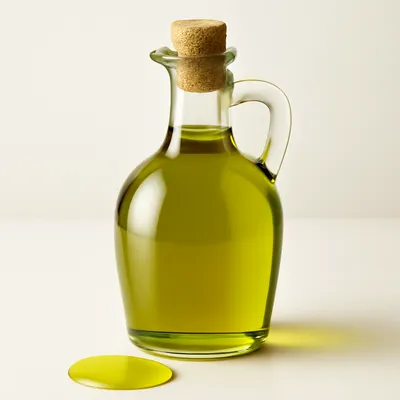


How it's made
9 steps · 15 min
- 15 min
The night before, rinse the Tolosa beans and soak them in plenty of cold water for at least 8 hours.
- 25 min
Drain the beans, put them in a wide pot, and cover with fresh cold water by a couple of fingers. Add a splash of olive oil and bring slowly up to heat.
- 32 min
As soon as the water trembles, drop the heat right down to a bare simmer — the surface should barely move. Never let it boil hard.
Watch outThe moment the water trembles, drop to a bare simmer — a hard boil splits the thin skins and the beans collapse into paste.
- 410 min
Make a simple sofrito: gently fry chopped onion and garlic in olive oil until soft and sweet, then stir it into the beans.
- 5150 min
Simmer the beans uncovered, very gently, for about 2 to 3 hours, topping up with a little cold water if they look dry and shaking the pot rather than stirring, until the broth turns dark and glossy and the beans are creamy but whole.
Watch outShake the pot instead of stirring, for 2-3 hours, until the broth turns dark and glossy — the leached starch bodies it, not mashing.
- 630 min
Meanwhile, in a separate pot, poach the morcilla, pork rib or belly, and chorizo gently until cooked, then slice them — these are the sacramentos.
- 720 min
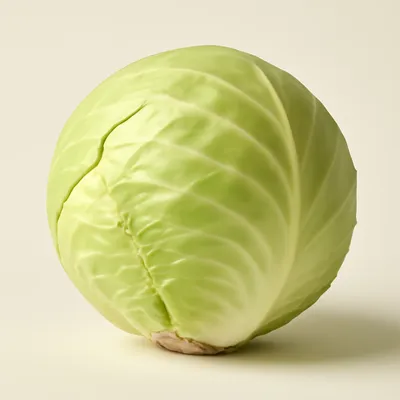
In another pan, stew the shredded cabbage with sliced garlic and olive oil until soft.
- 810 min
Season the beans with salt only near the end, then let the pot rest off the heat for a few minutes so the broth thickens.
Watch outSalt only near the very end — add it early and the beans' skins toughen and they never turn creamy.
- 95 min
Serve the beans in bowls, with the sliced meats and the cabbage on a separate plate and whole pickled piparra peppers on the table.
Archive tool suggestions — not reviewed
These legacy suggestions have not been evidence-reviewed and are not presented as required tools.