
A New York Jewish (Ashkenazi) pastry pocket of thin dough wrapped around a savory filling, most classically seasoned mashed potato, with buckwheat groats (kasha) the other traditional option. It comes in two main forms: round and oven-baked, with a soft, slightly flaky shell, or square and griddle-fried (the Coney Island style), with a crisp crust. Eaten hot as a handheld snack, often with a smear of brown mustard, it was for generations cheap, filling immigrant street food on Manhattan's Lower East Side.
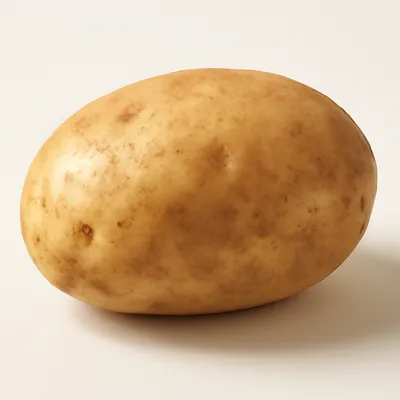




The knish came to New York with Ashkenazi Jewish immigrants from Eastern Europe around the turn of the 20th century; the word is Yiddish, from the Ukrainian 'knysh' and Polish 'knysz' for a filled dough, names linked to the Polish town of Knyszyn. The documented New York landmark is Yonah Schimmel, a Galician (some accounts say Romanian) immigrant who sold knishes from a pushcart before opening a shop, with the present Houston Street bakery dating to 1910 — it is regarded as the oldest knishery in the United States and is still family-run. The square fried 'Coney Island' knish has its own lineage: Gabila's, founded by Elia and Bella Gabay in 1921, popularized that griddled form, which became the version most New Yorkers picture.
A round baked knish breaks open to a soft, thin, lightly flaky shell giving way to a dense, smooth potato interior — buttery, well-peppered, often laced with sweet sauteed onion. The Coney Island square version is a different mouthful: a thin dough fried until the outside crackles and blisters, with a creamy potato center that stays soft against the crisp shell. Both are starchy and savory rather than rich; the heat carries the onion and black pepper, and a stripe of sharp brown mustard cuts the density. It is comfort food — warm, plain, and filling.
Two processes define the knish: a tender dough and a starchy filling. The dough is a simple flour-egg-oil pastry, rolled thin and kept supple by oil coating the flour proteins so the gluten relaxes rather than toughens, then rolled around the filling so it bakes into a thin, slightly flaky jacket. The potato is boiled until the starch granules swell and burst, then mashed and bound with sauteed onion, fat, salt, and pepper into a cohesive, scoopable mass. In the baked version, oven heat sets the shell while steam from the moist filling keeps the inside soft; in the fried Coney Island version, hot oil dehydrates and browns the surface fast for a crisp crust while the interior stays creamy.
Variations
The two great divisions are shape and method: the round baked knish (Yonah Schimmel's house style) versus the square griddle-fried Coney Island knish (Gabila's). Fillings vary by tradition — potato is the default, kasha (buckwheat) is the other classic Ashkenazi filling, and shops also make cheese, spinach, broccoli, and sweet versions. Regional habits differ too: at Coney Island and at boardwalk and deli counters the fried square is standard, while Yonah Schimmel keeps to the large baked round. Modern delis offer cocktail-size knishes for parties, but the working-class handheld snack remains the form most associated with the Lower East Side.
On the Palate
Where Knish sits in the American flavor cloud
Ingredients
Serves 6How it's made
5 steps · 45 min active + 45 min waiting
- 120 min
Boil peeled potatoes until very tender, then drain and mash until smooth.
Watch outMash while the potato is still hot and drain it well — a wet, gluey mash makes a heavy filling that steams the dough soggy.
- 210 min
Saute finely chopped onion in oil or butter until golden, then mix into the mashed potato with salt and pepper; let cool.
- 335 min
Make a soft dough from flour, egg, oil, water, and a pinch of salt; knead briefly, then rest it covered for about 30 minutes.
- 415 min
Roll the dough very thin, spread the potato filling along it, and roll it up into a log; pinch and twist into individual round portions, sealing the ends.
Watch outRoll the dough as thin as you can and seal the ends tight — a thick or open jacket bakes doughy instead of into a crisp thin shell.
- 530 min
Brush the tops with beaten egg and bake at 190°C until the shells are set and golden, then serve hot with mustard.
Watch outPull them when the shells are set and evenly golden — pale means the pastry is still raw and gummy inside.
Archive tool suggestions — not reviewed
These legacy suggestions have not been evidence-reviewed and are not presented as required tools.


