Vanillekipferl are small crescent-shaped shortbread cookies bound with ground nuts — usually almonds or hazelnuts — baked pale and tender, then rolled while still warm in vanilla sugar so a sweet, fragrant coating clings to them. They contain no leavening and little or no egg, which makes them exceptionally short and crumbly, almost dissolving on the tongue. A staple of German Weihnachtsbäckerei (Christmas baking) shared with Austria, they are a permanent fixture of the German Plätzchen tin alongside cinnamon stars and Spekulatius.




The crescent-shaped Kipferl is an old Central European baking shape, found in both sweet and savoury forms across the lands of the former Habsburg sphere; a popular tale links the crescent to the moon on the Ottoman banner after the 1683 Turkish siege of Vienna, but this is folklore rather than documented history and is usually told of the Austrian version. The vanilla-sugared nut shortbread known as Vanillekipferl spread from this shared Austro-German pastry tradition and became, by the 19th and 20th centuries, one of the most beloved Christmas cookies of the whole German-speaking world. In Germany it is baked nationwide as part of the home Christmas repertoire rather than belonging to any one region, and is treated as a close sibling of the Austrian cookie rather than a separate invention.
They barely hold their shape before crumbling into a sandy, buttery rubble rich with toasted nuts and the rounded scent of vanilla. The coating of vanilla sugar is sweet and aromatic and dusts the fingers; the crumb itself is only lightly sweet, letting the nut and butter carry it. Each crescent vanishes on the tongue almost as soon as it is bitten, leaving a warm, nutty, vanilla-perfumed finish. Delicate enough that they must be lifted gently while warm.
The texture is pure shortbread science: a high proportion of butter and finely ground nuts coats the flour proteins and physically blocks gluten from forming, giving the ultra-crumbly 'short' bite. Little or no egg and a deliberately pale bake keep the crumb tender and prevent it toughening. The crescents are rolled in vanilla sugar while still hot from the oven — the residual warmth and surface butter let the sugar adhere in a fine, even coat that would simply fall off a cold cookie. Because the dough is fragile and low in gluten, it is shaped by hand into crescents and chilled before baking so it holds form.
Variations
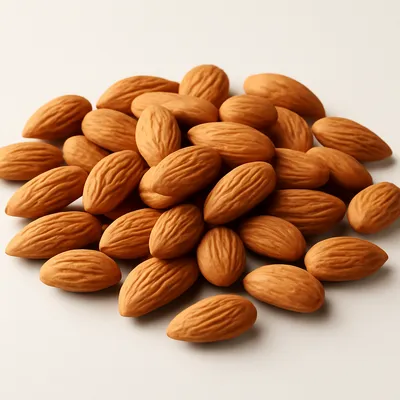
The nut is the main variable — almond gives a finer, paler crumb, hazelnut a deeper toasted flavour, and walnut a more rustic one; some recipes use ground almonds only. The ends are sometimes dipped in dark chocolate. The coating may be plain vanilla sugar or a mix of vanilla and icing sugar for a whiter dusting. The Austrian Vanillekipferl is the same cookie under the shared tradition, and the savoury Kipferl is the bread-roll cousin of the same crescent shape.
On the Palate
Where Vanillekipferl German sits in the German flavor cloud
Ingredients
Serves 10How it's made
6 steps · 40 min active + 40 min waiting
- 112 min
Rub cold butter into the flour and finely ground nuts, then work in a little sugar and vanilla to form a soft, short dough; chill until firm.
Watch outRub the cold butter and ground nuts into the flour into a soft short dough — the fat blocks gluten to give that ultra-crumbly bite; overwork it and it toughens.
- 25 min
Prepare the vanilla sugar by rubbing vanilla seeds or a split pod through caster sugar; set aside.
- 312 min
Roll pieces of the cold dough into thin ropes, cut into lengths and bend each into a slim crescent.
- 410 min
Arrange the crescents on a lined tray and chill again briefly so they keep their shape.
- 515 min
Bake at 170°C for about 12-15 minutes until just pale gold at the edges; they should not brown.
Watch outBake only to pale gold at the edges — these must not brown; over-baked and the tender crumb turns hard and loses its melt.
- 610 min
While still hot, roll or dredge each crescent gently in the vanilla sugar, then cool fully on a rack.
Watch outRoll them in vanilla sugar while still hot — the residual warmth and surface butter grip the fine coat; on a cold cookie the sugar just falls off.
Archive tool suggestions — not reviewed
These legacy suggestions have not been evidence-reviewed and are not presented as required tools.


