
A small four-sided pyramid of hard-boiled sugar — translucent and jewel-bright, run through with fine opaque stripes. The pyramid shape comes from drawing the cooked sugar into a rope and rotating the cut about a quarter-turn between each slice. Two French traditions dominate: the Berlingot de Carpentras in Provence, clear-bodied with thin white stripes, and the multicoloured Berlingot Nantais of the Loire, smaller and more opaque without the white striping.


Carpentras, in the Vaucluse, is the most storied home of the berlingot. Its defining trick was thrift: the town's candied-fruit industry left behind syrup, and that surplus was recooked to flavour and colour the candy — which is why the Carpentras berlingot carries fruit notes. Local tradition credits a François-Pascal Long with the candied-fruit-syrup recipe around 1844, though this rests on repeated lore rather than archive. What is better documented is Gustave Eysséric, who in 1851 industrialised Carpentras production with a cutting machine and traded paper cones for decorative tins. The Nantes berlingot is a separate line in many fruit flavours. Older stories tracing the sweet to the papal court at 14th-century Avignon are legend.
It shatters cleanly on the first bite into hard, sugary shards, then slowly dissolves to a long-lasting sweetness with whatever fruit or mint flavoured it. The body is glassy and smooth against the tongue; the opaque stripes are the only soft visual interruption in an otherwise clear candy. Sucked rather than chewed, a single berlingot lasts a good while. Mishandled boiled sugar turns sticky and weeps in humidity — a fresh one is dry and clicks against the teeth.
Sugar with a little glucose is boiled to the hard-crack stage, around 145–155°C, where almost all the water is driven off and the cooled mass sets glassy and brittle. Part of the batch is pulled and folded — satinage — which whips countless micro-bubbles into it; the trapped air scatters light, turning that portion opaque white. Lay the pulled white against the clear coloured sugar, draw the whole into a rope, and cut, twisting the blade roughly a quarter-turn each time so successive cuts run crosswise — that is what forms the four-sided pyramid. The glucose holds back sucrose crystallisation so the body stays clear, not cloudy.
Variations
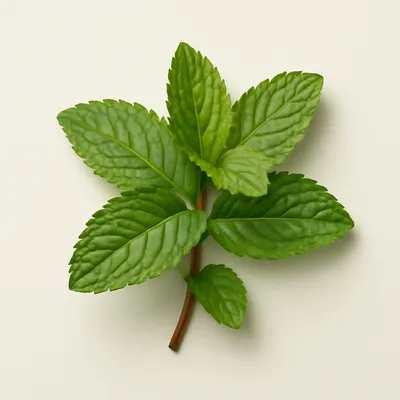
Berlingot de Carpentras (clear with white stripes, fruit-syrup flavoured) and Berlingot Nantais (multicoloured, opaque, many fruit flavours) are the two principals. Other regional forms exist: the Berlingot de Cauterets, a Pyrenean spa-town sweet sucked to mask sulphurous thermal water, and the Berlingot de Pézenas in the Hérault, made as small sticks rather than pyramids. Flavours range across mint, anise, fruit and honey.
On the Palate
Where Berlingot sits in the French flavor cloud
Ingredients
Serves 30How it's made
6 steps · 40 min active + 20 min waiting
- 115 min
Boil sugar, glucose syrup and water to the hard-crack stage, 145–155°C.
Watch outBoil to a full hard-crack, a hundred forty-five to a hundred fifty-five degrees — the cooled sugar must set glassy and brittle; short of that it stays sticky and won't hold a cut.
- 23 min
Pour off a small portion with colour and flavour and keep it warm and pliable.
- 312 min
Pull and fold the larger portion repeatedly until it whitens and turns satiny.
Watch outPull and fold until it turns satiny white — that whitening is the air you've worked in; keep going until it's opaque or the twist won't show.
- 45 min
Lay the white against the coloured sugar and draw the slab into an even rope.
- 515 min
Cut the rope into pyramids, rotating the blade a quarter-turn between each cut.
Watch outTurn the blade a quarter-turn between each cut — alternating the cut direction is exactly what forms the four-sided pyramid shape.
- 610 min
Let the berlingots cool hard, then store airtight away from humidity.
Archive tool suggestions — not reviewed
These legacy suggestions have not been evidence-reviewed and are not presented as required tools.


