
A hard, brittle confection of caramelised sugar studded with chopped or slivered almonds, rolled thin on oiled marble and cut or shaped while still warm and pliable. It is both a sweet in its own right and a workhorse of classic French pâtisserie: the rigid socle, or base, on which a croquembouche and other pièces montées are built, and a material moulded into decorative forms. It is not to be confused with the soft white honey nougat of Montélimar — nougatine is caramel and nuts, crunchy and brown.


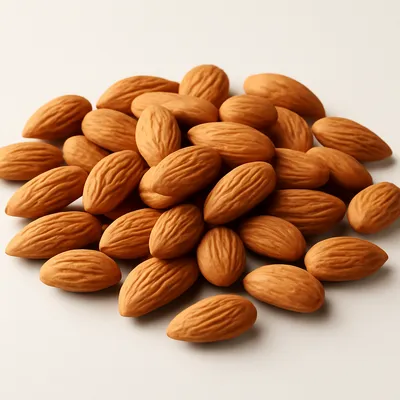

Nougatine belongs to the world of 19th-century grande pâtisserie and its towering pièces montées. Its name first appears in the lexicon in 1908, built from nougat with a diminutive suffix, the older word tracing through Provençal to the Latin for nut. The specialty is the emblem of Nevers, in the Nièvre, where the Nougatine de Nevers — brown almond nougatine glazed in orange, sold in round tins bearing the portraits of Napoléon III and the Empress Eugénie — is the town's confectionery signature. Local tradition credits a Nevers confectioner, Bourumeau, with inventing it in the 1850s, with the name registered as a mark in 1860; the surname is consistent across sources, the date and given name less firmly documented. Nougatine sits within the croquembouche tradition codified by Carême, though there is no record that Carême used it himself.
It snaps with a sharp, glassy crack and shatters into hard shards, the brittle caramel giving way to the crunch and toasted oil of the almonds. The flavour runs deep and slightly bitter — caramelised sugar browned almost to the edge — against the sweet, nutty almonds. Smooth and amber-dark to look at, faintly translucent at the thin edges. Worked correctly while warm it bends and cuts cleanly; left to cool it turns rigid and load-bearing, which is precisely why a croquembouche stands on it. Humidity is its enemy — it goes tacky and dull.
Sugar — dry, or with a little water and glucose — is cooked to the caramel stage, around 160–175°C, where it browns and develops the deep, faintly bitter flavour through caramelisation; warmed toasted almonds are folded in off the heat so they don't scorch. The mass is poured onto oiled marble and rolled thin, then cut or moulded fast, because it sets rigid as it cools and there is only a short window while it stays pliable. Reheated gently in a low oven it softens enough to rework. Ground fine, the same caramel-and-nut sets into a praline-type powder. The glucose holds back graininess so the sheet stays smooth and clear-edged.
Variations
Made with sliced or chopped almonds most often, sometimes hazelnuts. As a finished sweet there is the orange-glazed Nougatine de Nevers in its portrait tins. As a pâtisserie material it is shaped into the croquembouche base, cut into decorative pieces, or ground to a praline-type nougatine powder folded into creams and buttercreams. Thickness and grind change its role — sheets for structure, powder for flavour.
On the Palate
Where Nougatine sits in the French flavor cloud
Ingredients
Serves 12How it's made
6 steps · 35 min active + 10 min waiting
- 18 min
Lightly toast and warm the slivered almonds.
- 212 min
Cook the sugar to a caramel, 160–175°C, until amber.
Watch outCook the sugar to amber, 160–175 degrees — it needs to caramelize for the deep, faintly bitter flavor, but a shade past and it scorches acrid.
- 33 min
Fold the warm almonds into the caramel off the heat.
- 42 min
Pour onto oiled marble or a silicone mat.
- 510 min
Roll thin and cut or shape quickly while still pliable.
Watch outRoll and shape fast while it's still pliable — nougatine sets rigid as it cools and there's only a short window before it snaps instead of bending.
- 610 min
Let cool until hard, then store airtight away from humidity.
Archive tool suggestions — not reviewed
These legacy suggestions have not been evidence-reviewed and are not presented as required tools.


