Tamales oaxaqueños are the broad, flat tamales of Oaxaca, wrapped in banana leaf rather than corn husk and filled with dark mole negro and shredded chicken. The banana leaf lets them spread wide and flat instead of standing up like a husk tamal, and it perfumes the masa with a green, faintly sweet aroma as it steams. Inside, the masa is soft and the mole is deep, bittersweet and complex — chocolate-dark, layered with toasted chile and spice. They are festival and Sunday-market food in Oaxaca, the celebrated southern cousin of the slimmer corn-husk tamales of central and northern Mexico.

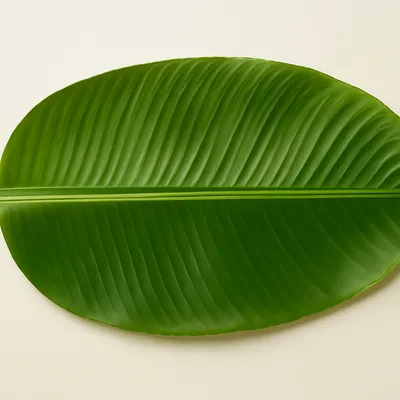


Tamales are a pre-Hispanic Mesoamerican food, and in Oaxaca and across southern Mexico they are traditionally wrapped in banana leaf rather than corn husk — largely a matter of what grows close at hand, since the broad leaves are abundant in the warm south where corn husks are less so. The leaf does double duty, both wrapping the tamal and lending it flavor. The defining filling, mole negro, is the most complex of Oaxaca's seven moles, a colonial-era layering of native chiles, cacao and turkey with Old-World spices, almonds and bread. Putting that ceremonial mole inside the banana-leaf tamal gives a dish that is festive by nature, made in large batches for celebrations and sold at Sunday markets; it is folk and feast cooking rather than a dish with a single recorded origin.
You unfold the banana leaf and a green, almost tea-like aroma rises off a flat, soft, dark-streaked tamal. The masa is tender and moist — flatter and a touch denser than a fluffy husk tamal — and pulls away from the leaf in soft sheets. The mole inside is the whole event: a slow build of burnt-bread bitterness, dried-chile fruit, and a long bittersweet chocolate-and-clove finish, with shreds of tender chicken carrying the sauce. It does not taste sweet despite the chocolate. The leaf's faint perfume runs under everything, and the contrast of pale masa against near-black mole is part of the pleasure.
Two things define the tamal. The masa is nixtamalized corn beaten with lard and broth until light, but spread thin and flat rather than mounded, so it steams into a flatter, sliceable layer. The mole negro is the labor-intensive heart: a dozen-plus dried chiles, seeds, nuts, bread, plantain and spices are toasted — some scorched dark on a comal — then ground and simmered into a thick, emulsified, glossy sauce. The banana leaf is briefly passed over a flame to make it soft and pliable and to release its aromatic oils, then used to wrap the spread masa and mole. Steaming gelatinizes the masa starches and melds the mole into it while the warmed leaf infuses a green, grassy perfume the corn husk cannot give. The flat shape and leaf wrap are the signatures that separate it from a husk tamal.
Variations
Mole negro with chicken is the classic, but mole amarillo, mole verde or rajas-and-cheese fillings are also wrapped this way, and pork or turkey can stand in for chicken. Some are made larger and shared, sliced like a loaf. The banana-leaf, flat-format tamal is itself the regional variation — the southern answer to the upright corn-husk tamales of the center and north, and a close relative of the chipilín-flecked banana-leaf tamales of neighboring Chiapas. Within Oaxacan cooking it is the festive mole tamal, distinct from the leaner everyday tamales and from the sweet pink ones.
On the Palate
Where Tamales Oaxaqueños sits in the Mexican flavor cloud
Ingredients
Serves 8
How it's made
8 steps · 1 hour 10 min active + 1 hour 50 min waiting
- 115 min
Prepare or warm mole negro and loosen it to a thick, spoonable sauce with chicken stock.
- 215 min
Poach chicken until tender, shred it, and toss with a little of the mole.
- 310 min
Pass banana-leaf sections briefly over a flame until they soften, darken slightly and turn pliable, then wipe clean.
Watch outPass the banana leaf over the flame just until it turns glossy and supple — a few seconds; scorch it and it tears when you fold.
- 412 min
Beat nixtamalized masa with lard, salt and warm broth until light and a pinch floats in water.
Watch outThe masa is ready when a pinch dropped in water floats — that lightness is what steams into a tender, sliceable layer.
- 58 min
Spread a thin, flat layer of masa onto each banana-leaf piece.
- 68 min
Place shredded mole chicken and a spoon of mole down the center and fold the leaf into a flat, sealed packet.
- 785 min
Stack the flat tamales in a steamer over boiling water and steam until the masa is set and pulls cleanly from the leaf, about 75–90 minutes.
Watch outSteam until the masa pulls cleanly off the leaf — if it still sticks and smears, it needs more time.
- 85 min
Rest briefly, then open the leaf at the table and serve with extra mole.
Archive tool suggestions — not reviewed
These legacy suggestions have not been evidence-reviewed and are not presented as required tools.