Disco fries are a New Jersey diner late-night staple: a plate of fries blanketed in brown gravy and melted mozzarella. The gravy soaks the fries soft while the cheese pulls into long, stretchy strands. It looks like poutine and is often compared to it, but the cheese is the giveaway — shredded mozzarella, not fresh curds. Quintessential drunk food, ordered after midnight at a Formica booth.



The popular story sets disco fries at the Tick Tock Diner in Clifton, New Jersey in the 1970s, named for the late-night disco crowd, but the trail is thin: every retelling is recent and secondary, no archival menu or dated mention survives, no inventor is named, and the suggested eras flatly conflict — variously the 1940s, the 1970s, and the early 1990s — with one firsthand recollection placing the term itself in the 1990s. The name reads as plausible folk etymology rather than documented fact. The dish does have a documented place in late-night and LGBTQ diner culture. Its exact origin is unrecorded.
Gooey and stretchy: a tangle of fries gone soft under a velvety, savory brown gravy, threaded with long strands of melted mozzarella that pull away in ropes. The fries surrender their crispness almost entirely — that softening is the point, not a flaw. Salty, rich, and warm, it is comfort food built for the end of a long night.
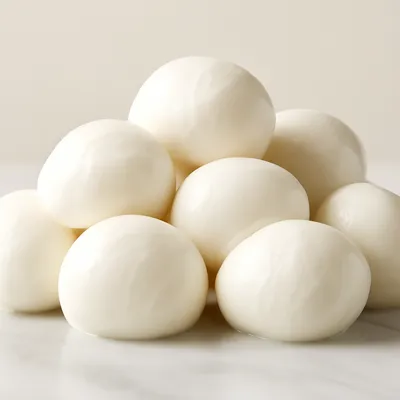
Hot gravy hydrates and steams the fried crust, so the fries soften and saturate rather than stay crisp. Low-moisture mozzarella melts into the stretchy strands that define the dish: heat loosens its casein protein network so it flows and forms ropes. This is exactly where it parts from poutine — fresh cheese curds have a calcium-phosphate-cross-linked casein matrix that resists melting and squeaks against the teeth, so poutine stays as discrete chewy bites while disco fries become one melted blanket. Same assembly, different cheese chemistry.
Variations
The cheese is the main variable: shredded mozzarella is canonical, but American, cheddar, and provolone all appear. Gravy ranges from the generic beef-brown to a turkey gravy. The cheese is melted either by the heat of the poured gravy alone or finished under a broiler. The dish is closely tied to North Jersey diners, where it is a fixture of the late-night menu.
On the Palate
Where Disco Fries sits in the American flavor cloud
Ingredients
Serves 2How it's made
6 steps · 15 min
- 16 min
Fry or bake a generous portion of fries until crisp and golden, and keep them hot.
- 26 min
Make a brown gravy: cook a flour-and-fat roux until nutty, then whisk in beef stock and simmer until it coats a spoon; season.
Watch outCook the roux until it smells nutty and turns light brown before the stock goes in; a raw roux tastes of flour and won't thicken cleanly.
- 31 min
Pile the hot fries on an oven-safe plate.
- 41 min
Scatter a generous handful of shredded mozzarella over the fries.
- 51 min
Ladle the hot brown gravy over the top so it soaks the fries and starts to melt the cheese.
Watch outLadle the gravy hot over the mozzarella so it starts melting the cheese into stretchy strands; if it's not fully melted, a minute under the broiler pulls it together.
- 62 min
Slide under a hot broiler for a minute if needed, until the cheese is fully melted and stretchy, and serve at once.
Archive tool suggestions — not reviewed
These legacy suggestions have not been evidence-reviewed and are not presented as required tools.