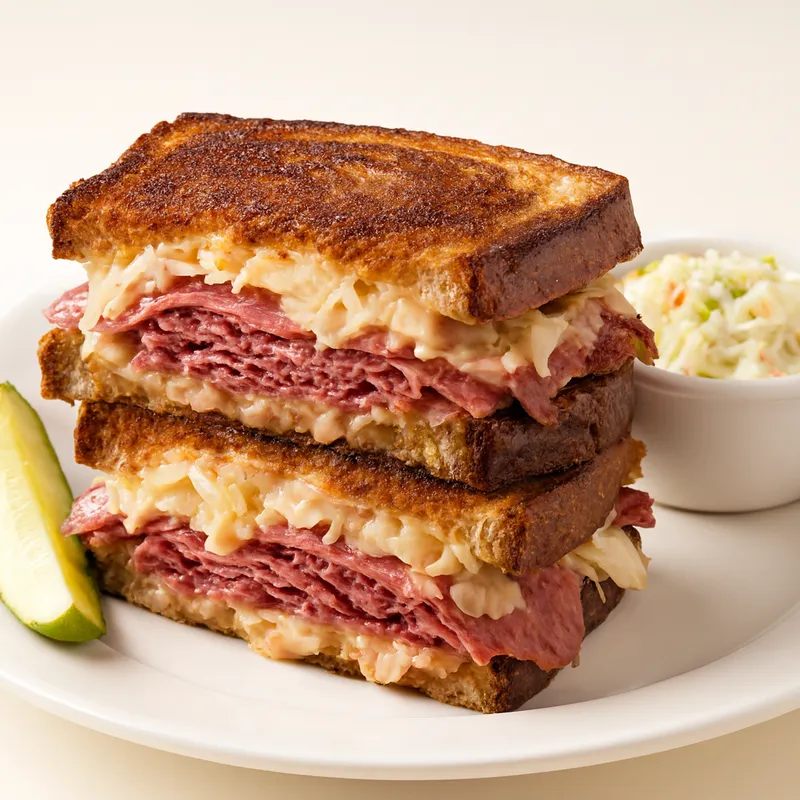
A malted milkshake, or 'malt,' is a thick milkshake enriched with malted-milk powder: ice cream, milk, and a syrup or flavoring blended with a spoonful of malt powder that adds a toasty, biscuity, faintly nutty depth. The malt makes the shake taste deeper and less plainly sweet than an ordinary one, and lends a slightly grainy body. It is a soda-fountain and Midwestern diner icon, served thick in a tall glass with the extra blended in the metal mixing tin alongside.

Malted milk powder — dried milk blended with malted barley and wheat — was patented in 1887 by William Horlick in Racine, Wisconsin, originally marketed as an easily digestible food for infants and invalids. The leap to the soda fountain is credited to Ivar 'Pop' Coulson, a worker at a Walgreens drugstore in Chicago, who is said to have added scoops of ice cream to the existing milk-and-malt drink around 1922, creating the thick malted milkshake that became a national fountain craze. Both anchoring facts — Horlick's Racine patent and the drink's Chicago-area popularization — place the malt firmly in the upper Midwest. The 'malt shop' became shorthand for a whole era of American soda-fountain culture.
Thick and cold, with the clean sweetness of an ice-cream shake deepened by malt's toasty, biscuity, almost cereal-like flavor and a faint savory edge. The malt powder gives it a slightly thicker, grainier body than a plain shake, and the finish is warm and nutty rather than sugar-flat. With chocolate it tastes like a frozen malted-chocolate candy; with vanilla, like toasted cereal cream.
The defining ingredient is malted-milk powder, made from barley that has been germinated and dried so its enzymes convert starches into maltose, then dried with milk solids and wheat flour; that malting is what gives the toasty, complex flavor and the soluble malt sugars. Blended into a shake it both flavors and thickens, its starches and proteins binding water and adding body. The shake itself is an emulsion of butterfat, air, and ice from the ice cream: blending shears the ice cream fine and whips in air for a thick, aerated, scoopable-but-pourable texture, while just enough cold milk loosens it to drink through a straw. Keeping everything very cold preserves the thick, frozen body.
Variations
Chocolate and vanilla are the classic malt flavors; strawberry and coffee malts are common too. A 'black-and-white malt' pairs chocolate syrup with vanilla ice cream. Without the malt powder it is simply a milkshake; thicker versions use more ice cream and less milk, while a 'concrete' is blended so thick it can be held upside down. Whoppers-style malted-milk candies are the same flavor in solid form, and some diners still serve the shake with the overflow in the cold metal mixing tin on the side.
On the Palate
Where Malted Milkshake sits in the American flavor cloud
Ingredients
Serves 2How it's made
6 steps · 10 min
- 12 min
Chill the serving glasses in the freezer while you work.
- 21 min
Add the ice cream, milk, and malted-milk powder to a blender, plus chocolate syrup or vanilla if flavoring.
- 31 min
Blend in short bursts until smooth and thick, scraping down the sides as needed.
Watch outBlend in short bursts just to smooth and thick; over-blending melts the ice cream and you lose the aerated, scoopable body.
- 41 min
Check the consistency and adjust, adding milk to thin or ice cream to thicken.
- 51 min
Pour into the chilled glasses, leaving any extra in the blender jar.
- 61 min
Top with whipped cream and serve at once with a wide straw and a long spoon.
Archive tool suggestions — not reviewed
These legacy suggestions have not been evidence-reviewed and are not presented as required tools.