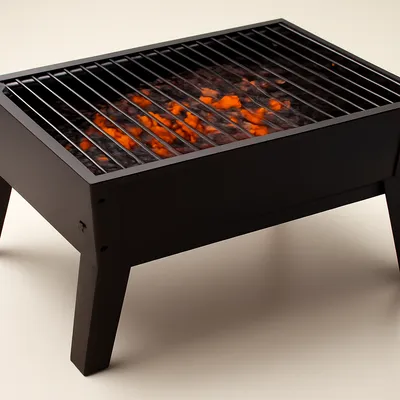
Baltimore pit beef is lean round grilled hot and fast over an open charcoal fire, sliced deli-thin while still rare, and piled on a kaiser roll with raw onion and 'tiger sauce' — horseradish cut with mayonnaise. Despite the name, the 'pit' is a grill, not a smoker: this is fire-cooked, not barbecue. The pleasure is the contrast between a charred, peppery crust and a cool, red, almost rare interior, sharpened by sinus-clearing horseradish.




Pit beef is a folk tradition of the roadside stands along Pulaski Highway, the old Route 40 corridor on Baltimore's industrial east side, where it took hold in the 1970s and spread through the 1980s. No single inventor or founding date is documented — the careful accounts call the origins murky and name no creator; the earliest known printed mention is a 1968 tavern advertisement. The well-known stands, Chaps Pit Beef (opened 1987) and the late Boog Powell's stand at Camden Yards (1992), are popularizers that arrived after the tradition was established, not its source. The flavoring leans on the city's German kaiser roll and the horseradish of its old Jewish delicatessens.
A study in contrast: smoky, salty charred bark wrapped around cool-to-warm, rare-pink, deli-thin beef. The horseradish-mayo sauce hits the nose rather than the tongue — a sharp, sinus-clearing heat that fades fast — while pungent raw white onion adds crunch and bite. The kaiser roll is neutral and sturdy, there to carry, not to compete. Serving it rare is a point of local pride; well-done is treated as near heresy.
Direct high heat drives intense surface browning and charring through the Maillard reaction, while the short cook leaves a steep thermal gradient — a scorched crust over a still-rare core, the opposite of barbecue's slow, even equilibration. Round is very lean with long, tough fibers, so it must be kept rare and sliced thin against the grain to mechanically shorten those fibers and stay tender. The horseradish heat is chemistry: crushing the root ruptures its cells, the enzyme myrosinase converts sinigrin into volatile allyl isothiocyanate, which rises into the nasal cavity and triggers the TRPA1 receptors — a different burn from chili's tongue-bound capsaicin, sharp but fleeting.
Variations
Other pit meats appear — turkey, ham, sausage, corned beef, and combinations — though specific named combos tend to belong to a single vendor. 'Tiger style' is local shorthand for pit beef with raw onion. The horseradish-and-mayo base is canonical; exact add-ins are not standardized. Doneness is the real battleground, and whether pit beef counts as 'barbecue' at all is a long-running local debate, the usual line being that barbecue tastes of smoke while pit beef tastes of fire.
On the Palate
Where Pit Beef sits in the American flavor cloud
Ingredients
Serves 6
How it's made
6 steps · 20 min
- 15 min
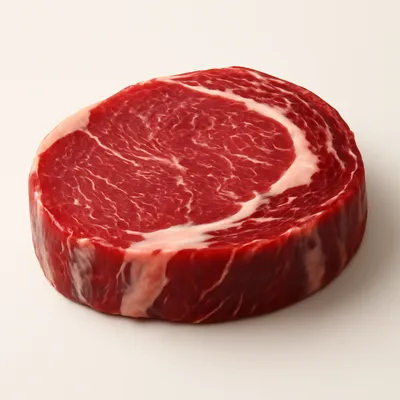
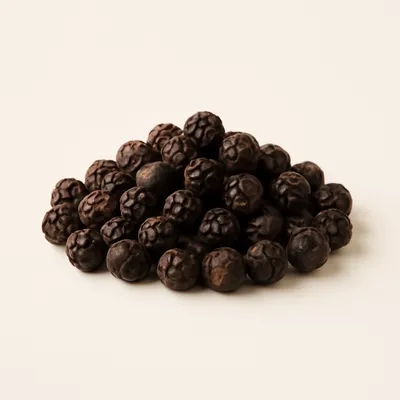
Trim a top round roast and rub it all over with a simple blend of salt, coarse black pepper, and garlic powder.
- 215 min
Build a hot charcoal fire and grill the roast over direct heat, turning often, to build a dark, even crust.
Watch outGrill fast over direct high heat, turning often, to build a dark even crust — you want a scorched outside over a still-rare core.
- 33 min
Pull the beef while the interior is still rare, around 49–52°C (120–125°F) internal, and rest it briefly.
Watch outPull the beef while the center is still rare, around 49–52 degrees — this lean round goes tough and dry the moment it's cooked past rare.
- 42 min
Stir together prepared horseradish and mayonnaise to make the tiger sauce, adjusting the heat to taste.
- 55 min
Slice the rested beef as thin as possible against the grain, keeping it rare.
Watch outSlice as thin as you can against the grain — cutting across the long tough fibers is what keeps very lean round tender to chew.
- 62 min
Pile the beef onto kaiser rolls, top with raw sliced onion, and spread on the tiger sauce.
Archive tool suggestions — not reviewed
These legacy suggestions have not been evidence-reviewed and are not presented as required tools.