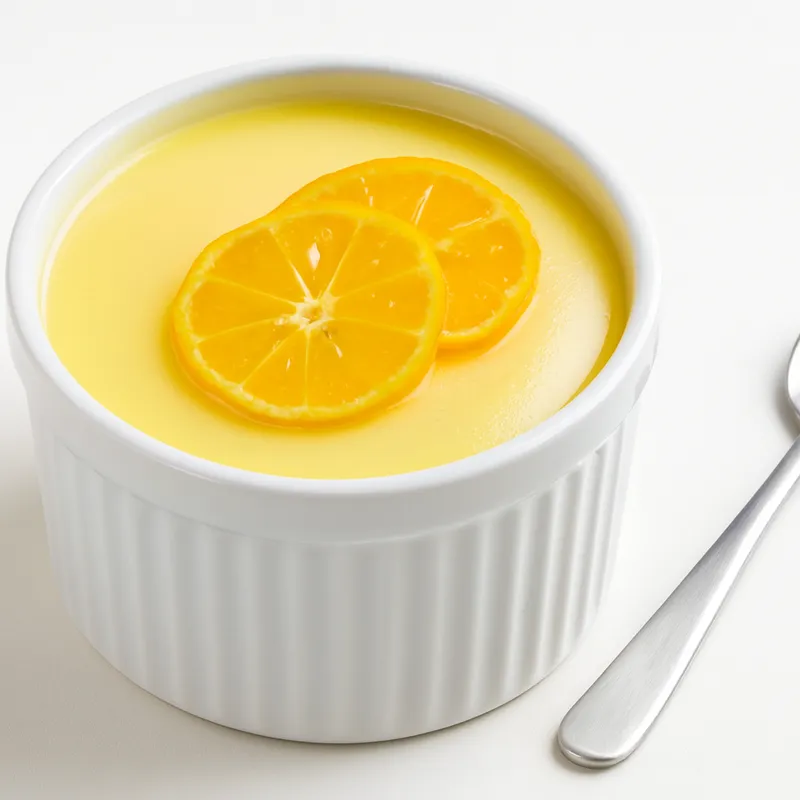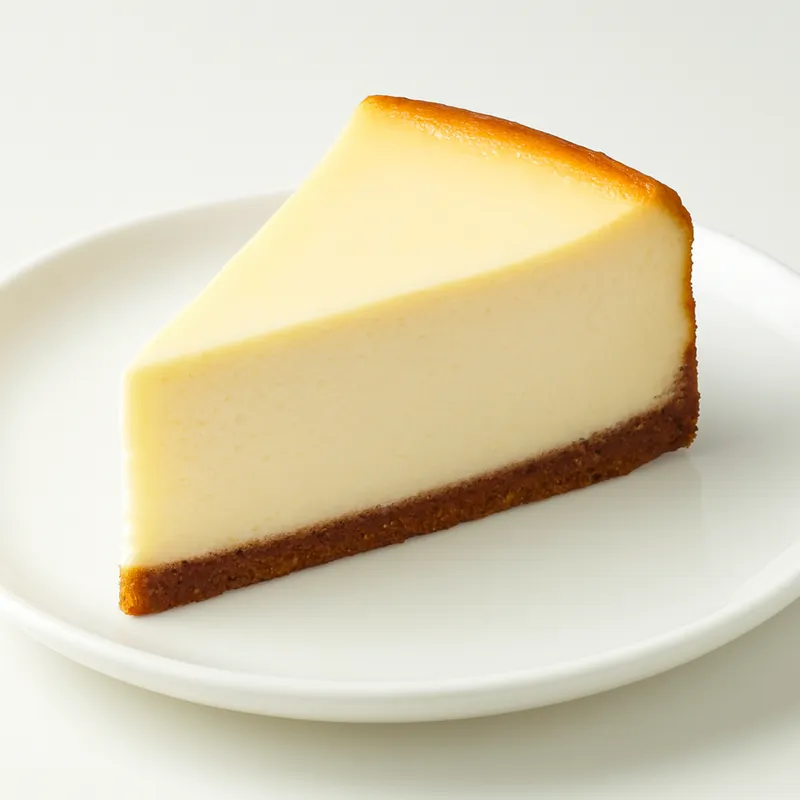
A rich and creamy dessert made with cream cheese, eggs, and a graham cracker crust.
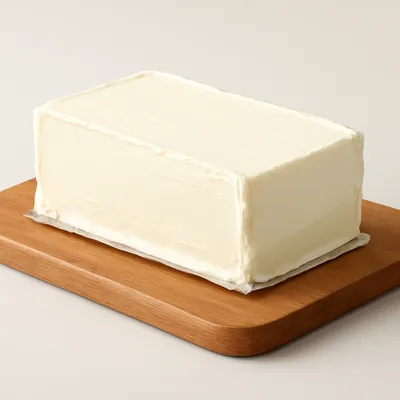


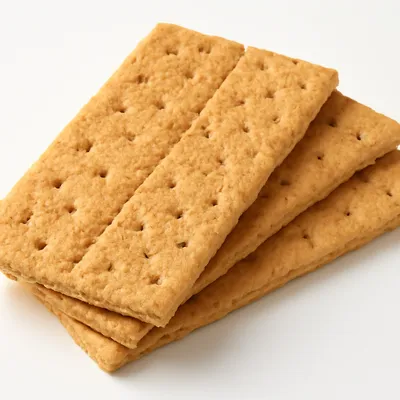


Popularized in 1920s New York, where deli owner Arnold Reuben is widely credited with first swapping ricotta for an all-cream-cheese filling; Lindy's restaurant on Broadway later helped standardize the formula. Cream cheese itself was a Chester, New York invention from 1872 — Philadelphia-brand was originally a New York product. The 'New York' style is specifically the Lindy's formula: pure cream cheese, eggs, sour cream, no flour.
Arnold Reuben’s 1929 Turf restaurant claim — cream cheese (Philadelphia brand, 1872) instead of ricotta or curd. Baked in a water bath at 160°C for the dense, no-crack texture; Junior’s in Brooklyn is the surviving canon since 1950.
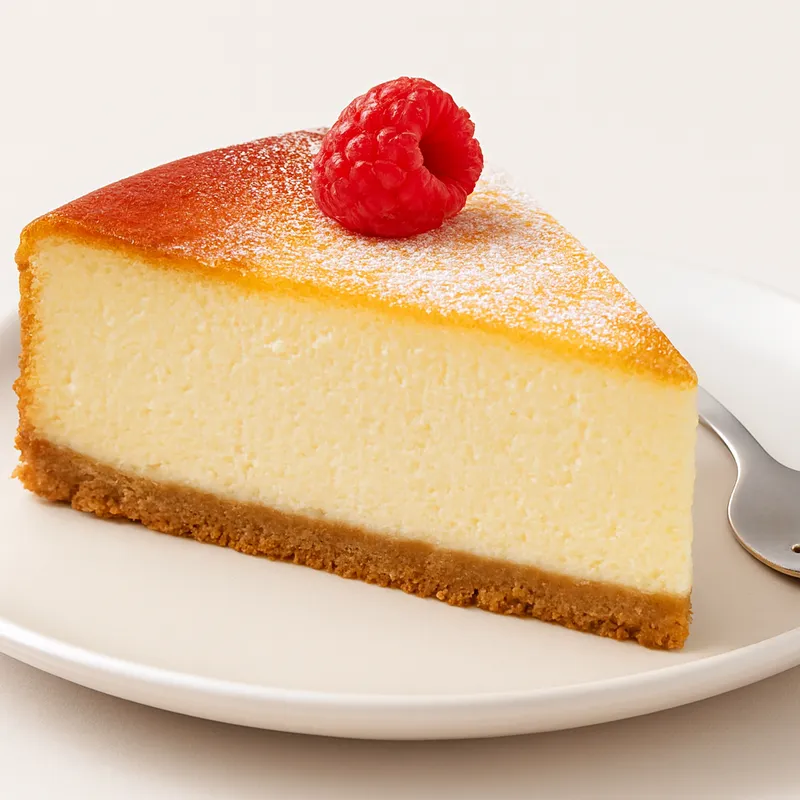
A dense, pale-yellow slab on a graham-cracker crust. Texture is closer to firm custard than mousse — drag a fork through and it leaves a clean trench. Tastes of cream cheese, lemon zest, and vanilla, almost no sweetness up front; the sugar shows up at the swallow. Served plain or with a thin smear of strawberry. Cracks on top mean it was over-baked or cooled too fast.
Baked in a water bath at low heat (around 325°F / 160°C) so the eggs set without curdling — the bain-marie holds the outer wall below 100°C while the center finishes. Pulled when the middle still wobbles like jelly; carry-over heat finishes it. A flour-thickened version is technically German Käsekuchen, not New York; the all-egg structure is what gives the NY slice its dense fork-mark.
Variations
Junior’s style (sponge-cake bottom, no graham); Lindy’s style (graham crust, the original); Italian ricotta-based is denser and grittier; Basque burnt cheesecake skips crust and burns the top; Japanese soufflé cheesecake is lighter, more egg-driven.
On the Palate
Where New York Cheesecake sits in the American flavor cloud
Bake low in a water bath (around 325°F/160°C) and pull it while the center still wobbles like jelly: the bain-marie keeps the eggs from curdling, and carry-over heat sets the middle after it leaves the oven.
Ingredients


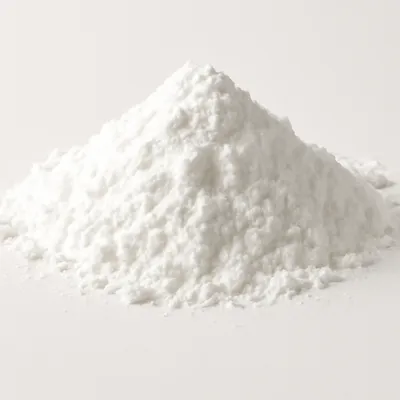
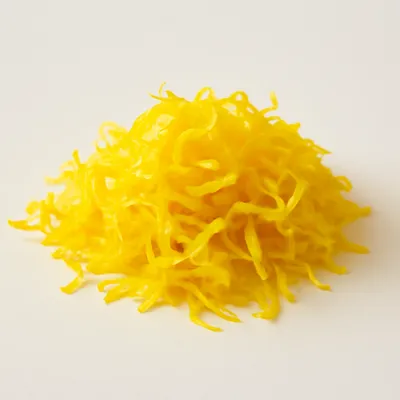

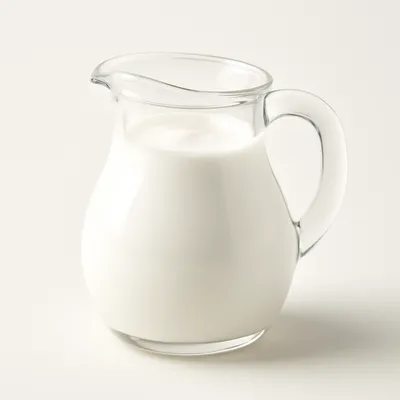
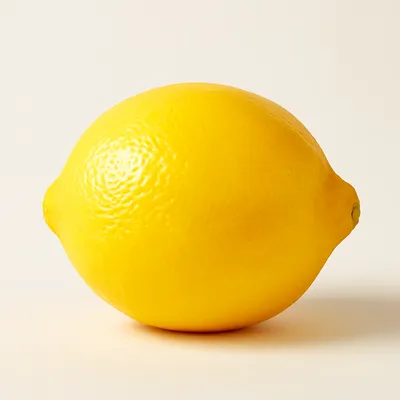

How it's made
6 steps · 30 min active + 1 hour waiting
- 15 min
Preheat your oven to 475°F (245°C). Butter the bottom and sides of a 10-inch springform pan. Crush graham crackers into a fine powder and mix with sugar and melted butter until the mixture resembles wet sand.
- 25 min
Press the graham cracker mixture firmly into the bottom and slightly up the sides of the pan. Chill in the refrigerator while preparing the filling.
- 35 min
In a large bowl, beat softened cream cheese with sugar, flour, and cornstarch until smooth and creamy. Add lemon zest and vanilla, mixing gently to incorporate.
Watch outDo not overbeat the mixture to avoid incorporating too much air, which can cause cracks during baking.
- 45 min
Add eggs and yolks one at a time, mixing gently after each addition. Stir in the cream last, ensuring the batter is smooth and thick.
Watch outStir the cream in until the batter is smooth, thick and pourable — like heavy paint, with no lumps.
- 55 min
Pour the batter into the prepared crust. Place the pan on a baking sheet to catch any drips. Bake at 475°F for 15 minutes, then reduce the temperature to 225°F and continue baking for 1 hour.
- 65 min
Raise the oven temperature to 250°F and bake for an additional 15 minutes. The cheesecake should be set but still slightly jiggly in the center.
Watch outThe edges look set but the center still shivers when you nudge the pan — that's done; the middle firms as it cools.
Archive tool suggestions — not reviewed
These legacy suggestions have not been evidence-reviewed and are not presented as required tools.