A slightly sweet bread made from cornmeal, often served as a side.




Pre-Columbian — Indigenous peoples of the Americas had been baking cornmeal cakes for thousands of years before contact. The cast-iron skillet method became the Southern standard in the 18th century when enslaved African cooks combined Indigenous corn with West African one-pot hearth technique. Sugar enters the recipe in the North during the late-1800s industrial sugar boom; Southern cooks still consider sugared cornbread a separate dish, closer to cake.
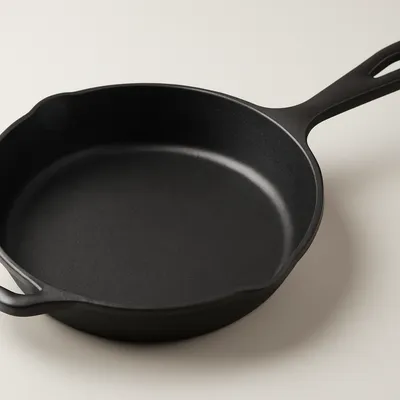
Cornbread is a quick bread built on cornmeal; this version also uses flour, eggs, and a little sugar. Pour the batter into a preheated cast-iron skillet for a crisp bottom, and stir only until the dry streaks disappear so the crumb stays tender.
A wedge or square of yellow-gold bread, crust crackly from a hot cast-iron skillet, interior dense and slightly gritty from cornmeal. Two regional camps split sharp: Southern (no sugar, white cornmeal, buttermilk, baked in a preheated greased skillet) versus Northern (sugar, yellow cornmeal, more flour, cake-like). Eaten with butter, with chili, crumbled into pot likker, or sopping up greens broth.
Preheating the cast-iron skillet with bacon fat or oil is the key Southern move — when the wet batter hits the screaming-hot pan, the bottom flash-fries into a crackling crust before the interior sets. Buttermilk's acid reacts with baking soda for lift and tenderizes the cornmeal's coarse starch. Sugar is functionally optional; cornmeal already contains enough sweet starch.
Variations
Southern (no sugar, white cornmeal, cast-iron); Northern (sweetened, yellow cornmeal, cake-like); hot-water cornbread is the unleavened pan-fried disc; corn pone is hand-shaped, baked plain; Hushpuppies are the deep-fried scrap version.
On the Palate
Where Cornbread sits in the American flavor cloud
Preheat the cast-iron skillet screaming hot with the fat in it — when cold batter hits the hot pan, the bottom flash-fries into a crackling crust that defines Southern cornbread.
Ingredients



How it's made
6 steps · 42 min
- 110 min
Preheat your oven to 400°F (200°C) and place a cast-iron skillet inside to heat up. This ensures a crispy crust when the batter hits the hot surface.
Watch outThe skillet should be hot enough that a drop of batter sizzles hard on contact — that instant sear is the whole point.
- 25 min
In a large bowl, whisk together the cornmeal, flour, sugar, and baking powder until evenly combined. The dry mix should be a uniform pale yellow with no visible clumps.
- 33 min
In a separate bowl, beat the egg and then mix it with milk and melted butter. The liquid mixture should be smooth and slightly frothy.
- 42 min
Combine the wet and dry ingredients, stirring just until the batter is smooth and no dry spots remain. The mixture should be thick and pourable.
Watch outFold the wet into the dry only until the streaks vanish; the batter stays thick and lumpy, not smooth.
- 52 min
Carefully remove the hot skillet from the oven, pour in the batter, and spread it evenly with a spatula. Listen for a satisfying sizzle as the batter hits the pan.
Watch outListen for a loud sizzle the moment the batter hits the pan — silence means the skillet wasn't hot enough.
- 620 min
Bake in the preheated oven until the top is golden brown and a toothpick inserted into the center comes out clean, about 20 minutes. The edges should pull slightly away from the sides of the skillet.
Archive tool suggestions — not reviewed
These legacy suggestions have not been evidence-reviewed and are not presented as required tools.