



Lobster on the New England coast was a poverty food into the 19th century — so plentiful that, by a widely repeated (though undocumented) tradition, Massachusetts indentured servants are said to have bargained for limits on how often they had to eat it. Canning brought it inland mid-1800s; the railroad tourist boom on the Maine coast in the 1880s-90s reframed it as a destination delicacy. Today Maine lands roughly 100 million pounds of lobster a year. The lobster pound — a holding tank with picnic tables — is the New England summer ritual.
Lobster was a poverty food into the 19th century — Massachusetts indentured servants bargained for limits on how often they had to eat it. The Maine railroad tourist boom of the 1880s reframed it as a delicacy. Maine lands roughly 100 million pounds a year. Set point is 60°C; rubber sets in above 70°C.
Crack the claw and a clean white knuckle of meat slides out, sweet, slightly briny, with a snap-tender bite that comes from the just-set protein. Tail meat is firmer, almost springy, the curl of the cooked tail held tight. A swipe through warm butter, a squeeze of lemon, the saline lobster water still on your fingers — that's the whole meal. The signal of overcooking is rubbery tail and meat that sticks to the shell rather than slipping out.
Lobster meat is mostly tropomyosin, actin, and myosin — fibrous proteins that set firm at 60°C and turn rubbery above 70°C. The 8-12 minute window is calibrated for hard-shell lobsters of those weights at a true rolling boil; soft-shell (shedders) cook 30% faster because the shell is thinner and the body cavity is mostly water. Heavily salted water (3% salt by weight, or seawater concentration) seasons the meat through the shell and stays at a higher temperature than fresh water — both speed cooking and prevent waterlogging.
Variations
Maine lobster-pound boil at picnic tables (Five Islands Lobster Co., Georgetown, ME); Connecticut hot-buttered lobster roll uses meat from boiled tails; the New Brunswick Atlantic-coast version often steams rather than boils.
On the Palate
Where Boiled Lobster sits in the American flavor cloud
Ingredients
Serves 2How it's made
6 steps · 25 min active + 5 min waiting
- 15 min
Choose two live 1.25-1.5 lb (570-680g) hard-shell Maine lobsters — they should be active, with curling tails when picked up. Soft-shell ("shedders", post-July) are sweeter but waterlogged; hard-shell give more meat per pound.
Watch outIf a lobster is sluggish or limp, it's been stressed too long — meat will be mushy. Refuse it.
- 212 min
Bring an 8-quart (8 liter) pot of water to a rolling boil with 80g sea salt (about 2 tbsp per quart — should taste like seawater). Optional: add 1 lemon halved and a sprig of seaweed if available.
- 310 min
Hold each lobster head-first and lower it into the boiling water. Cover. When the water returns to a boil, start the timer: 1.25 lb = 8 minutes; 1.5 lb = 10 minutes; 2 lb = 12-13 minutes.
Watch outDon't crowd the pot — stacked lobsters cook unevenly. Two lobsters per 8-quart pot is the limit.
- 41 min
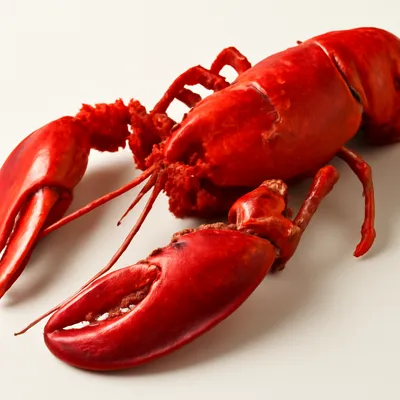
Lobster is done when shell is uniformly bright red, antennae pull out cleanly, and a small skewer at the joint between body and tail comes out hot. Internal at the thickest tail meat: 140°F (60°C).
- 55 min
Lift with tongs, drain head-down, place on a tray to rest 2 minutes. Meanwhile, melt 110g unsalted butter in a small pan over low heat — skim off white foam if you want clarified, or leave whole-butter for richer flavor. Cut 1 lemon into wedges.
- 62 min
Serve whole on a plate with a crab/lobster cracker, a small fork or pick, a ramekin of warm butter, and lemon. Provide bibs. Snap claws, twist tail from body, suck the legs — all part of the meal.
Watch outThe green tomalley (liver-pancreas) and any red roe are edible and prized — but Maine has issued advisories on tomalley contaminants in some years; check current guidance.
Archive tool suggestions — not reviewed
These legacy suggestions have not been evidence-reviewed and are not presented as required tools.